How Often Should You Replace Your Pillow?
There is no universal expiry date. Replace your pillow when it no longer supports a comfortable position, recovers poorly, is damaged or cannot be kept clean as directed.
By The Pillow Advisor Editorial Team · Updated June 2026

Disclosure: The Pillow Advisor is reader-supported. When you buy through links on our site we may earn an affiliate commission, at no extra cost to you. We only select products using cited sources and published specifications; we do not run an in-house lab. How this works.
How different fills show wear
Material changes the failure signs, but no fill comes with a reliable universal lifespan.
Polyester (poly-fill)
Inspect often for clumps, thin zones and poor recovery. Consumer Reports finds polyester generally holds its shape less well than other tested fills, but construction and use still vary.
Down & feather
Replace when repeated fluffing no longer restores an even, supportive shape, feathers escape excessively or the care label can no longer be followed safely.
Memory foam
Look for permanent impressions, cracks, crumbling, lost rebound or a height that no longer suits you. Never machine-wash a solid foam core unless its label explicitly permits it.
Latex
Latex can be resilient, but it is not permanent. Replace a core that tears, crumbles, develops lasting hollows or no longer returns to its intended shape.
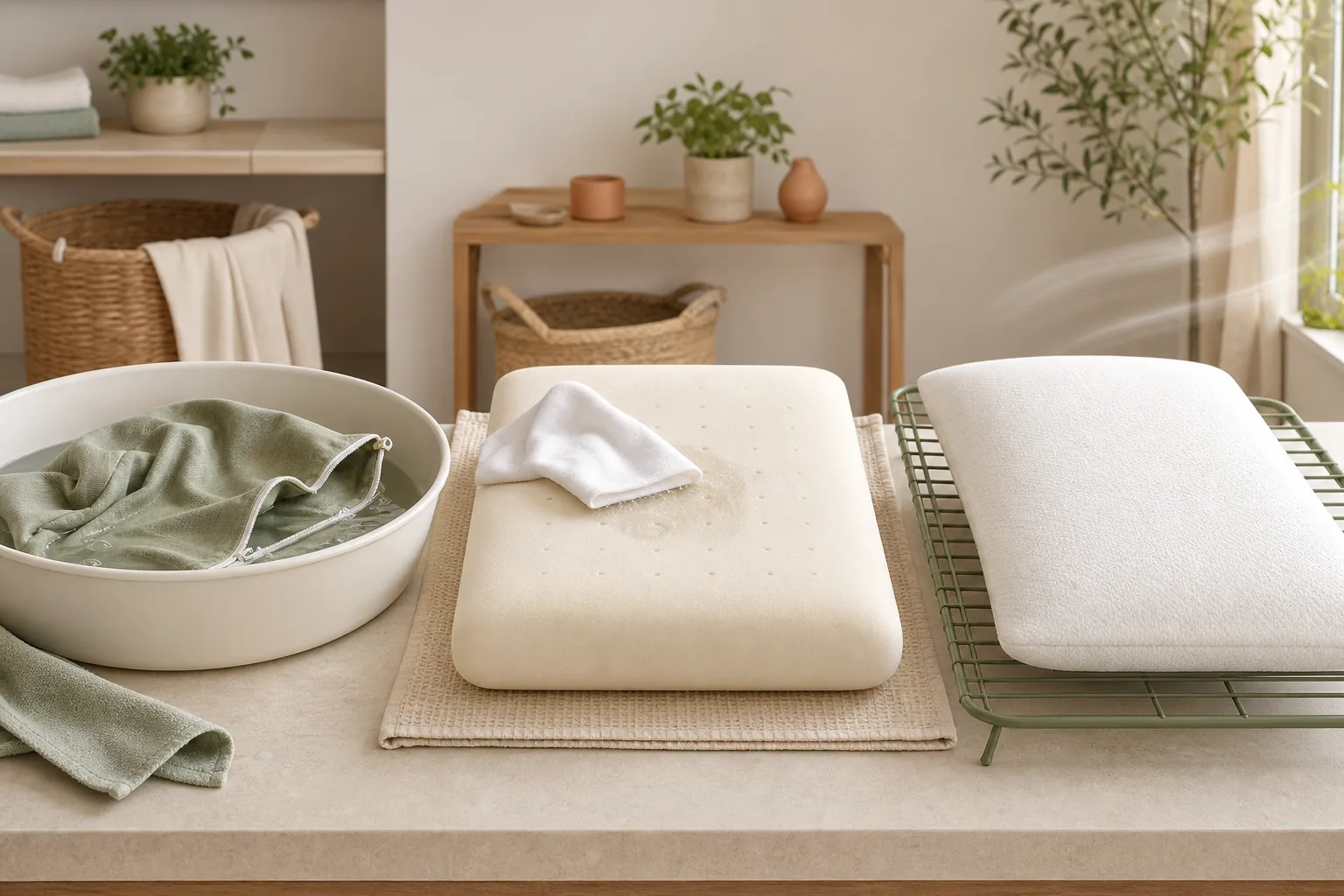
The fold test: useful clue, not a universal verdict
Folding can reveal poor recovery in some loose-fill pillows: if the pillow remains folded or the fill stays displaced, inspect it more closely. But this internet test is not a validated rule for solid foam, contour or molded latex. Your normal sleeping position, visible wear and manufacturer care instructions are stronger checks.
Signs it's time for a new pillow
- It stays lumpy, flat or misshapen after the fill is fluffed as its care label allows
- It no longer keeps your head comfortably positioned on your own mattress
- There are permanent lumps, flat spots, or the fill has shifted to the edges
- It cannot be cleaned or fully dried as directed, or allergy symptoms persist despite proper encasing and bedding care
- There are tears, escaping fill, crumbling foam, persistent odor or staining that proper cleaning does not resolve
Why an old pillow is worth replacing
Support and hygiene are separate decisions. A misshapen pillow may no longer hold a comfortable head position. For people with dust-mite allergy, AAFA recommends an allergen-barrier cover and washing bedding weekly in water at least 130°F; always follow the pillow's own wash and drying label because solid foam may not be washable.
Ready for a fresh one? Make it count by matching the new pillow to how you sleep — here's how to choose a pillow by loft, fill and firmness.
Time to replace it?
Frequently asked questions
What is the 2 2 1 pillow rule?
The 2-2-1 rule is a styling formula—two large pillows, two smaller pillows and one accent pillow—not a replacement schedule. It says nothing about the condition of the pillow you sleep on. Judge that pillow by support, recovery, cleanliness and its care instructions.
When should you throw away your pillows?
Replace a pillow when it remains flat or lumpy after permitted fluffing, no longer positions your head comfortably, has damaged or crumbling fill, or cannot be cleaned and fully dried according to its label. Follow local textile or foam disposal guidance; donation centers generally should not receive unsanitary or structurally failed bedding.
What is the lifespan of a pillow?
There is no definitive lifespan that applies to every pillow. Fill, construction, nightly use, moisture, cleaning and whether the pillow remains supportive all matter. AAFA recommends a two-year replacement interval specifically in its dust-mite-control guidance, while Ohio State advises replacing when the pillow no longer supports a neutral head position.
Source: AAFA - Dust Mite Allergy, Ohio State Health - How to choose a pillow
How do I know if my pillow needs replacing?
Check it on your own bed. Replace it if the head now tips noticeably, the fill bottoms out, fixed lumps or hollows remain, the core cracks or crumbles, or cleaning no longer resolves odor or visible soil. A fold test can reveal poor resilience in some fiber pillows, but it is not a validated pass/fail test for every material.
In short: use condition, support, hygiene and the care label—not age alone. When replacement is justified, see our best pillows.