How to Choose a Pillow: Loft, Fill and Firmness
Start with your sleep position and mattress, then compare compressed height, fill, firmness, breathability, care and return terms. There is no universal best pillow.
By The Pillow Advisor Editorial Team · Updated June 2026

Disclosure: The Pillow Advisor is reader-supported. When you buy through links on our site we may earn an affiliate commission, at no extra cost to you. We only select products using cited sources and published specifications; we do not run an in-house lab. How this works.
Step 1: Start with your sleep position
Position sets the starting range; shoulder width, body size and how deeply your mattress lets you sink determine the final fit.
Side sleepers
You usually need more compressed height to occupy the shoulder gap, but mattress sink and shoulder width determine how much. The pillow should not tip the head up or down.
Best pillows for side sleepersBack sleepers
Aim for medium loft. The pillow should cradle the natural curve of your neck without pushing your head forward or letting it fall back.
Best pillows for back sleepersStomach sleepers
A very thin, compressible pillow—or no head pillow if comfortable—limits added extension while the head is turned. A pillow under the hips can also reduce back strain.
Best pillows for stomach sleepersStep 2: Pick a fill for the feel
Memory foam
Solid foam contours and holds its shape; shredded foam is adjustable. Great pressure relief, but it can sleep warm unless it's gel-infused or ventilated.
Down & down-alternative
Soft, mouldable and light. Real down is luxurious but pricey; down-alternative is hypoallergenic and cheaper. Both flatten faster than foam and need fluffing.
Latex
Springy, supportive and naturally breathable, so it sleeps cool and lasts for years. It feels firmer and more responsive than memory foam.
Polyester (poly-fill)
The budget standard — soft and washable, but it clumps and flattens within a year or two, so plan to replace it more often.
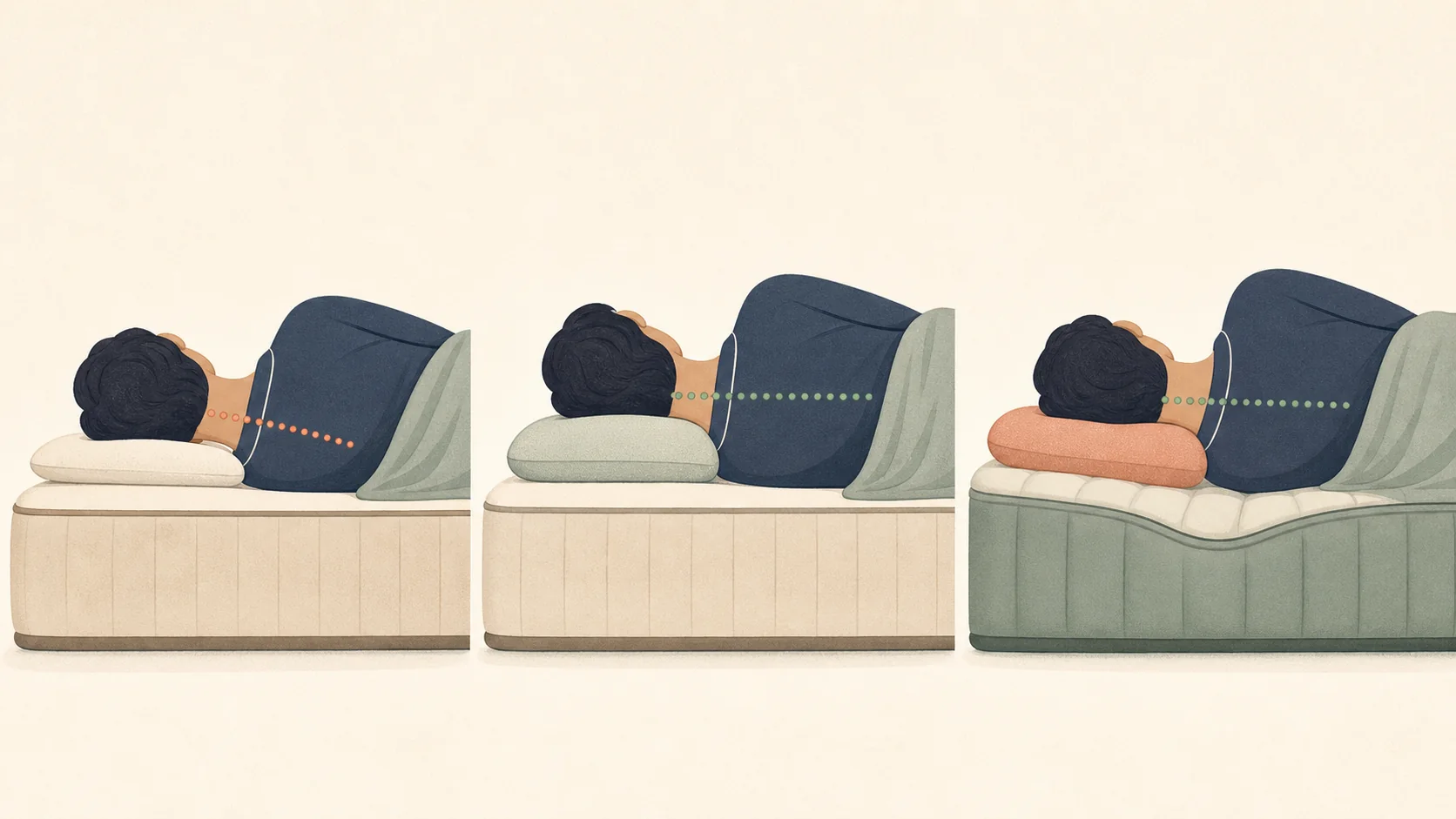
Step 3: Dial in firmness and check alignment
Firmness and height work together. Test on your own mattress, because a soft mattress reduces the shoulder-to-pillow gap while a firm mattress leaves more space. Lie in your usual position and check that your head is not visibly tipped toward the mattress or ceiling. Recheck after the fill has compressed for several minutes.
Not sure how much height you need? An adjustable pillow — usually shredded memory foam you can add or remove — lets you tune the loft instead of guessing. It is a reversible starting point if you switch positions, but the return policy still matters because feel cannot be predicted from specifications alone.
A quick word on replacing it
Even the best pillow wears out, but there is no definitive universal replacement date. Replace it when it no longer recovers its shape, stays lumpy, cannot be cleaned as directed or no longer supports a comfortable position. Here is how often to replace your pillow and the signs to watch for.
Ready to shop?
Frequently asked questions
What is the 2 2 1 pillow rule?
The 2-2-1 rule is a decorative sofa or bed arrangement: two larger pillows at the back, two smaller pillows in front and one accent pillow centered. It is not a clinical rule for choosing the pillow you sleep on. For sleep, fit one head pillow to your position, body and mattress.
What type of pillows do 5 star hotels use?
There is no single five-star-hotel pillow. Hotel collections commonly offer down, feather-and-down blends and down-alternative pillows in multiple firmness levels so guests can choose. The useful lesson is not a brand name: compare fill, compressed height and firmness, and check whether the exact hotel model is sold to consumers.
Why are hotel pillows so comfortable?
Hotel pillows may feel comfortable because they are frequently fluffed, protected and replaced, and hotels often provide more than one firmness. Fresh bedding and the mattress underneath also influence the impression. A hotel-style label alone does not establish support or durability, so test the pillow on your own mattress.
What to look out for when buying a pillow?
Check sleep position, mattress firmness, compressed—not displayed—height, fill feel, breathability, allergies, wash instructions and return terms. Consumer Reports notes that a softer mattress usually needs a thinner pillow because the body sinks farther. Avoid relying on unregulated labels such as ‘hypoallergenic’ or ‘orthopedic’ as proof of fit.
In short: match loft to your sleep position first, then pick a fill you like and a firmness that keeps your spine in line. When in doubt, go adjustable. Start with our best pillows.