Certification does not determine comfort. Use our guide to choosing a pillow to match the verified material and construction to the compressed loft and feel you actually need.
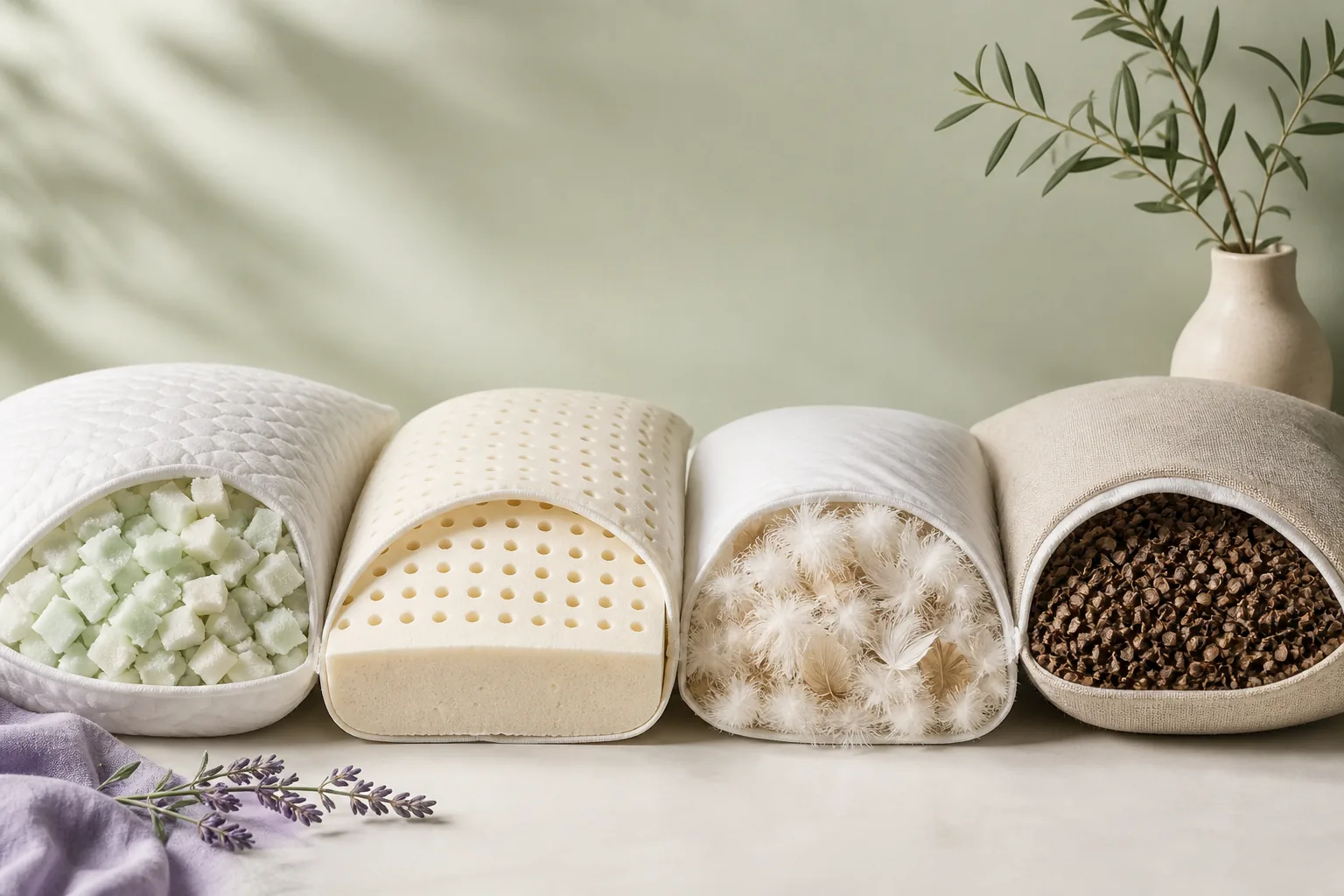
Products to compare
Pillows that fit this use case
These are not treatment claims or paid placements. Confirm current size, seller, price, and return terms before ordering.
Not sold on Amazon — check the brand directly.
Not sold on Amazon — check the brand directly.
As an Amazon Associate we may earn from qualifying purchases. OneLink may localize the destination to your country and available catalog.
Section 1
Best solid latex: Naturepedic
Naturepedic’s Solid Organic Latex Pillow uses a molded latex core and organic cotton fabric. The current page distinguishes GOTS-certified organic cotton from GOLS- or FSC-certified latex and says the finished product, materials and factory carry defined certifications.
A solid core provides consistent rebound and cannot be tuned by removing fill. Check the listed loft and trial before ordering. The latex insert is not a general machine-wash item even when an outer cover is removable.
Section 2
Best fixed latex-kapok blend: Avocado Organic
Avocado’s current Organic Pillow combines GOLS-certified organic latex with GOTS-certified organic kapok and arrives in a no-zipper, medium-plush configuration. The closed design avoids loose-fill handling but removes owner adjustment.
Choose it when the published fixed loft and softer kapok-latex feel suit you. Skip it when you expect to tune height at home; certified ingredients do not correct a mismatched profile.
Section 3
Best shredded blend: PlushBeds
PlushBeds publishes a shredded latex-and-kapok pillow with GOLS, GOTS, OEKO-TEX and GREENGUARD-related material claims. Shredding creates a more moldable surface and more internal air spaces than a solid slab.
Confirm whether the selected variant has owner fill access and which certification applies to the complete product versus the latex, cotton or kapok component. A long logo list can obscure rather than clarify scope.
Section 4
Organic, natural and low-emission mean different things
Organic refers to production and chain requirements under a named standard. Natural describes origin but may have no independent verification. GREENGUARD addresses emissions; OEKO-TEX programs address specified substances; neither automatically certifies agricultural organic status.
A product can combine a certified organic shell with a conventional core. Record every component and the exact wording rather than converting one certified layer into an all-organic claim.
Section 5
GOTS claims require a certified chain and label
The Global Organic Textile Standard states that only products made by certified entities and approved by a certifier may be represented and labeled as GOTS goods. Its rules cover processing, chemical management, traceability and social criteria in addition to fiber origin.
Look for a license or certification reference and verify it in the current database. A supplier’s generic GOTS membership or certified fabric does not automatically prove every pillow sold is a certified finished good.
Section 6
GOLS applies specifically to latex
GOLS verifies organic-origin natural rubber and processing through defined custody requirements. Naturepedic explains that latex labeled GOLS-certified must contain at least 95% certified organic raw material by weight under that standard.
A GOLS core can sit inside a separately certified or conventional textile. Check both latex and shell, and distinguish a whole finished-product certification from certified components named in marketing.
Section 7
Care and durability still depend on construction
Solid latex rebounds consistently but is heavier and usually spot-clean only. Shredded latex can be reshaped yet may migrate. Kapok adds light softness but can clump; wool compresses and may felt if washed incorrectly.
Follow the exact label, use a washable protector and confirm replacement-cover access. Organic certification does not make a fill waterproof, machine-washable or immune to aging.
Section 8
Our method and buying checklist
We used current official product pages and certification rules, not marketplace badge text or anonymous organic claims. We did not sleep-test the products and do not rank comfort from retailer stars.
Before purchase, save the product specification, certification identifier, dimensions, care instructions, trial and opened-item return terms. Recheck them at checkout because materials and scope can change by model.
Sources
Frequently asked questions
What is the best organic pillow?
The best verified option matches both certification scope and fit. Naturepedic is clearest for solid latex; Avocado offers fixed latex-kapok; PlushBeds offers a shredded blend.
How do you know if a pillow is really organic?
Find the named standard, certifier or license and exact product scope, then verify current status in the certification database. Do not rely on natural or eco-friendly wording.
Is GOTS or GOLS better?
They cover different materials and processes. GOTS focuses on organic textiles and their chain; GOLS applies to organic latex. A pillow may legitimately use both.
Are organic pillows chemical free?
No product is literally free of chemicals. Certification restricts specified inputs and processes; it does not mean the material contains no chemical substances.