
Sleeping with two pillows is not inherently bad. What matters is the compressed height and shape under your head, not the number on the bed. Two thin pillows can behave like one medium pillow; two thick, firm pillows can push the head forward or sideways. A second pillow under the knees, between the legs, behind the torso, or beside a CPAP mask has a different job and should not be counted as head support.
If the stack is compensating for an unsuitable pillow, use our pillow-loft and construction guide to choose by sleeping position, shoulder gap, and mattress sink.
For a product shortlist that lets you change height without a loose stack, compare the best adjustable pillows and confirm the current fill-removal instructions.
Two pillows are a height decision, not a rule
Count is a poor proxy for support. A pair of soft down pillows may compress below the height of one dense molded-foam pillow. Folded edges, uneven fill, a hand under the pillow, and a soft mattress can change the effective height again. Judge the setup after your head and shoulder have settled, not while the pillows are freshly fluffed.
A useful first check is repeatability. If the upper pillow slides away, forms a ridge, or leaves you rebuilding the stack each night, the setup is not delivering stable support. One appropriately sized pillow or an adjustable-fill model is usually easier to reproduce than two unrelated pillows.
Match the compressed stack to your sleeping position
A side sleeper normally needs enough compressed loft to fill the distance created by the shoulder and mattress. For example, a broad-shouldered person on a firm mattress may need more height than a smaller person whose shoulder sinks deeply into a soft mattress. Two thin pillows can work when they stay level, but a steep upper pillow can tilt the head toward the ceiling.
A back sleeper usually needs less height behind the head. Two firm pillows commonly create forward neck flexion; Harvard Health advises avoiding a pillow that is too high or stiff. A stomach sleeper generally needs very low head support because the neck is already rotated, so stacking two head pillows is especially likely to add unwanted extension.
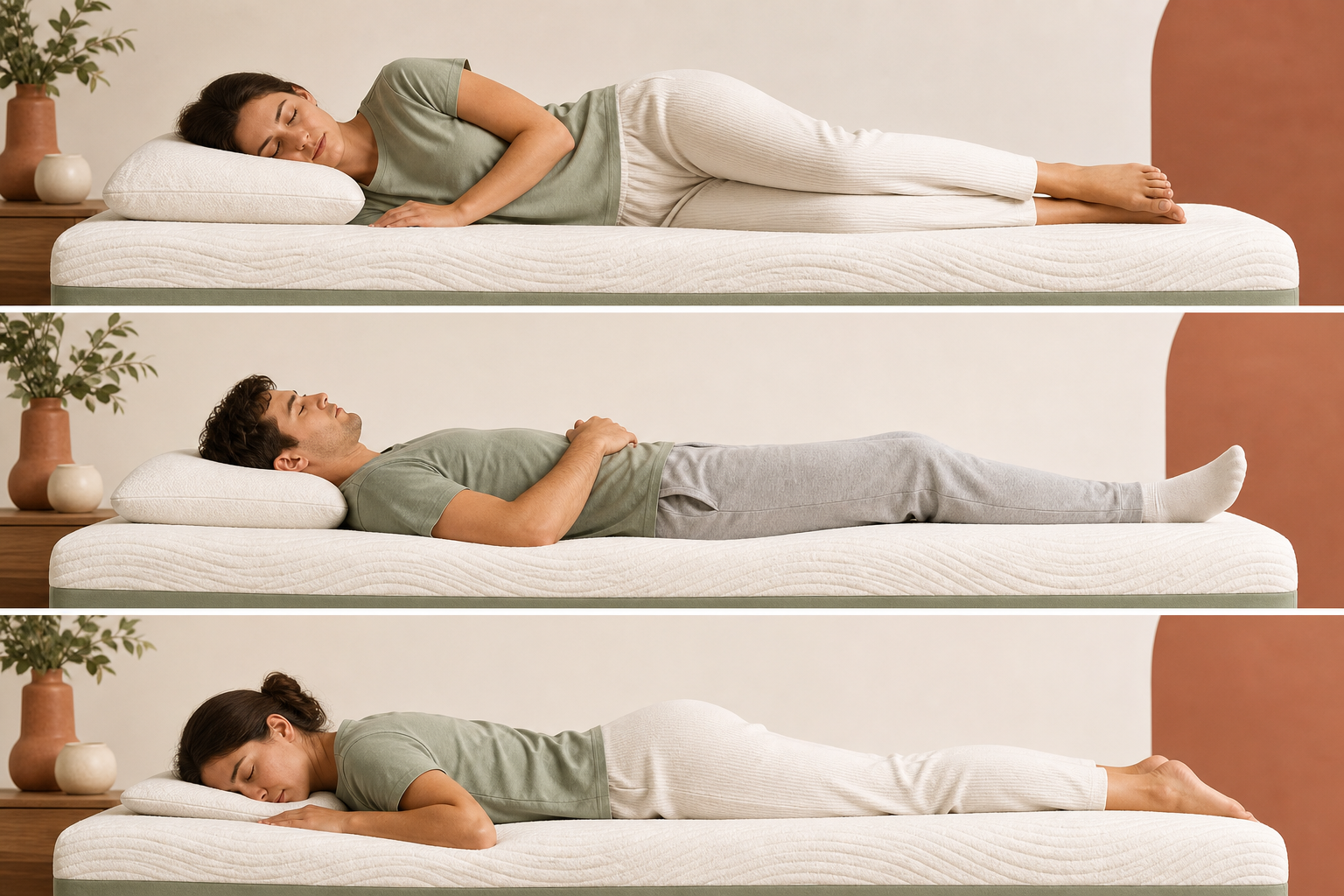
A second pillow can have a completely different job
Do not treat every extra pillow as part of the head stack. A back sleeper may place a small pillow under the knees; a side sleeper may use one between the knees; a pregnant sleeper may support the abdomen or back; and a restless sleeper may place a body pillow behind the torso. Those examples change body support without doubling head height.
Make each pillow answer one question. The head pillow manages the head-to-mattress gap. A knee pillow reduces a leg or hip gap. A body pillow can discourage rolling or support an arm. When one unstable pile is expected to perform all three jobs, it becomes harder to identify which change helped or caused discomfort.
Need more precise height than a loose stack?
Compare adjustable pillows whose fill can be removed in small steps, then verify dimensions and return terms.
Why a clinician may ask how many pillows you use
The question can be about breathing rather than pillow preference. Orthopnea is shortness of breath while lying flat that improves when sitting or standing. Cleveland Clinic notes that some people with orthopnea prop themselves up with several pillows, but the important issue is the underlying symptom—not finding a taller retail pillow.
New or worsening breathlessness when lying down, waking short of breath, chest discomfort, wheezing, swelling, or needing progressively more pillows deserves medical assessment. Do not use this article to diagnose the cause or replace prescribed treatment.
Two pillows do not treat sleep apnea
An ordinary two-pillow stack is not a treatment for obstructive sleep apnea. It may flex the neck, shift during sleep, or interfere with a CPAP mask. Harvard Health notes that pillows can disturb CPAP positioning, while Mayo Clinic emphasizes properly fitted CPAP interfaces and clinician-directed treatment.
Position can matter for some people with sleep apnea, but the solution is not universally ‘sleep higher.’ Mayo Clinic describes side-position strategies for selected patients. Follow the plan from your sleep clinician and equipment provider, especially when changing pillow shape around a mask or hose.
Run a simple three-night fit check
Night one: use your normal setup and note where the lower pillow ends and the upper pillow begins. Night two: remove the upper pillow or reduce adjustable fill while keeping the rest of the bed unchanged. Night three: restore only the amount of height that clearly feels missing. This is a comfort comparison, not a medical test.
Each morning, record whether you woke with new neck stiffness, a headache, hand numbness, jaw pressure, repeated pillow adjustment, or CPAP leakage. Stop the experiment if symptoms are severe or progressive. The goal is a stable, comfortable neutral position—not proving that one or two pillows is universally correct.
Frequently asked questions
What is the 2-2-1 pillow rule?
It is primarily a decorative bed-styling formula—two larger pillows, two smaller pillows, and one accent pillow—not a clinical rule for how many pillows should support your head while sleeping.
Why do doctors ask if you sleep with two pillows?
They may be screening for breathlessness when lying flat. Needing more pillows to breathe comfortably can be relevant to orthopnea and should be discussed with a healthcare professional, especially if it is new or worsening.
Is it better to sleep with one or two pillows?
Neither count is automatically better. Choose the setup that keeps the head and neck comfortably aligned after compression and remains stable through the night.
Does sleeping with two pillows help breathing?
Elevation may temporarily change symptoms for some people, but an ordinary stack is unstable and does not diagnose or treat the cause. Breathlessness when lying flat warrants medical advice; sleep apnea treatment should follow a clinician-directed plan.
Sources
About the editorial team
The Pillow Advisor checks product specifications, care instructions and reliable expert sources. We do not invent hands-on testing or medical claims.