
Use this shape comparison alongside our cervical pillow guide. That roundup separates fit features from treatment claims and explains when professional assessment matters.
Important: Pillows cannot diagnose or treat serious neck conditions. Seek prompt care for pain after trauma, weakness, numbness, loss of coordination, fever, unexplained weight loss or severe worsening symptoms.
Products to compare
Pillows that fit this use case
These are not treatment claims or paid placements. Confirm current size, seller, price, and return terms before ordering.
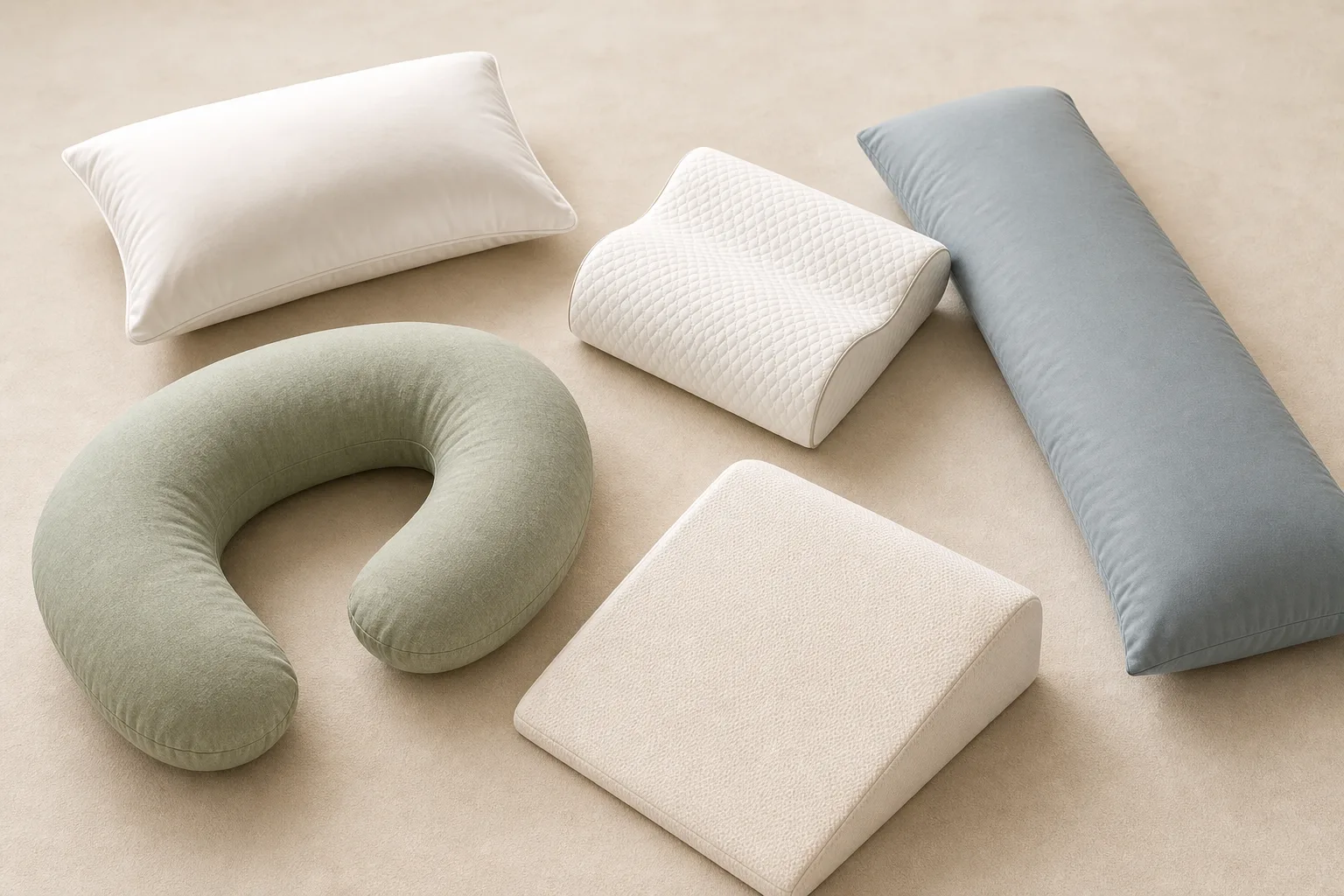
Defined neck zones
Cushion Lab Neck Relief Pillow
A shaped neck zone offers a more defined position than a regular pillow. Check the published contour against your position and mattress sink.
Verify specifications at Cushion Lab official Neck Relief Pillow specificationsCheck Cushion Lab on AmazonFreedom to reposition
Coop Original Adjustable Pillow
Loose adjustable fill preserves a conventional surface while allowing gradual loft changes, useful if a fixed contour feels restrictive.
Verify specifications at Coop official Original Adjustable Pillow specificationsCheck Coop options on AmazonAs an Amazon Associate we may earn from qualifying purchases. OneLink may localize the destination to your country and available catalog.
Section 1
The defining difference is zoned shape
A cervical pillow typically raises material beneath the neck and creates a lower area for the head. Wave-shaped foam may offer two edge heights; butterfly forms add shoulder cutouts or side-sleeping wings. The user must land in the intended zone.
A regular rectangular pillow distributes fill more uniformly. Down, fiber or shredded foam can often be molded, while a solid slab maintains a consistent surface. Regular does not mean unsupportive; it means support is not fixed into an obvious anatomical contour.
Section 2
Contour fit is less forgiving
If a neck roll is too high, it can feel like pressure beneath the neck or push the head away from a comfortable position. Too low, and the recess may not provide meaningful support. Shoulder build, head shape and mattress sink change the required geometry.
Measure both contour edges and center depth. A product labeled ergonomic without dimensions leaves a critical fit question unanswered. Reversible heights or removable inserts reduce risk but do not guarantee a match.
Section 3
Regular pillows allow more movement
Combination sleepers can roll across a broad regular surface without finding a ridge or shoulder notch. Loose fill can be redistributed for side and back positions, though it may shift during the night and require reshaping.
A cervical design can guide placement and resist drift, which some sleepers appreciate. Others wake outside the recess or dislike feeling constrained. Match the design to actual movement rather than an idealized static diagram.
Section 4
What current evidence can and cannot say
A 2025 systematic review examined pillow effects on pain, disability and sleep quality in chronic neck pain, reflecting ongoing but heterogeneous research. A prior systematic review and meta-analysis found possible benefits for some spring and rubber pillows, while results did not support a simple universal contour rule.
Different studies use different materials, shapes, follow-up periods and patient groups. That limits claims that any cervical pillow cures neck pain or corrects the spine. Product-specific marketing should not be treated as clinical evidence.
Section 5
Alignment is a practical test, not a perfect photograph
Cleveland Clinic and Johns Hopkins emphasize supporting a comfortable head and neck position, but bodies and mattresses differ. On the side, check for obvious lateral tilt; on the back, avoid a contour that forces the chin strongly toward the chest.
Ask another person to observe or take a neutral photo after you settle, without using a single image as a diagnosis. Comfort, sleep continuity and morning symptoms over several nights also matter.
Section 6
Care can favor a conventional fill
Many molded memory foam or latex cervical cores cannot be machine-washed; only the cover may be washable. Complex shapes may require proprietary cases. A regular fiber or approved down pillow may be easier to launder, but its label remains decisive.
Check replacement-cover availability, drying instructions and whether the contour can be rotated. A hygienic, well-fitting regular pillow is more useful than a difficult-to-maintain contour that is rarely used.
Section 7
Trial and return terms are unusually important
Contour mismatch can be obvious only after several full nights. Confirm trial length, hygiene exclusions, return shipping and whether opened pillows qualify. Keep every insert and avoid staining during evaluation.
Start with the lower edge when the manufacturer recommends it and change only one variable. Stop when symptoms clearly worsen; a required ‘break-in’ period should not override significant discomfort or warning signs.
Section 8
Who may prefer each design
A cervical pillow may suit a mainly back or side sleeper who wants a defined neck zone and can match published heights. A regular adjustable pillow may suit combination sleepers, uncertain buyers and people who prefer moldability.
The decision is about fit and behavior, not which shape looks more medical. When pain drives the purchase, discuss sleep positioning with a qualified clinician who knows the diagnosis and treatment plan.
Sources
Frequently asked questions
Is a cervical pillow better than a regular pillow?
Only when its contour and heights fit the sleeper. Regular adjustable pillows offer more movement and can also support a comfortable position.
Do cervical pillows actually work?
Some research reports benefits for particular pillow types and groups, but evidence is heterogeneous. No design is proven best for everyone or a cure for neck pain.
Can a cervical pillow make neck pain worse?
A mismatched height or contour can increase discomfort. Stop use if symptoms worsen and seek assessment for persistent pain or neurological warning signs.
How long does it take to get used to a cervical pillow?
There is no medically required universal period. A short careful trial may clarify fit, but significant or increasing symptoms are not something to push through.