Check the care label first. Instructions for your exact model always override general advice. The wrong wash or drying method can permanently damage foam, latex, or bonded layers.
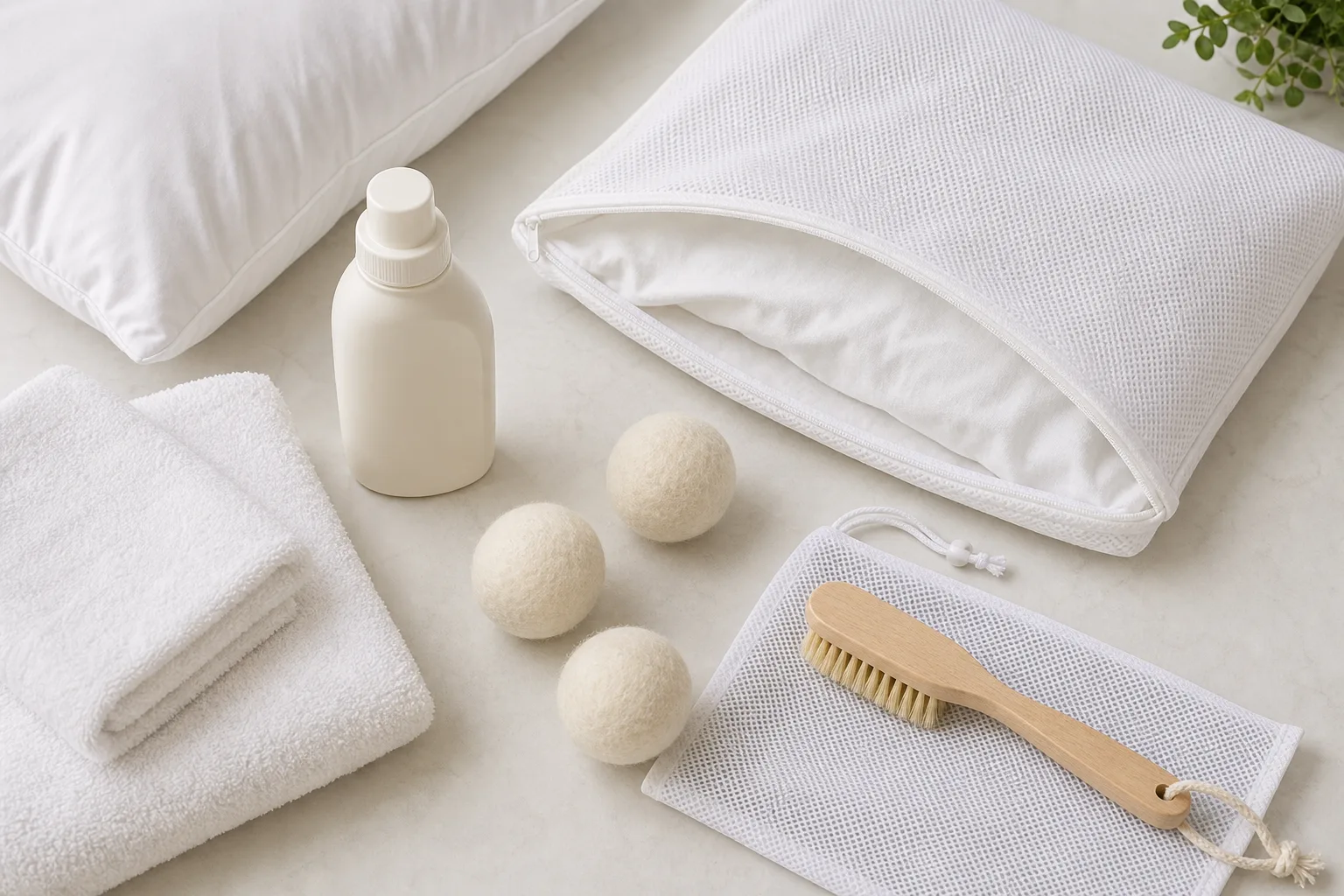
A safer basic process
- 1
Read the label and product page
Confirm temperature, cycle, drying method, and whether only the cover is washable.
- 2
Inspect seams and stains
Repair loose seams first and gently pretreat stains using a method suitable for the material.
- 3
Wash gently with enough room
Machine wash only when expressly allowed. Balance the load and use a small amount of mild detergent.
- 4
Dry completely
Use permitted low heat or air-dry flat with circulation. Do not use the pillow until its center is fully dry.
Three assumptions that can cause damage
- Washable cover ≠ washable core. A zipper only means components separate; check the care instructions for each layer.
- Low heat is not always safe. Foam, latex, adhesives and membranes can still deform or age under dryer heat.
- Surface-dry is not core-dry. Thick fill can remain cool and damp inside. Do not reuse the pillow until the center is dry.
Test any spot treatment on a hidden area first and never combine cleaning agents. Bleach, enzymes, fragrances and solvents can affect covers, foam or adhesives and are not interchangeable. Use only a product and dose permitted by the textile label or manufacturer.
Method by pillow fill
| Fill | Usually safe | Avoid |
|---|---|---|
| Down or feather | Machine wash only if the label permits; rinse thoroughly and dry fully on low heat. | Storing damp, high heat, and fabric softener. |
| Synthetic fiber | Many models tolerate a gentle wash and low dryer setting; verify the label. | Crowded drum and incomplete drying. |
| Solid memory foam | Wash the cover; usually spot-clean the core and air-dry flat. | Washing machine, wringing, and hot dryer. |
| Latex | Wash the cover; spot-clean the core as directed and dry away from direct sun. | Machine washing, dryer, and prolonged direct sunlight. |
| Buckwheat | Remove and keep hulls dry; wash only the empty cover as directed. | Getting buckwheat hulls wet. |
Stop, clean or replace?
Stop when seams open, the core crumbles or a strong odor returns after complete drying. Clean only as the label permits. Replacement is safer when contamination sits deep inside a non-washable core or support is permanently lost; harsher washing cannot restore worn fill.
Not sure which fill you have, or whether replacement makes more sense than washing? Use When to replace a pillow as the next practical step.
Practical accessories
Products for cleaner, safer pillow care
A washable protector can help reduce new stains. Dryer balls are only suitable when the care label expressly permits tumble drying. Always check size, material, and current seller.
Reducing future stains
Breathable zippered pillow protector
A washable barrier can catch oils and moisture. Confirm the size and care label; waterproof membranes may sleep warmer.
Compare pillow protectors on AmazonLabel-approved tumble drying
Unscented wool dryer balls
Dryer balls can help move approved down or fiber fill during drying. Do not use them when the pillow is not allowed in a dryer.
Compare dryer balls on AmazonAs an Amazon Associate we may earn from qualifying purchases. OneLink may route you to the Amazon store for your country.
FAQ
Can you put pillows in a washing machine?
Some down and synthetic pillows can be machine-washed; solid memory foam and latex usually cannot. Follow the care label.
What washing-machine setting should you use?
Use only the temperature and cycle named on the label. A gentle cycle is common, but construction varies.
Can pillows go in the dryer?
Only when permitted. Foam and latex usually should not; many fiber and down pillows can use low heat.
How do you know a pillow is fully dry?
Press and inspect several areas for cool, heavy, or damp spots. Allow more drying time when uncertain.