Choose memory foam if…
- You like a slower, close-contouring feel
- You want many adjustable shredded-fill options
- You prefer a fixed sculpted contour
- You have checked heat and odor trade-offs
Choose memory foam for slower, closer contouring; choose latex for quicker rebound and a springier feel. Construction and compressed height still matter more than either material label.
By The Pillow Advisor Editorial Team · English SERP and PAA checked July 23, 2026
Compare nine differences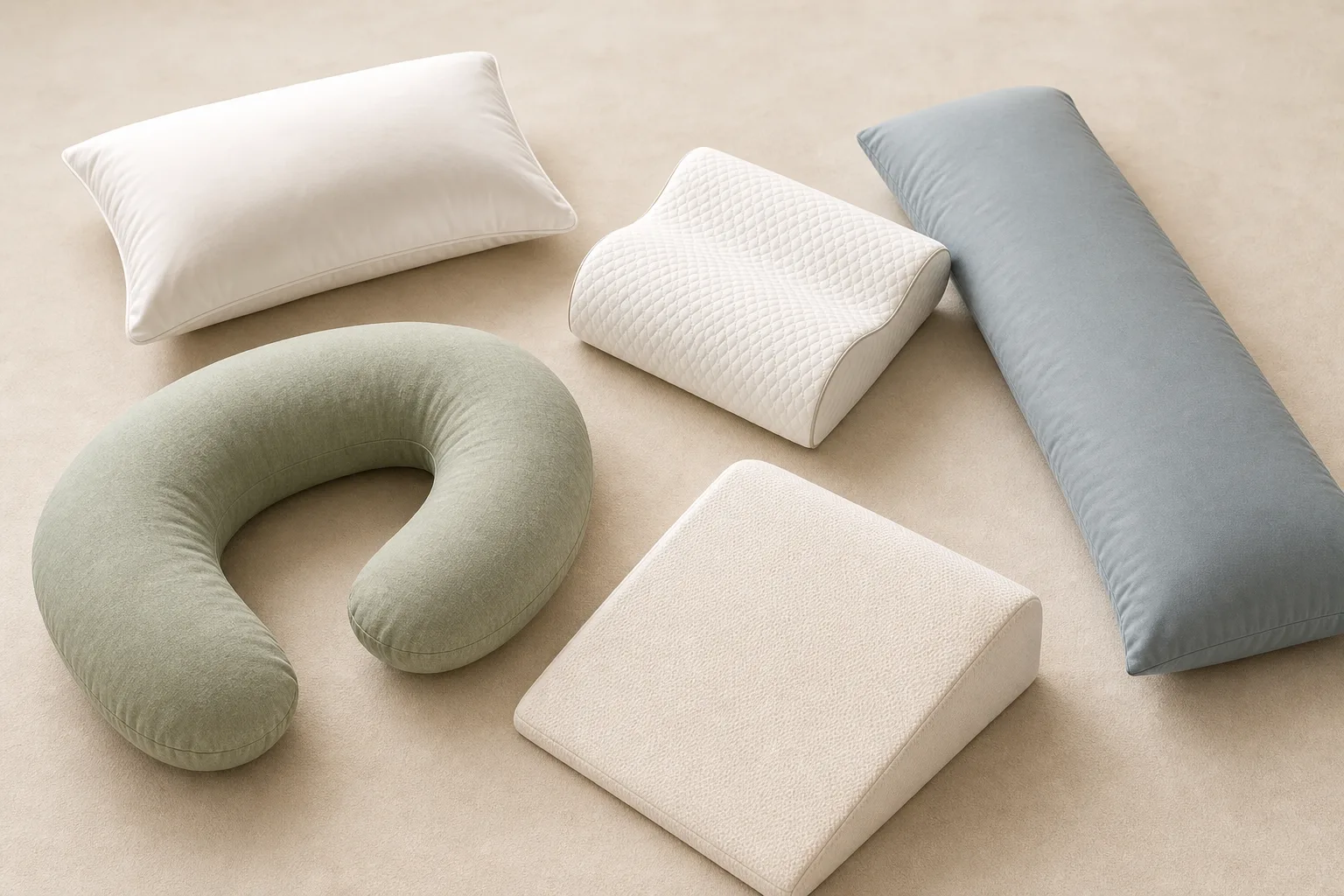
| Factor | Memory foam | Latex |
|---|---|---|
| Feel | Slow contouring; solid foam holds a molded shape | Springier and quicker to rebound |
| Height options | Solid, contour, layered or adjustable shredded fill | Molded core, shredded fill or removable layers |
| Heat | Dense solid foam can retain more heat | Often more open and responsive; construction still matters |
| Weight | Usually medium to heavy | Often heavy, especially molded cores |
| Motion/response | Slow response and less bounce | Fast response and more bounce |
| Care | Core commonly spot-clean only | Core commonly spot-clean only; follow label |
| New-product odor | Polyurethane odor can occur | Rubbery odor can occur |
| Allergy issue | Check cover, additives and dust-mite controls | Avoid natural-rubber latex if clinically allergic; ask a clinician |
| Best reason to choose | You prefer close contouring or adjustable shreds | You prefer quick rebound and a springier surface |
These examples make the material trade-off concrete; they are not paid rankings. Confirm the exact variant, loft, seller, price and return terms at checkout.
Memory-foam example
A molded memory-foam option for shoppers who want slow contouring rather than loose adjustable fill.
Check Amazon optionsLatex example
A latex-core construction for shoppers comparing quicker rebound with the slower response of memory foam.
Check Amazon optionsTest compressed height on your own mattress, verify the opened-product return policy and read which component is actually washable. A badly fitted premium latex pillow remains a bad fit; an inexpensive adjustable foam pillow may be easier to tune.
These four questions were captured verbatim from the US Google PAA for “memory foam vs latex pillow.”
Neither is inherently better. Latex generally feels springier and rebounds faster; memory foam generally contours more slowly and closely. Pillow height, construction and your mattress determine fit more than the material name, so choose by feel and compressed height and use a return policy when possible.
Choose latex for quicker rebound and a more buoyant feel; choose memory foam for slower contouring or the wide availability of adjustable shredded-fill models. Solid versions of either can be heavy and usually are not machine-washable. Neither material is a universal treatment or alignment guarantee.
Latex pillows can be heavy, springier than some people like, expensive and difficult to wash internally. Natural rubber latex can also matter for people with latex allergy, and a rubber-like odor may be noticeable when new. ‘Natural’ does not by itself prove low emissions, purity or better health outcomes.
Source: FDA - Latex allergies
There is no single healthiest pillow material. Choose a comfortable, supportive height; check the complete materials and care label; control relevant allergens; and look for specific third-party claims rather than vague ‘non-toxic’ language. CertiPUR-US addresses specified polyurethane-foam content and emissions, while GREENGUARD certification addresses chemical-emission limits—not clinical superiority.
Source: CertiPUR-US - Certification FAQ, UL - GREENGUARD Certification