
Use this as a specific extension of our guide to choosing the right pillow. That guide weighs sleep position, shoulder build and mattress sink before recommending a loft range.
Important: Persistent or severe neck pain, weakness, numbness, pain after injury, or signs of sleep apnea warrant professional medical assessment. Adult pillow experiments do not apply to infant safe sleep.
Section 1
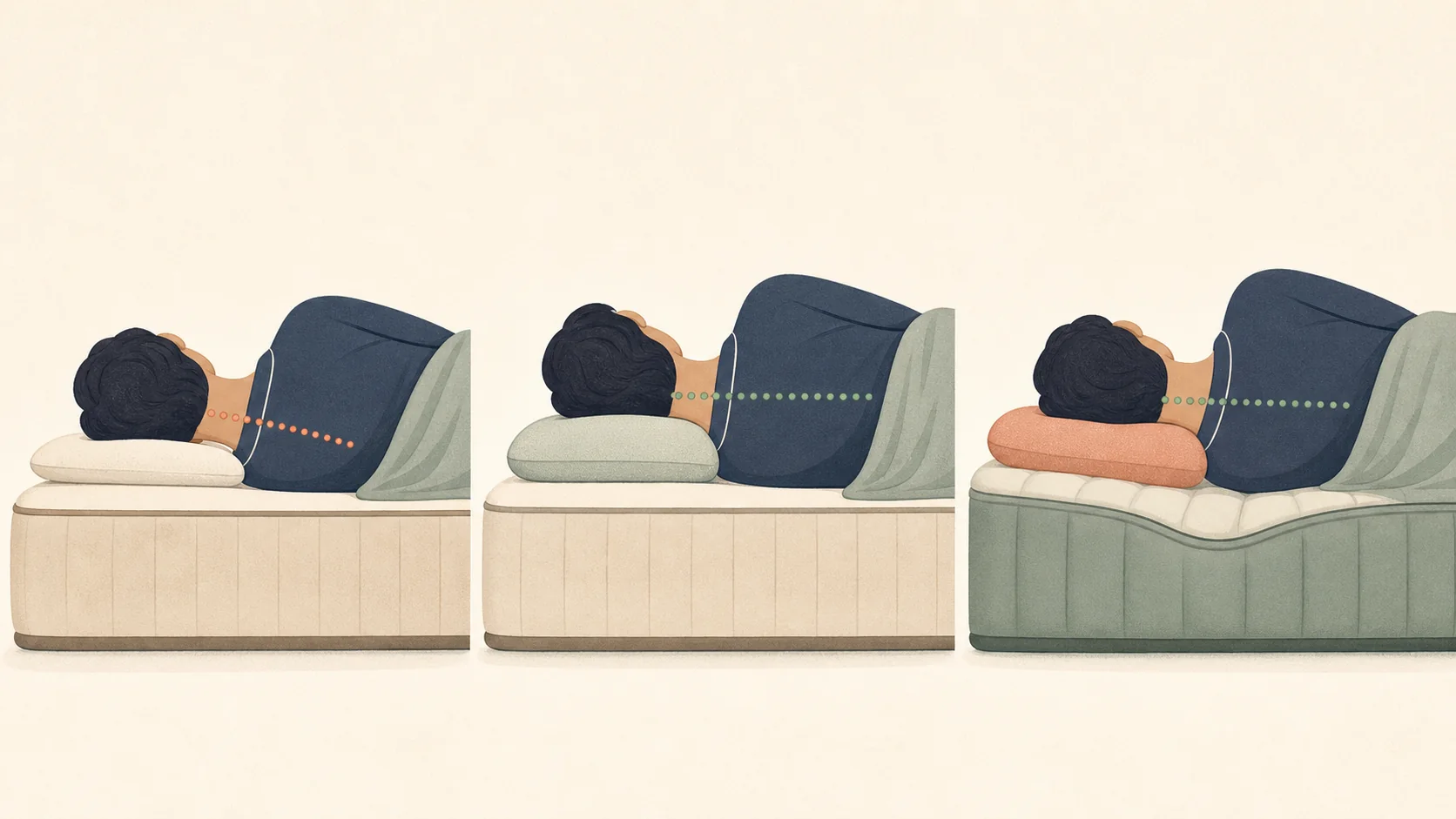
Side sleepers usually need the largest gap filled
Your shoulder holds your head above the mattress when you lie on your side. Without enough compressed loft, the head tends to drop toward the bed and the neck bends sideways for a long period. A softer mattress may let the shoulder sink farther and reduce the gap, but rarely makes body geometry irrelevant.
Using an arm or folded hand under the head is a clue that the surface feels too low. It also changes shoulder loading, so it is not the same as genuinely sleeping flat without support.
Section 2
Back sleepers often need lower, shaped support
On your back, a thick pillow can push the chin toward the chest. No pillow at all can leave another sleeper feeling unsupported under the natural neck curve. The useful target lies between those extremes and changes with head shape, upper-back contour and mattress surface.
Johns Hopkins notes that sleep-position effects come with individual caveats and that a supportive pillow cradling the neck may help some people with neck or shoulder pain. That is different from claiming one pillow treats a diagnosis.
Section 3
Stomach sleepers are the possible exception
A stomach sleeper must turn the face to breathe. Adding a tall pillow can also extend the neck backward, so some adults find a very thin pillow or no head pillow less uncomfortable than a high model.
Pillow removal does not eliminate rotation. Cleveland Clinic explains that stomach sleeping can stress the neck, back and shoulders. Consider the whole position—including arms and any support under the pelvis—rather than treating pillow height as the only variable.
Section 4
Pillowless sleep is not a proven neck treatment
Claims that sleeping flat resets the spine oversimplify a varied evidence base. A change may feel better because the old pillow was too high, not because zero loft is universally therapeutic. The opposite result is possible when the old pillow was too low or unstable.
Do not use a short home experiment to diagnose the source of pain. Morning symptoms can also relate to daytime posture, mattress condition, injury or a health problem. Seek assessment when symptoms persist, worsen or include neurological warning signs.
Section 5
Test less loft without making a dramatic jump
Change one factor at a time. Remove some fill from an adjustable pillow or try a folded towel before moving from a high pillow to none. Keep the mattress and usual position consistent, and allow several nights unless discomfort clearly increases.
Record ease of falling asleep, awakenings and morning sensations in the neck, shoulders, jaw and head. Also note whether you roll to another position; a setup that suits stomach sleeping may be much too low after you turn onto your side.
Section 6
Infant safe sleep is a separate subject
Advice about adult comfort must never be transferred to babies. Infants require a firm, flat sleep surface and a safe environment without loose pillows, following current pediatric guidance. Consumer positioning products do not replace those rules.
For adults, keep the decision functional: choose the least loft that comfortably supports your actual position. If you already sleep well and wake without symptoms, a minimalist trend is not a reason to remove a suitable pillow.
Sources
Frequently asked questions
Is it healthier to sleep without a pillow?
Not as a general rule. The appropriate loft depends on sleep position, body shape, mattress sink and symptoms. Many side sleepers need substantial compressed height.
Is sleeping without a pillow good for your neck?
It may feel better when the previous pillow was too high, particularly for some stomach sleepers. Back and side sleepers often need appropriately shaped support instead of zero loft.
Does sleeping without a pillow improve posture?
There is no proven universal posture improvement. Overnight head position depends on the complete sleep system, and everyday daytime posture is not corrected simply by removing a pillow.
Can sleeping without a pillow cause headaches?
An uncomfortable overnight sleeping position can accompany morning symptoms, but headaches have many possible causes. New, severe, persistent or injury-related headache needs timely professional medical evaluation and should not be self-diagnosed.