
Firmness is one variable in choosing a pillow. Use the full guide to combine it with fill type, adjustable height, dimensions and return terms.
Important: A pillow is not a treatment for persistent pain. Seek medical assessment for severe or worsening neck pain, weakness, numbness, pain after injury or other concerning symptoms.
Products to compare
Pillows that fit this use case
These are not treatment claims or paid placements. Confirm current size, seller, price, and return terms before ordering.
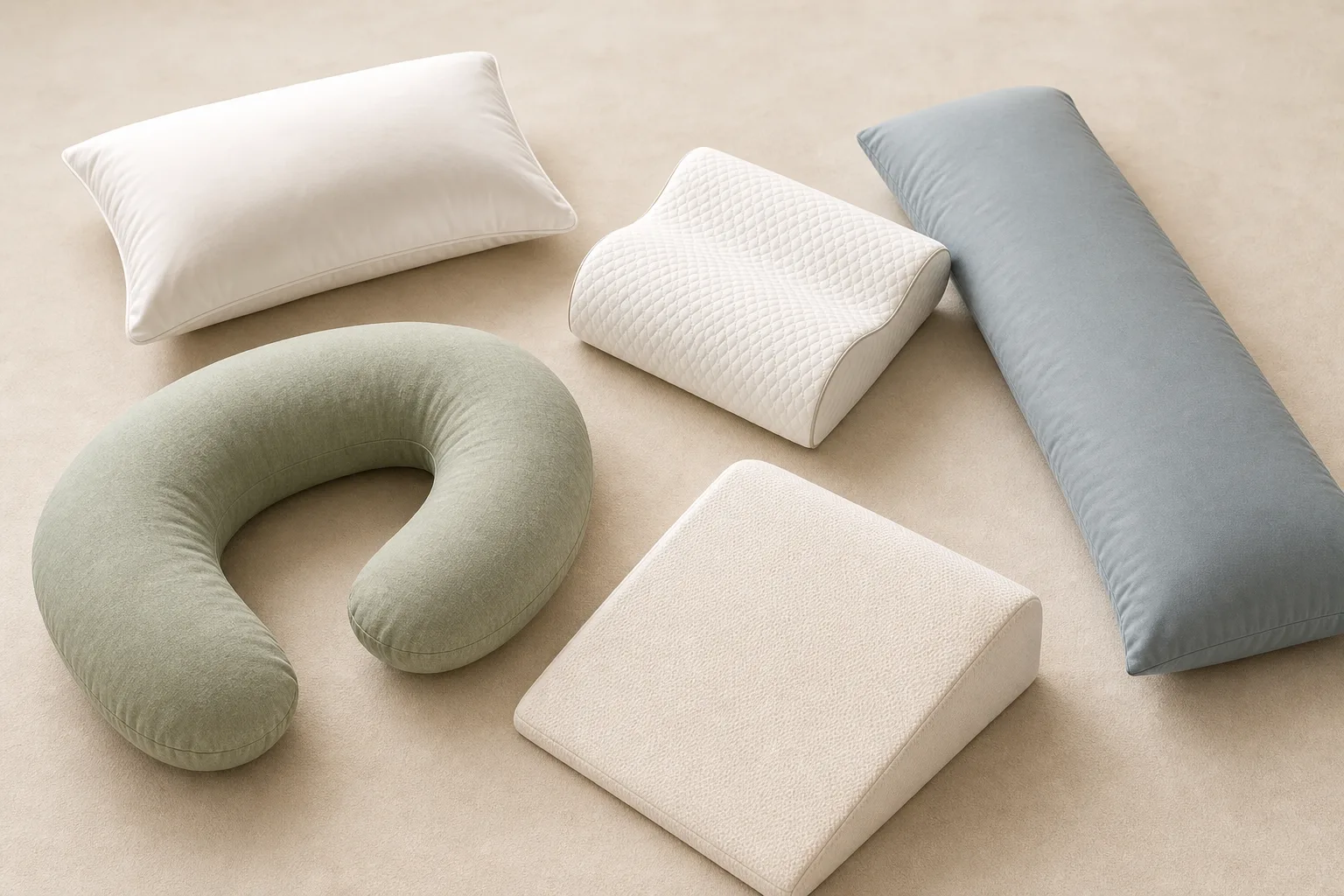
Softer fiber feel
Saatva Down Alternative Pillow
A fiber pillow is a practical soft starting point, but compare fill and return terms because soft does not guarantee low compressed height.
Verify specifications at Saatva official Down Alternative Pillow specificationsCheck Saatva options on AmazonMore collapse resistance
Saatva Latex Pillow
A latex core generally resists compression more than loose fiber. Match the selected loft to your shoulder gap rather than buying on firmness language alone.
Verify specifications at Saatva official Latex Pillow specificationsCheck Saatva latex optionsAs an Amazon Associate we may earn from qualifying purchases. OneLink may localize the destination to your country and available catalog.
Section 1
Firmness is resistance, not simply height
A firm pillow resists compression more than a soft one, but it can still start low. A soft pillow may look tall when fluffed and collapse deeply under the head. That is why photographs and uncompressed measurements cannot predict the loaded position by themselves.
Ask for both loft and firmness, then identify the fill. Solid foam, molded latex, loose down and polyester clusters produce different resistance curves even when a retailer calls each one medium-firm.
Section 2
Side sleepers often need more resistance
The shoulder creates a substantial gap between head and mattress in side lying. A pillow that collapses too far can let the head tilt downward; an excessively firm or tall model can push it upward. Broader shoulders and firmer mattresses usually preserve a larger gap.
A soft mattress lets the shoulder sink and may reduce required pillow height. Test the pillow on the mattress where it will be used rather than copying a firmness recommendation from a different sleep system.
Section 3
Back sleepers need contour without forward push
Back sleepers commonly need a lower compressed height than side sleepers. A firm high pillow can push the chin toward the chest, while a very soft flat pillow may not support the neck curve comfortably.
Johns Hopkins advises that comfort can guide many healthy sleepers and notes that a supportive pillow cradling the neck may help some people with neck or shoulder pain. Supportive does not necessarily mean hard; shape and height are part of support.
Section 4
Stomach sleepers usually need the least loft
A high or firm head pillow can add backward neck extension when sleeping face down. Many stomach sleepers therefore prefer soft, thin or adjustable designs. Some adults experiment with very little head support, though stomach sleeping still requires the neck to rotate.
Do not equate plush with low. A heavily filled soft pillow can remain too tall, so check how far it compresses and whether fill can be removed.
Section 5
Materials change the meaning of soft and firm
Down is moldable and often compresses considerably; feathers or inner chambers add structure. Shredded foam can be adjusted but may feel lumpy. Solid memory foam distributes pressure slowly, and latex typically rebounds faster.
Fiber pillows range from airy clusters to dense batting. Compare construction details and fill weight instead of using firmness to infer breathability, washability or durability. Those properties require separate evidence.
Section 6
Pressure and stability create a balance
A pillow can be firm enough to maintain height yet uncomfortable at the ear, jaw or side of the face. A very soft surface may feel pleasant initially but allow the head to drift or require nightly reshaping.
Look for a stable core with a pressure-relieving surface when you need both. Chambered down, latex with a soft outer layer and adjustable blends are different ways to pursue that balance.
Section 7
Adjustability reduces—but does not remove—risk
Fill-access zippers and removable layers let you tune height. Make one change at a time, retain removed fill and test for several nights after loose material settles. Adjusting quantity can also alter firmness and surface evenness.
A mechanism cannot make every material suitable. If the feel, rebound or contour remains wrong throughout the return window, exchange the pillow instead of endlessly modifying it.
Section 8
Use a repeatable home test
Lie in your normal position for at least several minutes. Check for obvious upward, downward or sideways head tilt and notice pressure, jaw position and the urge to place an arm under the pillow. Retest after the fill warms and settles.
Record morning comfort for several nights while keeping other variables stable. Stop if symptoms worsen, and use opened-item returns before the deadline rather than treating discomfort as an adaptation requirement.
Sources
Frequently asked questions
Is it better to sleep on a soft or firm pillow?
The better option maintains a comfortable compressed height in your position. Side sleepers often need more resistance; stomach sleepers usually need less loft.
Are firm pillows good for side sleepers?
They can be when firmness prevents collapse without pushing the head upward or creating ear pressure. Shoulder width and mattress sink change the target.
Can a pillow be too firm?
Yes. It may create pressure or hold the head too high, particularly when the loft is also substantial. Firmness and height must be assessed together.
Do firm pillows last longer?
Not automatically. Durability depends on material, construction, use and care. Some firm fiber fills mat, while resilient latex or quality foam may retain shape longer.