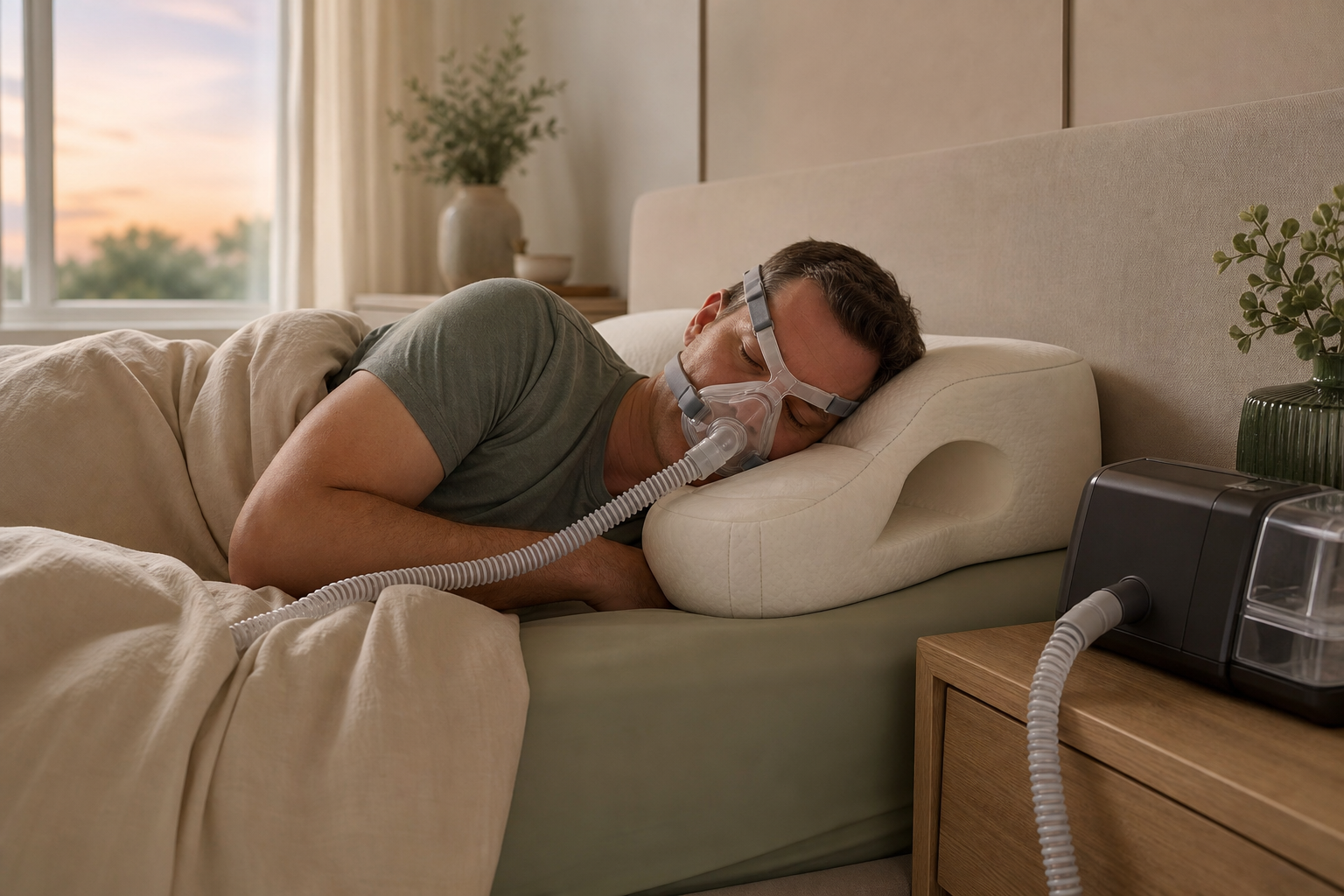
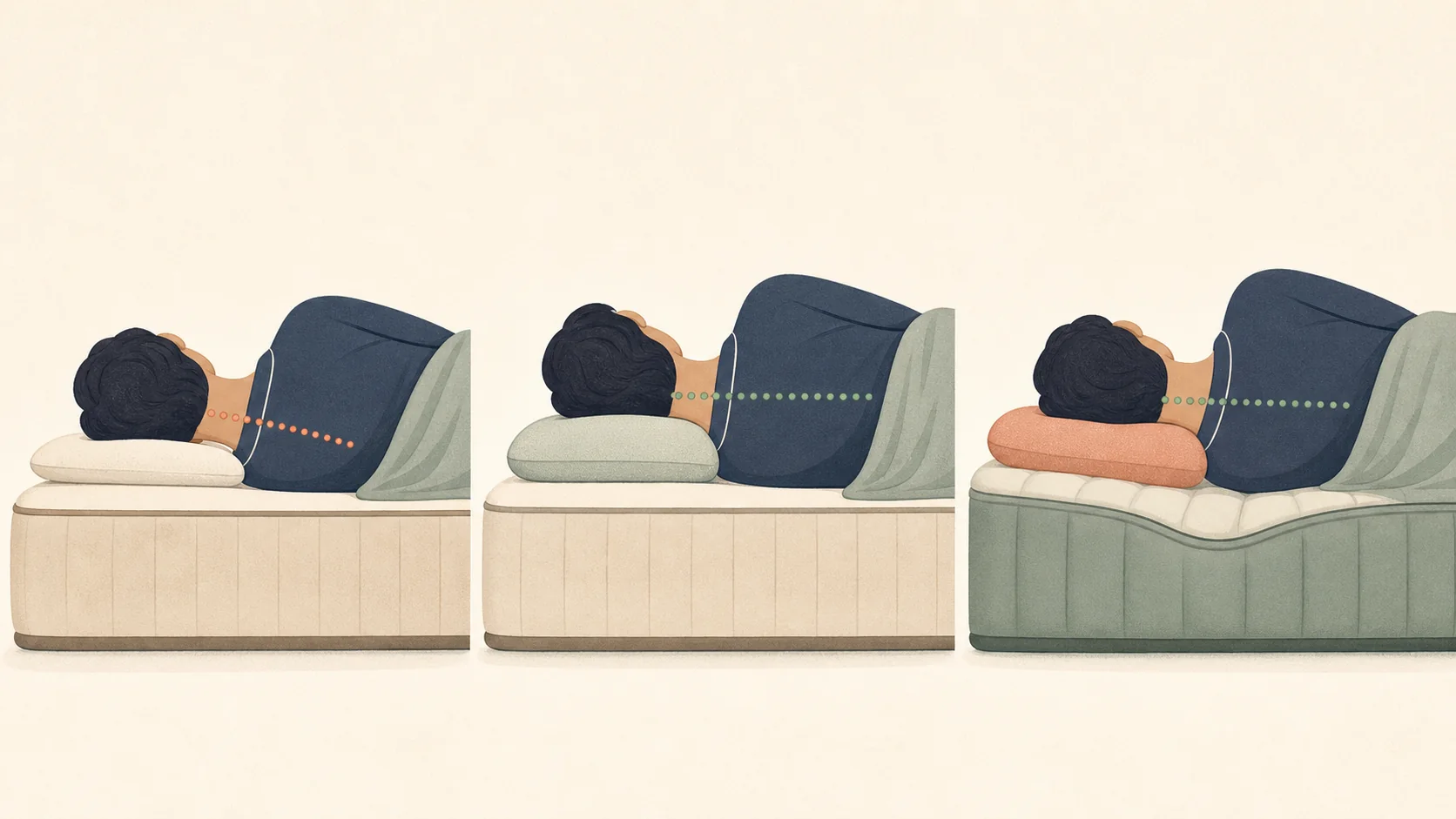
This page is specifically about keeping a prescribed mask and hose clear of the pillow. Use our side-sleeper pillow guide separately to judge the loaded height your neck and shoulder need.
Important: Do not stop PAP, change pressure settings or tighten a mask excessively because of a pillow recommendation. Persistent leaks, skin injury, breathlessness, severe daytime sleepiness or poor treatment results need review by your sleep clinician or equipment provider.
Products to compare
Pillows that fit this use case
These are not treatment claims or paid placements. Confirm current size, seller, price, and return terms before ordering.
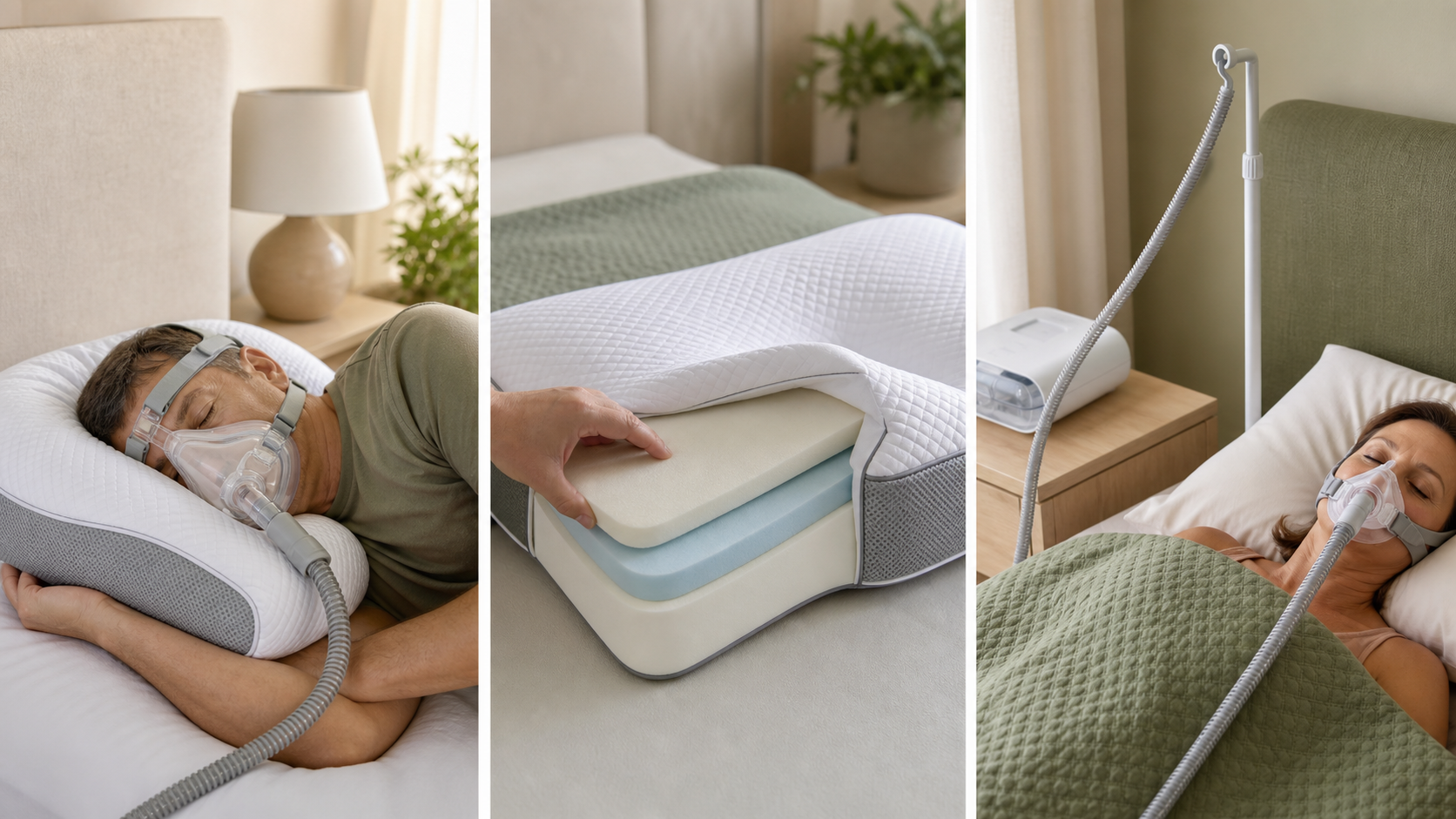
Best for two-height adjustment
Lunderg Memory Foam CPAP Pillow
Cutouts on both sides, two neck-edge profiles and a removable 1.1-inch foam layer. Lunderg publishes a 5.5-inch full height and 4.4-inch lower setup. The important limitation is feel: the maker describes it as firm memory foam and explicitly warns that people who dislike that material probably will not like this pillow.
Verify specifications at Lunderg official CPAP Pillow specificationsCheck Lunderg on AmazonBest for a wider loft range
Contour CPAPMax 2.0
Multiple removable layers, bilateral mask recesses, a hose tether and two sleep surfaces. Contour publishes adjustment from about 2.25 to 5.25 inches and a 20 by 13-inch footprint. That compact width and structured contour can feel restrictive if you move far across a normal pillow.
Verify specifications at Contour Living official CPAPMax specificationsSee the closest option on AmazonBest when hose pull is the actual problem
Freestanding CPAP Hose Holder
This is an accessory, not a pillow. It can suspend part of the hose above the bed so turning creates less direct pull at the mask. Keep the base stable, preserve enough slack, follow the equipment instructions and never route tubing around the neck or across a walkway.
Verify specifications at Resmed CPAP setup and equipment guidanceSee the closest option on AmazonAs an Amazon Associate we may earn from qualifying purchases. OneLink may localize the destination to your country and available catalog.
Section 1
Start with the interference, not the word CPAP
A CPAP pillow is useful only when the ordinary pillow physically pushes the mask, headgear or connector out of place. Nasal pillows occupy little space near the nostrils; nasal and full-face masks extend farther over the cheeks; top-of-head and front hose connections pull in different directions. Write down the exact mask model, size, hose connection and dominant sleep position before comparing pillow shapes.
Run a no-cost check first. Put on the mask while lying in your normal position and have a partner or mirror confirm whether the pillow edge touches the seal. If the seal stays clear but the hose tugs when you turn, changing the pillow may solve the wrong problem. If the mask is being compressed into the cheek, a bilateral cutout becomes relevant.
- Mask edge touches the pillow: compare cutout depth and position
- Head feels too high or low: prioritize removable loft layers
- Hose pulls while turning: correct routing or consider a holder
- Leak continues without pillow contact: inspect fit, wear, cleaning and settings with the provider
Section 2
Best adjustable choice: Lunderg Memory Foam CPAP Pillow
Lunderg publishes a 14.5 by 21.6-inch footprint, two different neck-edge shapes and a removable 1.1-inch bottom layer. The complete pillow is listed at 5.5 inches high; removing the layer lowers it to 4.4 inches. Cutouts on both sides allow a left- or right-facing mask to extend beyond the support surface, and two fitted cases are included.
The limitation is just as important as the feature list. This is a firm molded memory-foam pillow, not a soft conventional bed pillow. The maker says the foam core cannot be washed and notes that people who dislike memory foam should not choose it. A side sleeper on a firm mattress may need more loaded height, while a back sleeper may find even the lower setup excessive; use the opened-item return rules as part of the decision.
Section 3
Most height settings: Contour CPAPMax 2.0
Contour CPAPMax uses removable layers to publish a broader adjustment range of roughly 2.25 to 5.25 inches. Its footprint is 20 by 13 inches, with side pressure-free zones for the mask, a shoulder recess and an integrated hose tether. One sleep surface combines ventilated foam with mesh; the reverse adds a softer fiber-filled feel.
More parts do not guarantee easier fit. A 13-inch depth is compact compared with many standard pillows, the center contour determines where the head lands, and the layer stack changes both height and support. Current first-party reviews include people who found it too firm or saw no improvement in mask data, which is useful counterevidence: the pillow should be judged on mechanical clearance and comfort, not promised treatment results.
Section 4
When a hose holder is more useful than a new pillow
A hose holder addresses drag rather than cheek contact. It lifts part of the tube above the mattress, allowing a controlled loop to follow the sleeper when turning. This is the more precise intervention when your existing pillow has the right loaded height and never touches the mask, but the tube catches on bedding or pulls from the machine side.
Place the holder on a stable surface and leave enough slack to turn without tension. Keep tubing away from the neck, children, pets and the walking route. Resmed also advises positioning the machine lower than the head to help manage condensation; a holder does not override equipment, humidifier or heated-tube instructions.
Section 5
Match cutout geometry to mask and sleep position
For a side sleeper with a wide full-face mask, measure from the nose centerline to the mask's outermost cheek edge and compare that reach with the product's cutout. The mask should extend into free space without leaving the forehead or head unsupported. A shallow decorative notch can look suitable in a photo while still pressing the cushion sideways.
Back sleepers use the central well more than the side recess, so loaded loft becomes the main filter. Combination sleepers need usable cutouts on both sides and enough central surface to roll without falling into an edge. Stomach sleeping with PAP creates additional neck rotation and hose-routing problems; follow individual clinical and mask-provider advice rather than treating a CPAP label as approval for every position.
Section 6
A pillow cannot diagnose or treat the cause of a leak
Mask leakage can also come from the wrong size, worn cushion, facial oil, displaced headgear, mouth leak with a nasal interface or damaged equipment. Fit the mask in the position in which it is actually used. Do not keep tightening straps to compensate for a leak: excess tension can distort the cushion and increase pressure on the skin.
A small randomized trial of a side-cutout gel pillow found improved pillow preference but did not show a significant reduction in residual apnea-hypopnea index or mean CPAP leak. That is the correct evidence boundary: a shaped pillow may improve comfort and reduce direct interference for a particular sleeper, but it is not a substitute for therapy data and clinical follow-up.
Section 7
Cover care and returns decide whether the design is practical
A fitted cover should follow the cutout rather than bridging it tightly. Lunderg includes two fitted cases and says the foam core is not washable. CPAPMax lists a zippered quilted mesh/fiber-fill cover. Follow the exact care label, keep foam dry and verify that replacement fitted covers remain available before treating a specialty shape as a long-term purchase.
Specialty pillows may be treated as personal bedding by a seller. Confirm whether an opened pillow can be returned, which seller fulfills the Amazon listing and whether direct-manufacturer comfort guarantees apply to marketplace purchases. Keep the package and test with a clean, non-distorting protector when the policy permits it.
Section 8
A three-night mechanical fit check
Night one is the baseline with the normal pillow: note visible mask contact, hose pull, position and the machine or app's usual leak information without changing pressure. Night two changes one variable—either the cutout pillow at its lower setting or the hose route. Night three adjusts only the removable layer. This does not diagnose therapy effectiveness; it separates two physical problems that are often mixed together.
Stop the trial if skin damage, breathing discomfort, new severe pain or clearly worse mask stability appears. If leakage or sleepiness remains problematic, take the observations and device data to the equipment provider or sleep clinician. The goal of the accessory is a repeatable, comfortable setup around prescribed therapy, not a better-sounding marketing claim.
Sources
Frequently asked questions
Do CPAP pillows really work?
They can reduce direct pillow contact with a mask and may improve comfort for some sleepers. Evidence does not support treating them as a replacement for PAP or assuming they will reduce apnea events or every type of leak.
What is the best pillow to use with a CPAP machine?
Choose from the actual interference: bilateral cutouts for side-sleep mask contact, adjustable loaded loft when neck height is uncertain, or a hose holder when tube drag is the main problem. Verify the shape against your exact mask.
What is the 4-hour rule for CPAP?
The phrase usually refers to an insurance or program adherence threshold, not a universal target for adequate treatment. Follow the usage plan from your clinician and payer; a pillow should support comfortable prescribed use rather than define how long therapy is needed.
What is the pillow trick for sleep apnea?
No pillow trick diagnoses or cures sleep apnea. Side positioning or upper-body elevation may be part of an individualized plan, while a CPAP pillow mainly creates space around a prescribed mask. Do not replace treatment with an ordinary pillow arrangement.