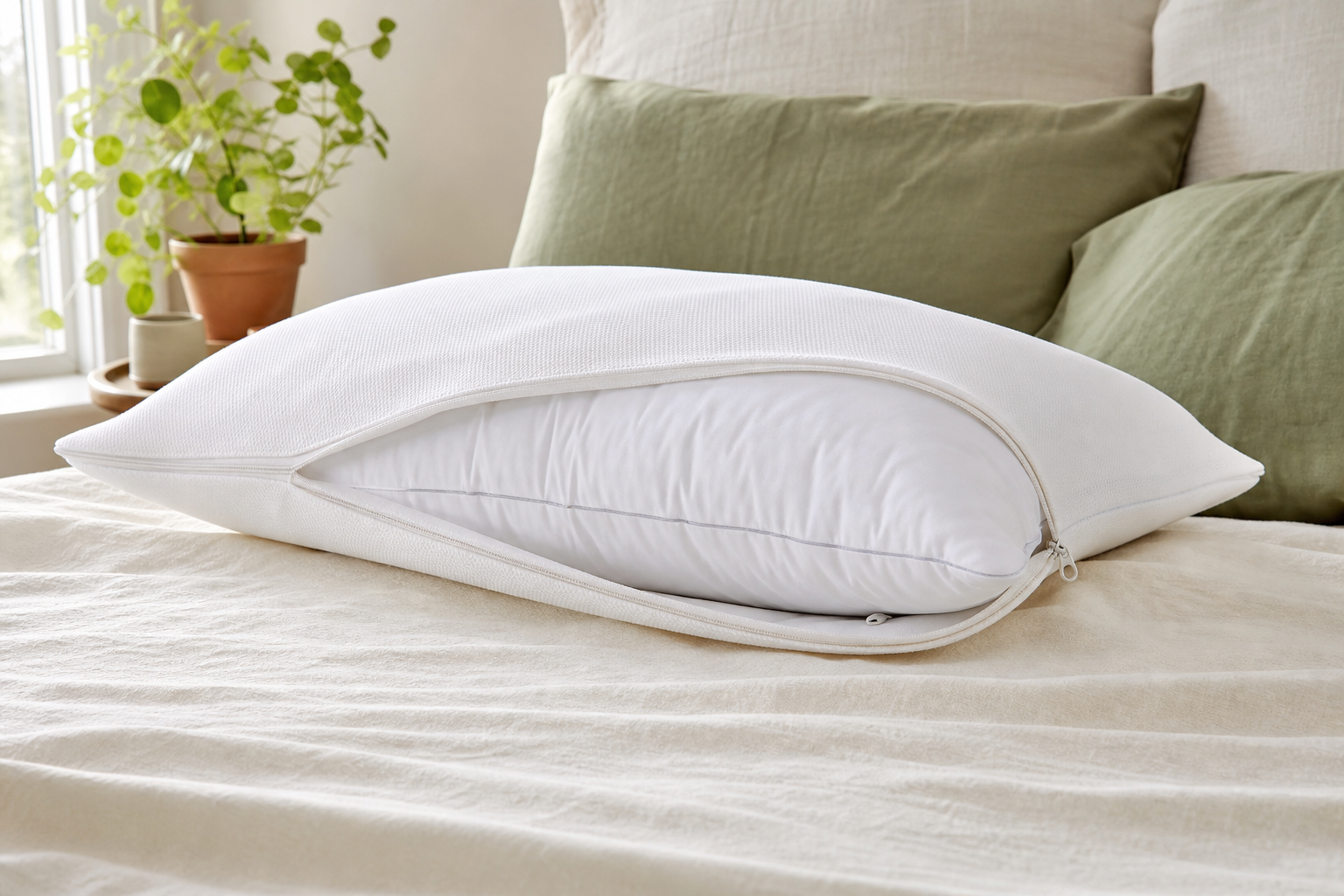
A pillow protector is a removable barrier between your pillow and pillowcase. It can reduce direct exposure to skin oils, sweat and everyday debris, but it does not make a pillow waterproof, allergy-proof or maintenance-free unless the exact product specification supports that claim.
Use this article alongside our step-by-step pillow washing guide, and first confirm which pillow construction fits your needs.
Products to compare
5 products for different priorities
This is a verifiable shortlist, not a ranking based on hands-on testing. Amazon ratings and availability change, so always check the current listing.
Waterproof zippered option
SureGuard Waterproof Pillow Protectors
Cotton-terry surface over a waterproof barrier, full zipper enclosure and machine-washable construction. Check the selected pillow size before ordering.
Budget allergy-focused option
AllerEase Maximum Pillow Protector
A zippered encasement using the brand's Allergy Defense fabric. Compare the Maximum model carefully with its waterproof and cotton variants.
Full waterproof encasement
Protect-A-Bed AllerZip Pillow Protector
A polyester encasement with polyurethane laminate and fine-tooth zipper. The maker specifies hot-water washing and controlled tumble drying.
Published allergen-barrier detail
Mission: Allergy Premium Microfiber Encasement
The maker publishes a 2-micron mean pore size, bound seams, zipper flaps and a lightweight microfiber construction. It is not presented as a waterproof membrane cover.
Cotton without a waterproof membrane
National Allergy 100% Cotton Pillow Cover
A tightly woven cotton encasement with an auto-locking zipper and inner zipper barrier. The current official page describes it as a limited-quantity closeout.
What a pillow protector actually does
A pillowcase is primarily the visible sleep surface. A protector adds a second, usually zippered layer around the pillow. That extra layer receives much of the routine moisture and residue before it reaches the shell of the pillow itself.
Protection depends on construction. A loosely woven cotton cover behaves differently from a membrane-backed encasement, and a zipper does not automatically create a sealed allergen barrier. Read the fabric, closure and care specification rather than relying on the word protector.
When it is a useful purchase
A washable protector is most useful when the pillow core is difficult to clean, when you want to reduce staining, or when the manufacturer requires a protector for hygiene or trial eligibility. It can also make routine care easier because the removable layer is simpler to wash than many foam, latex, feather or adjustable-fill cores.
It cannot rescue a pillow with the wrong loft, damaged foam or persistent odor. Fit and condition still matter more than adding another layer.
Choose breathable or waterproof carefully
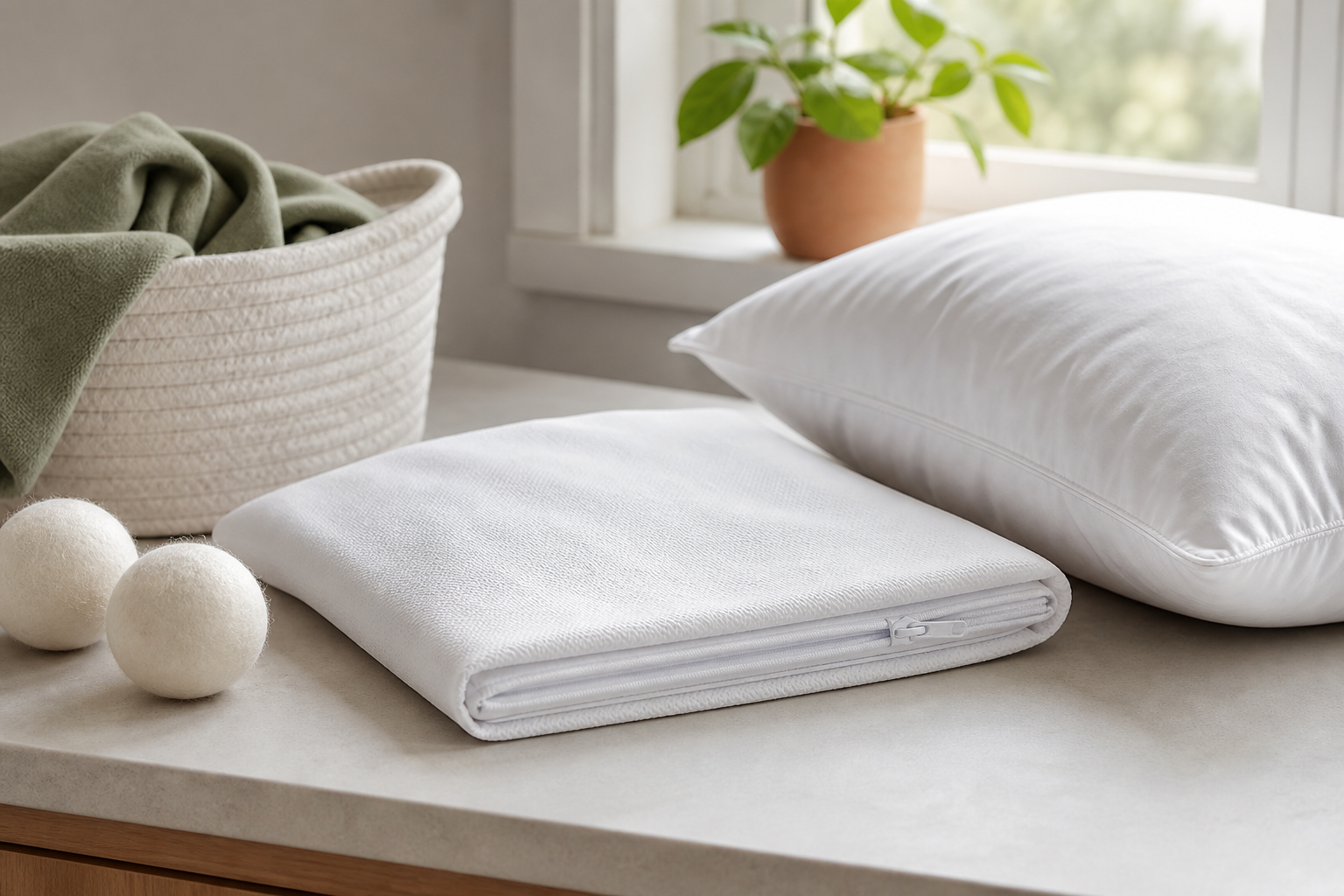
Simple cotton or Tencel-style textile protectors prioritize airflow and a familiar fabric feel. Membrane-backed models add stronger liquid resistance but may feel warmer or sound different. Waterproof is a product-specific performance claim, not a synonym for every zippered cover.
For allergy-focused shopping, check whether the maker publishes pore size, full encasement construction and washing instructions. No protector replaces clinical advice or source control for a diagnosed allergy.
Ready to protect your pillow?
Compare the current fabric, closure, size and care instructions before buying.
Fit, closure and fabric checklist
Match the protector to the pillow dimensions and depth. A cover that is too tight can compress loft; excess fabric can bunch under the pillowcase.
- A protected zipper or smooth closure
- Enough room for the pillow to recover fully
- A care temperature you can realistically maintain
- Fabric and membrane details stated by the manufacturer
- Return terms that allow you to assess feel and noise
How often should you wash it?
Follow the protector label and respond to actual exposure. Many people wash a protector less often than the pillowcase but more often than the pillow core. Wash sooner after illness, spills or heavy perspiration when the label permits it.
Dry it fully before replacing the pillow. Heat limits differ, especially for waterproof membranes. Do not copy generic high-heat advice onto an unknown product.
Our conclusion
A well-fitted, washable protector is a sensible low-complexity purchase for most pillows, especially when the core has restrictive care instructions. Choose it for easier maintenance and reduced direct soiling—not as a cure for allergies, overheating or poor pillow fit.
Frequently asked questions
Do pillow protectors make you hot?
Some membrane-backed protectors can reduce perceived airflow, while lightweight woven protectors may feel closer to a normal pillowcase. Construction matters more than the product name.
Do you put a pillowcase over a pillow protector?
Yes. The protector surrounds the pillow and the pillowcase remains the normal outer sleep surface.
Can a pillow protector stop dust mites?
Only make that assumption when the product is a complete encasement and the manufacturer provides relevant barrier specifications. A generic cover is not automatically mite-proof.
About the editorial team
The Pillow Advisor checks product specifications, care instructions and reliable expert sources. We do not invent hands-on testing or medical claims.