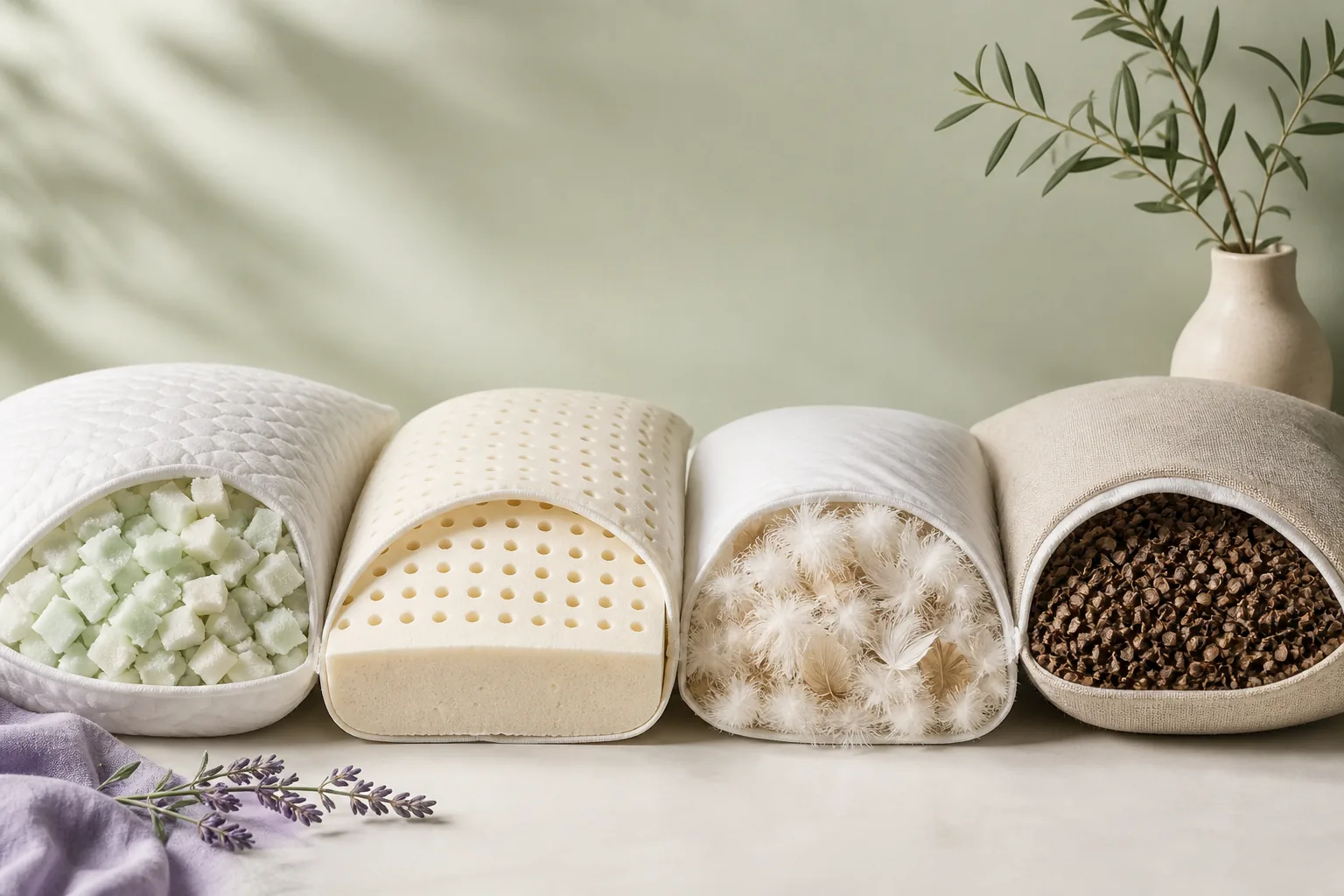
Fluffing can improve distribution, but it cannot reverse worn-out support. Use our pillow replacement guide to separate a temporarily compressed pillow from one whose fill or structure has reached the end of its useful life.
Important: Never use a dryer, direct heat or aggressive bending unless the pillow manufacturer allows it. A damp pillow must be dried safely before it is fluffed or returned to bed.
Products to compare
Pillows that fit this use case
These are not treatment claims or paid placements. Confirm current size, seller, price, and return terms before ordering.
Reducing future staining
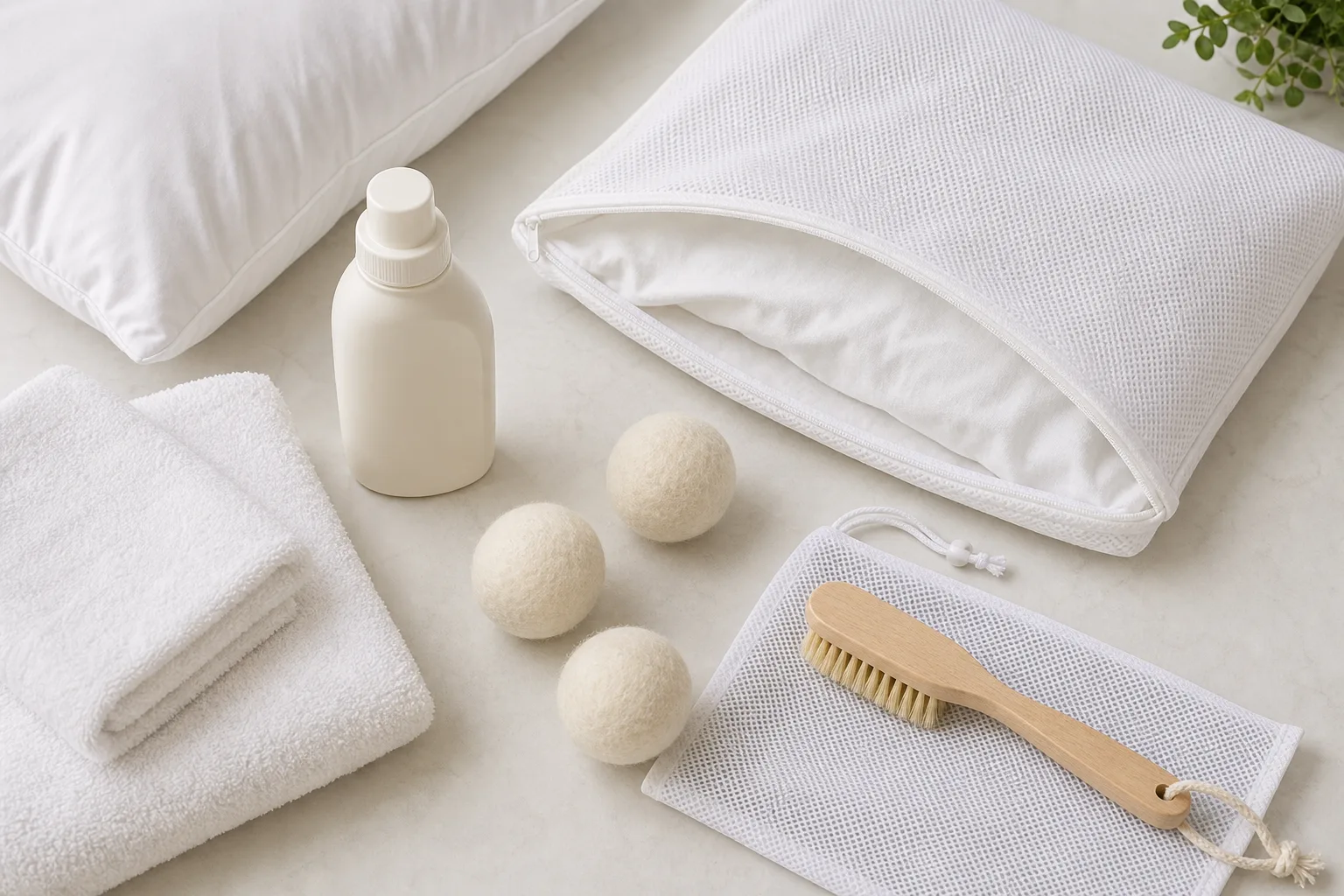
Breathable zippered pillow protector
A washable barrier can catch oils and moisture. Check size, fabric, and care label; waterproof membranes may sleep warmer.
Verify specifications at Allergy Standards pillow encasing guidanceCompare pillow protectorsLabel-approved tumble drying
Unscented wool dryer balls
Can help move approved down or fiber fill during tumble drying. Use only when the pillow label permits machine drying.
Verify specifications at Whirlpool guidance on dryer ballsCompare dryer ballsAs an Amazon Associate we may earn from qualifying purchases. OneLink may localize the destination to your country and available catalog.
Section 1
First decide whether fluffing can help
Fluffing moves loose fill and introduces air between clusters; it does not manufacture new material. It can correct a down pillow that compacted overnight or fiber that migrated toward the edges. It cannot repair crumbling foam, broken internal chambers or fill that remains permanently matted after correct cleaning and drying.
Remove the pillowcase and protector so you can see the shape. Check for open seams and confirm the pillow is completely dry. Working a wet pillow can push moisture deeper and make down or fiber clump more tightly.
Section 2
Use the opposite-sides method for loose fill
Hold the left and right edges, compress them gently toward the middle and release. Repeat from the top and bottom. Then place the pillow flat and use your fingertips to guide dense areas toward visibly empty corners without pulling hard on the shell.
Rotate the pillow and repeat in short rounds. Violent punching looks dramatic but places more stress on stitching and internal baffles. A controlled squeeze-and-release motion redistributes down, feather and many synthetic clusters with less risk.
Section 3
Treat adjustable shredded fill deliberately
An adjustable pillow can feel lumpy when fill settles unevenly or too much material remains inside. Open only the manufacturer-designated access zipper, keep loose pieces away from children and pets, and move small amounts rather than emptying the entire liner onto the bed.
After adjustment, close every zipper fully and lie on the pillow for several minutes. The goal is not maximum height; it is an even surface at a loft that keeps your neck comfortable in your usual sleep position.
Section 4
Do not force solid foam or molded latex
A solid core is designed to recover according to its own material and shape. Bending, punching, kneading or heating it can tear cell structure or distort a contour. Remove and wash only approved covers, air the core as directed and let temperature-sensitive foam recover naturally at normal room conditions.
Tempur-Pedic publishes a gentler roll-and-unroll refresh for certain filled pillows while warning not to submerge inserts unless their instructions permit it. That example shows why construction-specific manufacturer advice matters more than a universal viral trick.
Section 5
A dryer is optional, not the default
Some labels permit a no-heat or low-heat tumble with clean dryer balls, which can separate approved down or fiber fill. Other pillows must never enter a dryer. Read the tag for both temperature and cycle restrictions before using mechanical fluffing.
Do not improvise with tennis shoes, high heat or long unattended cycles. Added objects can transfer dirt or damage a shell, and excess temperature can harm fill. Hand-fluffing is the lower-risk starting point when the label is unclear.
Section 6
Know when the result is only cosmetic
Test the pillow in your normal position after its shape settles. If it immediately collapses, develops a hard ridge, leaves your neck unsupported or needs repeated intervention every night, the issue is probably not just distribution.
Review age, odor, stains, damaged seams and loss of resilience together. A freshly fluffed pillow can look full in a photograph while providing little useful support under the weight of a head. Replace it when function no longer returns.
Steps
- Remove outer layers and inspect: Confirm the pillow is dry and free from torn seams before moving the fill.
- Compress opposite sides: Gently push left and right edges inward, release, then repeat from top and bottom.
- Redistribute dense areas: Guide loose clusters toward empty corners with fingertips instead of punching the shell.
- Follow construction-specific instructions: Adjust shredded fill only through its intended liner and do not knead a molded solid core.
- Retest support in bed: Judge the settled pillow under load; replace it if support and evenness do not return.
Sources
Frequently asked questions
How do I make my pillows fluffy again?
For loose fill, remove the case, squeeze and release opposite sides, then redistribute dense clusters toward empty areas. Drying or a label-approved air-fluff cycle may help when moisture caused clumping.
Does putting pillows in the dryer fluff them?
It can help some label-approved down or fiber pillows, but many foam and latex pillows cannot be tumble-dried. Use only the named cycle and heat level on the care tag.
How do hotels keep pillows fluffy?
There is no single hotel method or fill. Frequent rotation, protectors, laundering schedules and replacement all affect appearance. Copy the care instructions for your pillow rather than assuming a commercial process is safe at home.
Why is my pillow flat after washing?
The fill may still be damp or clumped, detergent residue may remain, or the material may be worn. Complete the approved rinse and drying process before judging whether fluffing can restore it.