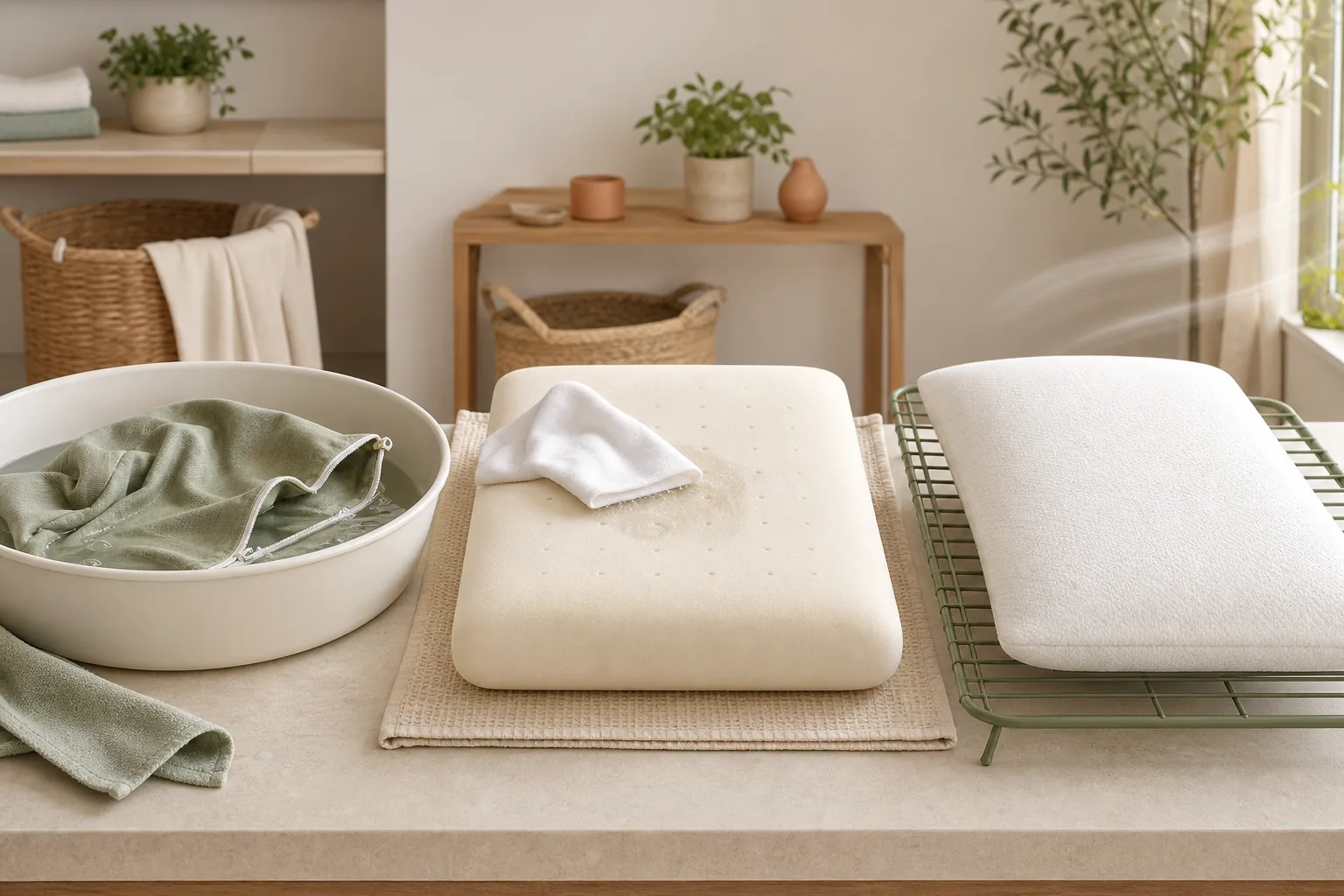
Drying is the final—and often longest—stage of our complete pillow-washing guide. The correct method depends on whether the inner fill is down, fiber, solid foam, shredded foam, latex or a mixed construction.
Important: The care label overrides general advice. Never put foam, latex or another heat-sensitive pillow in a tumble dryer unless its own manufacturer explicitly permits it.
Products to compare
Pillows that fit this use case
These are not treatment claims or paid placements. Confirm current size, seller, price, and return terms before ordering.
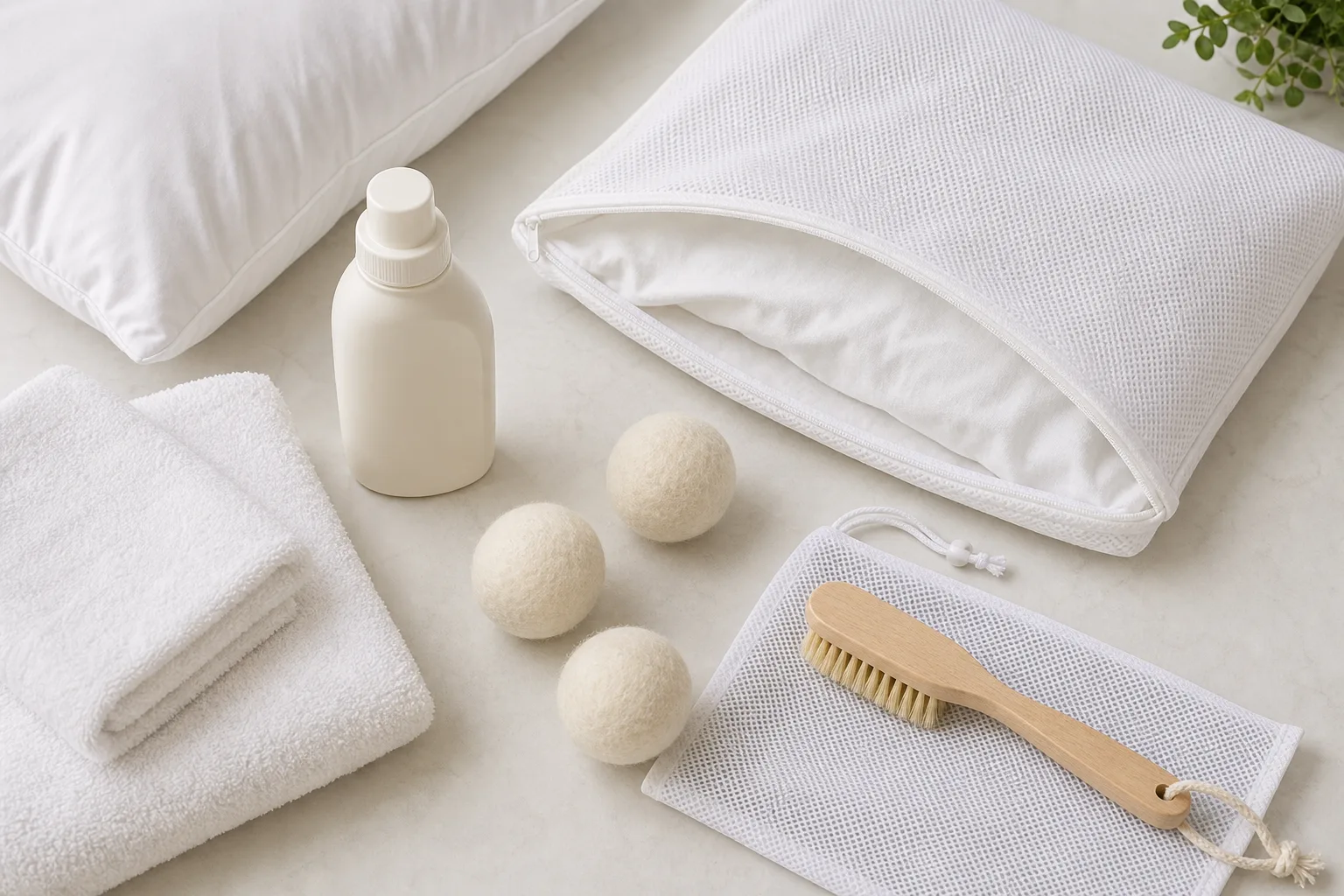
Reducing future staining
Breathable zippered pillow protector
A washable barrier can catch oils and moisture. Check size, fabric, and care label; waterproof membranes may sleep warmer.
Verify specifications at Allergy Standards pillow encasing guidanceCompare pillow protectorsLabel-approved tumble drying
Unscented wool dryer balls
Can help move approved down or fiber fill during tumble drying. Use only when the pillow label permits machine drying.
Verify specifications at Whirlpool guidance on dryer ballsCompare dryer ballsAs an Amazon Associate we may earn from qualifying purchases. OneLink may localize the destination to your country and available catalog.
Section 1
Read the drying instruction before the wash starts
Do not wait until you are holding a saturated pillow to discover that it needs two days of air-drying. Read the label first, identify every removable layer and plan a dry alternative for that night. A machine-washable cover can have a non-washable, non-tumble-dry core.
Words such as tumble dry low, air fluff, line dry and dry flat describe different processes. A crossed-out tumble-dryer symbol means that dryer balls or a shorter program do not make machine drying safe. Photograph a fading care label so its restrictions remain available later.
Section 2
Machine-dry only label-approved fills
Move washable down, feather or synthetic pillows to the dryer promptly so wet fill does not sit compressed. Whirlpool advises checking the tag and describes low heat for synthetic fill and a no-heat air-fluff setting for down or feather. Your pillow manufacturer remains the deciding source because shells, chambers and finishes differ.
Dry two compatible pillows together only when the dryer has enough room for them to move. Overfilling slows evaporation and hides dense wet zones. Clean dryer balls can improve movement, but they cannot dry a center that never receives airflow.
Section 3
Pause, rotate and break up wet clusters
Stop the cycle periodically and feel the corners, seams and middle. Turn each pillow and gently pull apart down or fiber clumps with clean hands. This redistributes fill and exposes damp material that has stayed insulated inside a compact ball.
Do not use high heat simply to finish sooner. Excess heat can shrink a shell, affect adhesives, scorch natural fill or change synthetic fibers. More time on the approved low or no-heat program is safer than raising the temperature beyond the label.
Section 4
Air-dry foam and latex flat
Many solid memory foam and latex cores should not be tumble-dried or washed. If the maker permits spot cleaning, place the core flat on a clean ventilated rack and turn it as instructed. A fan can circulate room air; a radiator, hair dryer, heated blanket or direct high heat can damage responsive foam.
Support the whole pillow rather than hanging a heavy wet core from one edge. Hanging can stretch, tear or distort softened material. Shredded foam is not automatically washable: the inner liner and fill still need explicit care instructions.
Section 5
Test the center instead of trusting a timer
Drying time varies with fill mass, humidity, airflow, washer spin speed and machine design. A universal number of minutes is therefore unreliable. Press several places and compare their temperature and weight. A cool, heavy or compact center usually indicates retained moisture.
Smell is another check, but fragrance products can obscure it. The pillow should have no musty or wet-animal odor, and fill should move freely rather than form cold knots. When uncertain, continue the approved drying method and reassess later.
Section 6
Do not trap residual moisture
Wait before reinstalling a protector or putting the pillow in a cupboard. A zippered or waterproof layer slows the last evaporation. Place the dry pillow in a clean room, then check it once more after it has cooled; dryer warmth can temporarily hide a cool damp center.
If a pillow remains smelly, lumpy or abnormally heavy after thorough label-safe drying, do not keep repeating aggressive cycles. Deep contamination, damaged foam or deteriorated fill may make replacement more sensible than another wash.
Steps
- Identify the fill and read the label: Confirm whether the complete pillow may be tumble-dried, air-dried or only spot-cleaned.
- Remove excess water without twisting: Use the approved spin cycle or gentle pressing; never wring a foam or filled pillow.
- Choose the exact permitted method: Use label-safe low or no heat for approved fills, or flat room-air drying for non-tumble-dry materials.
- Rotate and separate clumps: Pause regularly so corners and dense interior sections receive airflow.
- Check the hidden center: Continue until every zone is dry, light and free from cool clumps or musty odor.
Sources
Frequently asked questions
How long does it take for pillows to air dry?
There is no dependable universal time. Fill, thickness, room humidity and airflow differ. Judge the center rather than the clock and allow substantially longer than the surface needs.
How do you dry a wet pillow fast?
Use the fastest method the label actually permits: an effective washer spin, ample dryer movement on the approved setting, or strong room airflow around a flat air-dry pillow. Do not add unapproved high heat.
Can you put pillows in the dryer?
Some down, feather and synthetic pillows can enter a dryer; many foam and latex pillows cannot. Check the complete pillow’s label, not only the removable cover.
How do you know if a pillow is completely dry?
Check its middle, seams and corners after it cools. It should feel evenly light and dry, with no cold dense sections, damp clumps or musty odor.