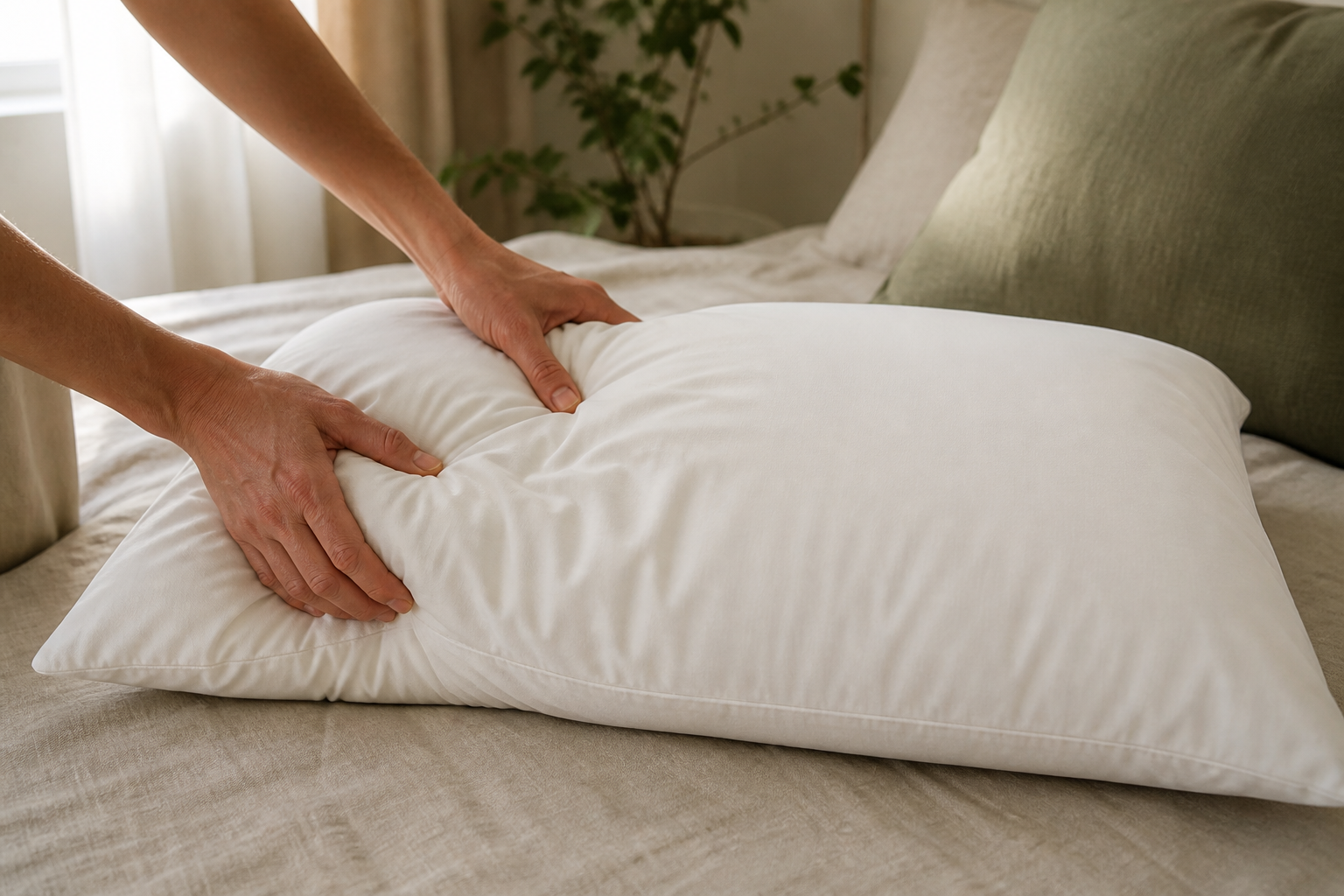
A lumpy pillow can often be improved when loose polyester, down, feather or shredded fill has simply migrated or dried in clusters. Start with the care label, make sure the center is completely dry, then loosen small clumps by hand before considering a dryer. Do not wash, heat or aggressively knead a solid foam or molded latex core unless its own manufacturer explicitly allows it. If the material is crumbling, permanently compressed, musty or no longer supportive, replacement is safer than another rescue cycle.
If the pillow was just washed, finish our complete pillow drying check before trying to redistribute the fill.
For routine shape maintenance rather than hard clusters, use the gentler pillow fluffing guide.
Products to compare
3 products for different priorities
This is a verifiable shortlist, not a ranking based on hands-on testing. Amazon ratings and availability change, so always check the current listing.
Label-approved tumble-dryer rescue
Smart Sheep 100% Wool Dryer Balls, 6-Pack
The maker lists six hand-felted New Zealand wool balls, approximately 71 millimeters each. They create separation in a moving dryer load but do not make foam or no-dryer pillows safe to tumble.
A refillable synthetic pillow or sewn project
Fairfield Poly-Fil Premium Polyester Fiber Fill
Fairfield describes this as 100% polyester fiberfill for craft and home-decor projects, sold in multiple bag sizes. Use it only when the pillow has intended fill access or can be safely resewn.
Reducing direct soil on a restored pillow
National Allergy BedCare All-Cotton Pillow Protector
A zippered 100% cotton barrier protector available in several sizes and designed to be machine washable. It protects a pillow after recovery; it does not remove existing lumps.
Can a lumpy pillow be fixed?
Sometimes. Loose fill can migrate into corners, mat under repeated pressure or cling together while damp. If the fibers or feathers are still resilient, patient hand separation and complete drying may restore a more even surface. Fairfield, a polyester-fiberfill maker, specifically advises waiting until an item is completely dry and then kneading from the outside to redistribute shifted fill.
A lump is not always movable fill. Solid memory foam can crack or develop a permanent body impression, latex can crumble, and aged polyester can fuse into hard knots. Those changes cannot be reversed by adding dryer balls. Stop if the shell is torn, foam is shedding, the odor is musty or sour, or the pillow stays uneven after one label-approved rescue attempt.
Identify the fill before choosing a method
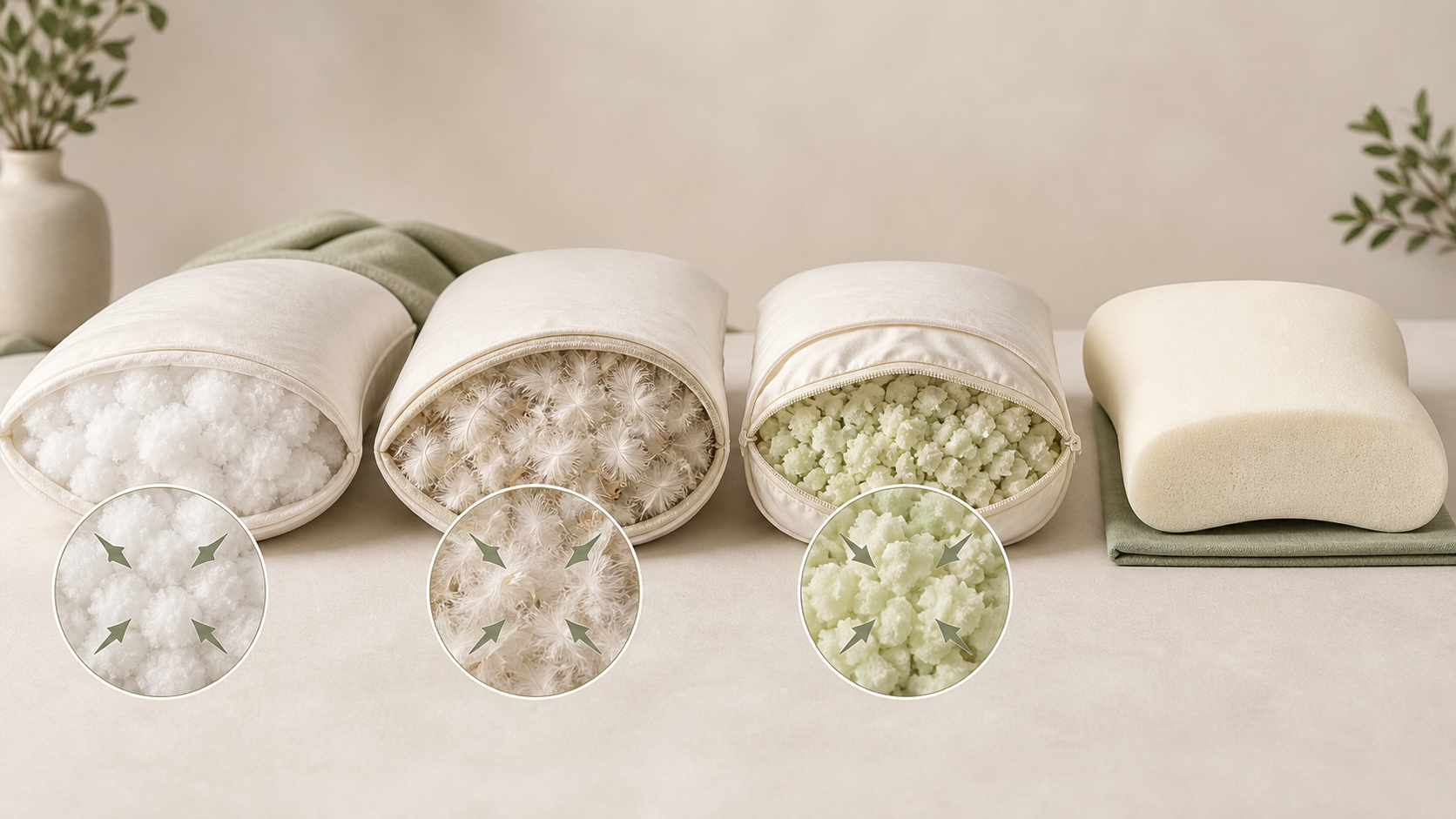
Read the sewn-in label and open only a manufacturer-provided zipper. A loose polyester or down-alternative pillow usually feels like many soft tufts. Down and feather feel light and mobile, sometimes with detectable quills. Shredded foam consists of discrete springy pieces inside a liner. Solid memory foam and molded latex are one continuous core and should not be treated like loose laundry fill.
If the label is missing, choose the least aggressive option: massage through the closed shell, keep the core dry and avoid heat. Tempur-Pedic says not to wash or submerge its pillow insert unless the exact care instructions say it is washable; its solid TEMPUR material is refreshed by gently rolling and unrolling, not by laundering.
- Loose polyester or down alternative: hand-separate clusters; dryer only if the label permits
- Down or feather: redistribute gently and dry completely on the maker's setting
- Shredded foam: spread pieces through the liner; follow the exact wash instructions
- Solid memory foam: do not machine wash or tumble dry unless explicitly approved
- Molded latex: avoid heat, twisting and unapproved washing
How to break up lumps by hand
Remove the pillowcase and protector. Place the closed pillow on a clean, dry surface. Pinch one small clump between both hands through the shell and gently pull the material apart; do not yank the seam. Work from the largest knots toward thin areas, then push loosened fill from crowded corners back toward the center. Rotate the pillow and repeat.
For a concrete five-minute pass, divide the surface mentally into six sections. Spend about 30 seconds on each section, then hold opposite short ends and compress and release them like an accordion. Finish by smoothing the fill edge to edge. If the pillow feels cool or damp in the center, pause and dry it correctly; manipulation cannot solve moisture trapped inside.
Does the care label allow tumble drying?
Wool dryer balls can help separate loose fill during an approved cycle. Confirm the pillow's instructions and current seller before ordering.
How to fix a lumpy pillow after washing
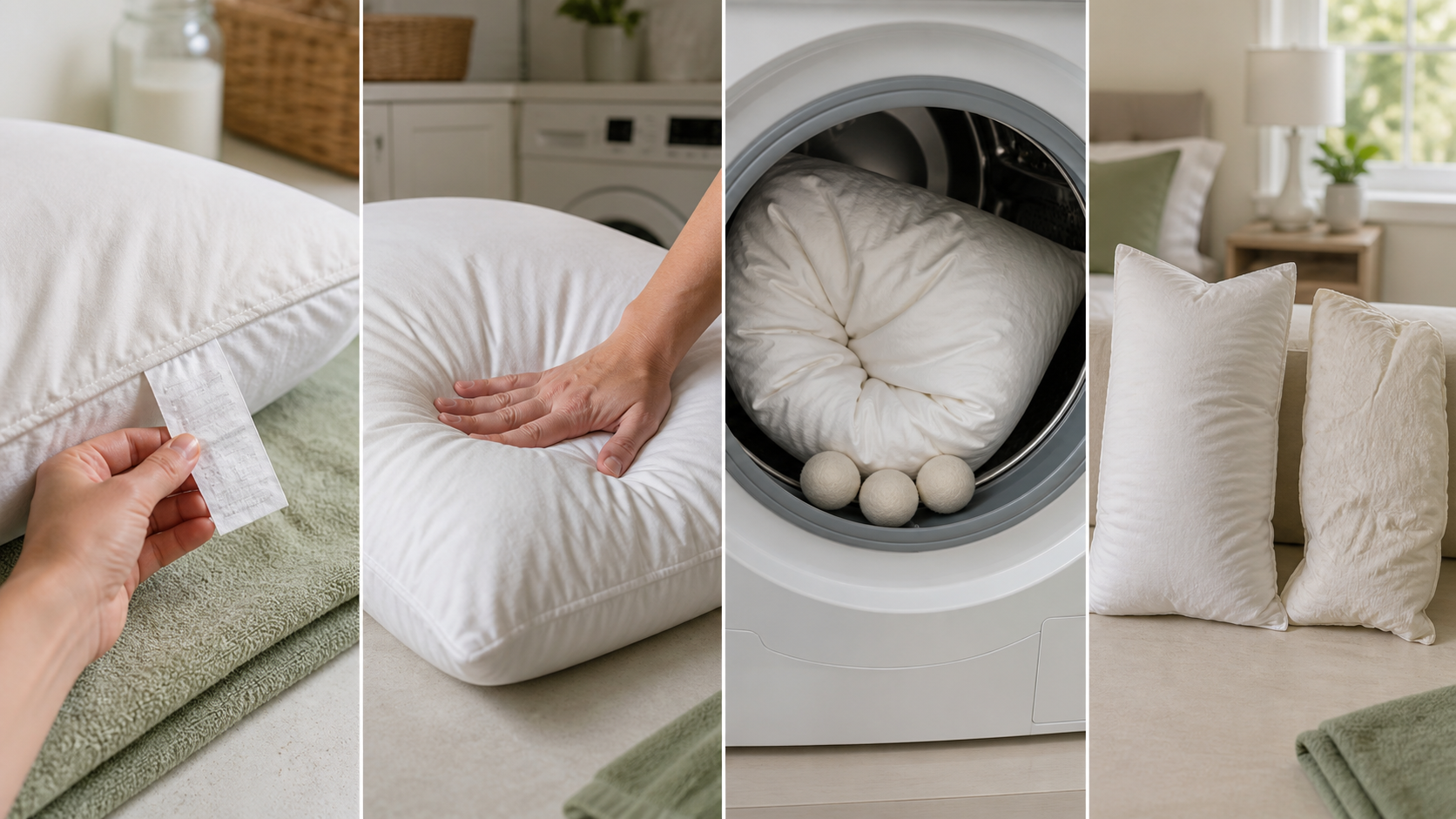
First decide whether it is still wet. Press the center with a dry towel, feel for cool dense patches and smell near the surface. A pillow can feel dry outside while damp fill remains clumped inside. Run another label-approved drying cycle rather than sleeping on it or sealing it in a protector.
If the tag allows tumble drying, use its stated temperature and enough drum space for the pillow to move. Wool dryer balls can provide mechanical separation without the smell or dye-transfer concern of improvised tennis balls, but they do not override a no-dryer label. Stop periodically, break up clusters by hand and return the pillow until the center is fully dry. Never put solid memory foam or latex in the dryer merely because this method works for fiberfill.
How to fix a lumpy pillow without tennis balls
Hands are the safest universal starting tool. For dryer-approved loose fill, clean wool dryer balls are a practical reusable alternative. Smart Sheep's current set contains six approximately 71-millimeter wool balls; use only the number appropriate to the drum and keep enough space for the pillow to tumble. The product does not make an otherwise unsafe pillow dryer-safe.
An adjustable shredded-fill pillow offers another route: unzip only the designed access, remove a small amount into a clean dry container, tease apart compacted pieces and redistribute them before closing the liner securely. Coop's care instructions show why exact models matter: its Original and Eden inner pillows can be washed and dried low, while its solid Cool+ foam pillow is spot-clean only.
Refill, protect or replace?
Refilling is reasonable only for a pillow designed with fill access or a sewn project you can open and close safely. Fairfield Poly-Fil is a verifiable 100% polyester craft and home-decor fill; it is not a universal substitute for a brand's engineered foam, down blend or certified construction. Add small teased tufts, test the loaded height and avoid overstuffing the seam.
A washable protector can reduce the frequency with which the pillow itself needs cleaning, but it cannot repair damaged fill. Replace the pillow if clumps immediately return, the core cracks or crumbles, support is permanently uneven, or odor and moisture remain after correct drying. Use our replacement checklist to separate a cosmetic shape issue from a pillow that has reached the end of its useful life.
Frequently asked questions
Can a lumpy pillow be fixed?
Loose polyester, down, feather and some shredded fill can often be redistributed if it is clean, completely dry and still resilient. Solid foam damage, crumbling latex and permanently fused fibers usually cannot be restored.
My washed pillow is now lumpy. How can I fix it?
Check the care label and make sure the center is fully dry. Separate small clumps by hand. If the label permits tumble drying, use the specified setting with enough drum space and dryer balls, pausing to redistribute fill.
How do you fix a lumpy pillow without tennis balls?
Massage clusters through the closed shell, compress and release opposite sides, and redistribute fill from crowded corners. For dryer-approved pillows, clean wool dryer balls are an alternative; they must not be used to override care restrictions.
Can you put a memory foam pillow in the dryer to remove lumps?
Do not do so unless the exact manufacturer explicitly permits it. Solid memory foam is commonly spot-clean only and can be damaged by heat and tumbling; follow the sewn-in label and official care guide.
Sources
About the editorial team
The Pillow Advisor checks product specifications, care instructions and reliable expert sources. We do not invent hands-on testing or medical claims.