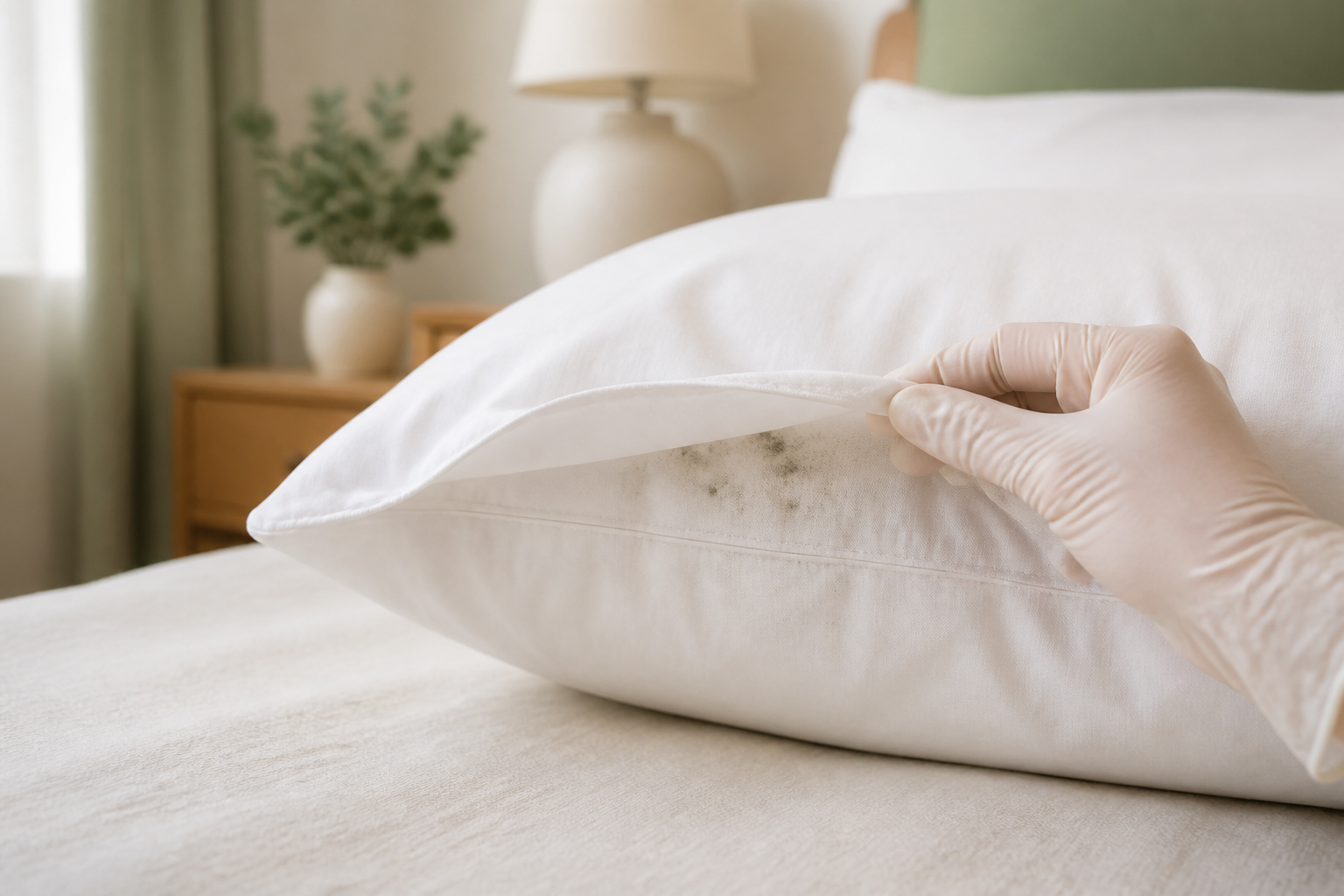
If a pillow has visible mold growth or a persistent musty odor, stop using it while you inspect the pillow and the surrounding bed. A washable outer cover may sometimes be handled according to its care label, but mold that has reached porous foam, fiber, feather, or latex fill is difficult to remove completely. In that situation, replacement is usually the safer practical decision.
If the pillow is clean and its label permits washing, follow our material-specific pillow washing guide instead of improvising with bleach or high heat.
If contamination has reached the fill or the pillow no longer dries fully, use our replacement checklist to judge condition, support, odor, and hygiene together.
First: isolate the pillow and check the whole sleep area
Remove the pillow from the bed without shaking, beating, or sniffing it closely. Place it on an easy-to-clean surface and inspect the pillowcase, protector, pillow shell, mattress surface, headboard, wall, and nearby window for dampness or spotting. The pillow may be the first visible clue rather than the only affected item.
A practical example: one small stain on a removable protector after a spill is a different case from gray-green spotting that returns through the shell or a musty odor that remains after the pillow has dried. Photograph the condition before cleaning if you rent or suspect a leak, then address the moisture source.
Is it safe to sleep on a moldy pillow?
Do not keep sleeping directly on a visibly moldy or persistently musty pillow. CDC says damp and moldy environments can cause no effects in some people but may cause nasal, eye, skin, throat, or respiratory symptoms in others. People with asthma, mold allergy, chronic lung disease, or immune suppression need particular caution.
A pillow sits directly beside the nose and mouth for hours. You do not need to identify the mold species before acting: CDC does not recommend routine home mold testing, and visible or musty growth still requires removal plus moisture control. Seek medical advice for concerning or persistent symptoms; a blog post cannot diagnose whether mold caused them.
Should you clean the pillow or throw it away?
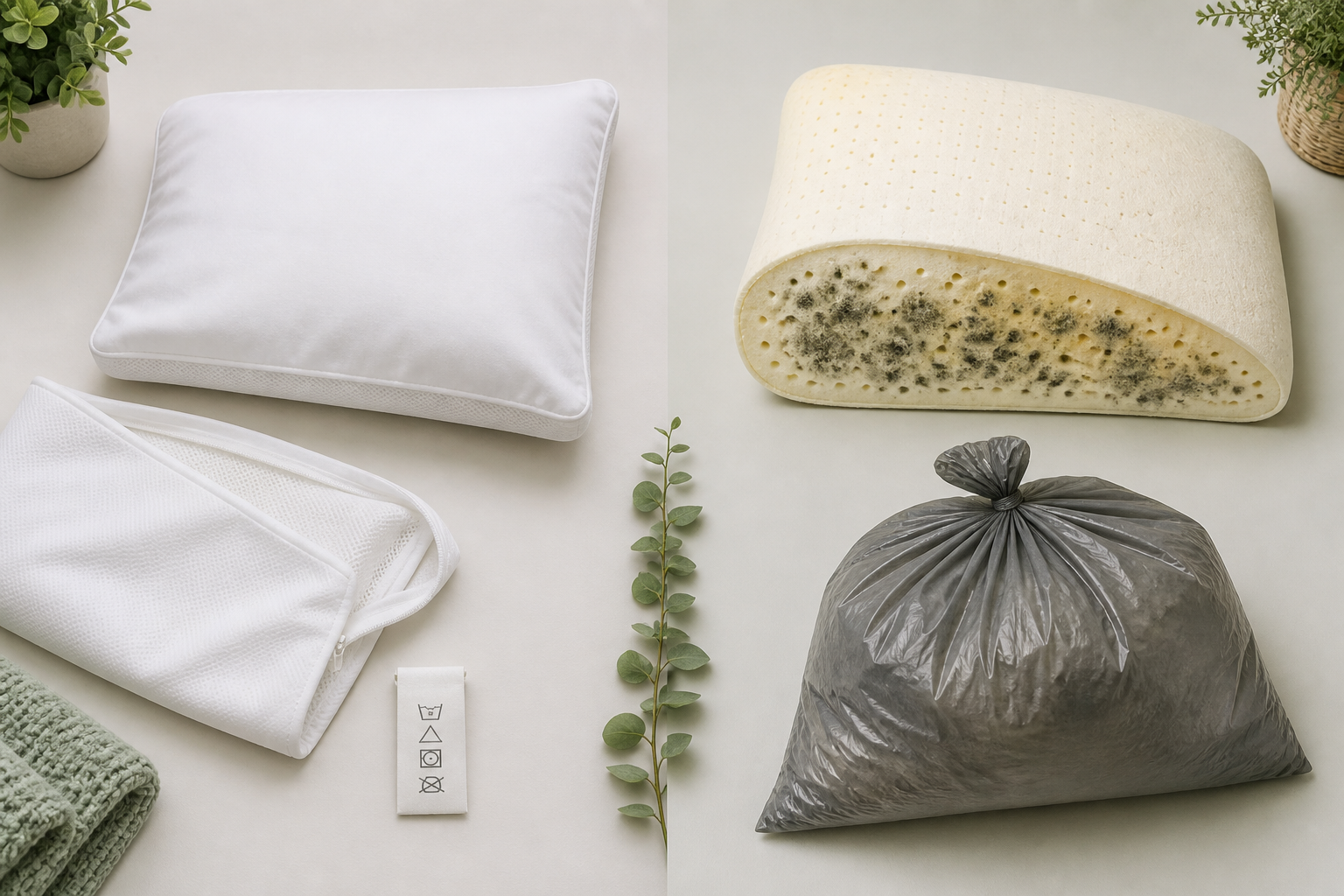
Use construction and depth of contamination as the decision points. EPA notes that mold can enter the spaces and crevices of porous materials and may be difficult or impossible to remove completely. Pillow fills are porous, so visible growth on foam or fill, widespread spotting, flood or sewage exposure, or an odor that persists inside the core are strong reasons to discard the pillow.
A limited mark on a separate, washable protector is different. Remove it carefully, follow that exact care label, wash it separately, and dry it completely. Inspect the pillow underneath. Do not assume the core is clean if moisture passed through, and do not wash solid memory foam or latex unless the pillow manufacturer explicitly permits it.
Protect the replacement—without trapping moisture
Choose a washable, correctly sized protector and follow its drying instructions. A protector helps with routine soiling but does not replace humidity control.
Can mold be washed out of a pillow?
Sometimes a machine-washable textile cover can be cleaned, but washing is not a universal cure for a contaminated pillow core. A down-alternative pillow labeled machine washable may tolerate a complete wash-and-dry cycle; a solid foam pillow can tear, retain water, or remain damp inside. The care label sets the mechanical limits, while visible mold inside porous fill changes the risk decision.
For example, if a washable polyester pillow became damp yesterday but has no visible growth or musty odor, label-compliant washing and complete drying may be reasonable. If you cut no materials but can see spotting through ventilation holes in foam, or the center still smells musty after the surface feels dry, replacement avoids pretending that surface cleaning reached the interior.
Fix the moisture source before replacing it
Replacing the pillow without correcting moisture invites a repeat. Check for a wet-hair habit, heavy night sweating, a protector that traps moisture, incomplete tumble drying, a cold exterior wall, window condensation, humidifier placement, roof or plumbing leaks, and indoor humidity.
EPA recommends keeping indoor relative humidity below 60%, ideally 30% to 50%, and drying wet materials promptly—ideally within 24 to 48 hours. A small humidity meter can reveal a pattern: a bedroom that sits at 68% overnight needs a room-level moisture solution, not simply another pillow.
- Let hair and skin dry before bed
- Dry every washable pillow layer completely before remaking the bed
- Keep pillows away from condensation-prone walls and windows
- Clean and dry spills immediately
- Use a dehumidifier or air conditioner when indoor humidity remains high
- Repair leaks rather than masking odor
A simple discard-or-keep checklist
Discard the pillow when mold is visible in the fill, contamination is widespread, it was soaked by contaminated water, or musty odor persists inside. Consider cleaning only a removable washable layer when the underlying pillow is dry, clean, odor-free, and the label provides a suitable process.
Bag a discarded pillow before carrying it through the home so debris is contained. Do not donate it. Clean the nearby washable bedding according to its labels, inspect the mattress and room, and make sure the moisture problem is resolved before putting a replacement pillow in the same spot.
Frequently asked questions
Is it safe to sleep on a moldy pillow?
No. Stop using a pillow with visible mold or persistent musty odor while you assess the pillow and room. Mold exposure affects people differently, and those with asthma, allergies, lung disease, or immune suppression need extra caution.
Should I throw away a pillow with mold?
Usually yes when mold has reached porous foam, fiber, feather, or latex fill, when spotting is widespread, or when odor persists inside. A separate washable protector with a limited surface mark may be handled according to its label after the pillow underneath is inspected.
Can mold be washed out of a pillow?
A washable cover or some label-approved fiber pillows may be cleaned, but washing cannot be assumed to remove growth from a porous core. Solid foam and latex also should not be soaked unless the manufacturer explicitly permits it.
What are signs that mold may be affecting your health?
CDC lists possible effects such as stuffy nose, sore throat, coughing, wheezing, eye irritation, or skin rash, while some people have no symptoms. These signs are not specific to mold; contact a healthcare professional for diagnosis or concerning breathing symptoms.
Sources
About the editorial team
The Pillow Advisor checks product specifications, care instructions and reliable expert sources. We do not invent hands-on testing or medical claims.