
Start with our broader body pillow guide for straight and shaped options, then use this comparison to decide whether pregnancy-specific coverage is worth the extra footprint.
Important: Pregnancy sleep needs are individual. Follow your obstetric clinician’s advice, especially with a high-risk pregnancy, breathing concerns, severe pain, dizziness, bleeding or other concerning symptoms.
Products to compare
Pillows that fit this use case
These are not treatment claims or paid placements. Confirm current size, seller, price, and return terms before ordering.
Flexible everyday support
Coop Original Adjustable Body Pillow
A straight 20 × 54-inch format can support knees or an upper arm and remains useful beyond pregnancy. Confirm fill adjustment, case availability, and opened-item returns.
Verify specifications at Coop official Original Body Pillow specificationsCheck Coop options on AmazonFront-and-back coverage
Newton Baby Pregnancy Pillow
Its U shape supports both sides without moving the entire pillow, but occupies more bed space and may impose a fixed head height.
Verify specifications at Newton Baby official Pregnancy Pillow specificationsCheck Newton options on AmazonAs an Amazon Associate we may earn from qualifying purchases. OneLink may localize the destination to your country and available catalog.
Section 1
Body pillow describes length; pregnancy pillow describes purpose
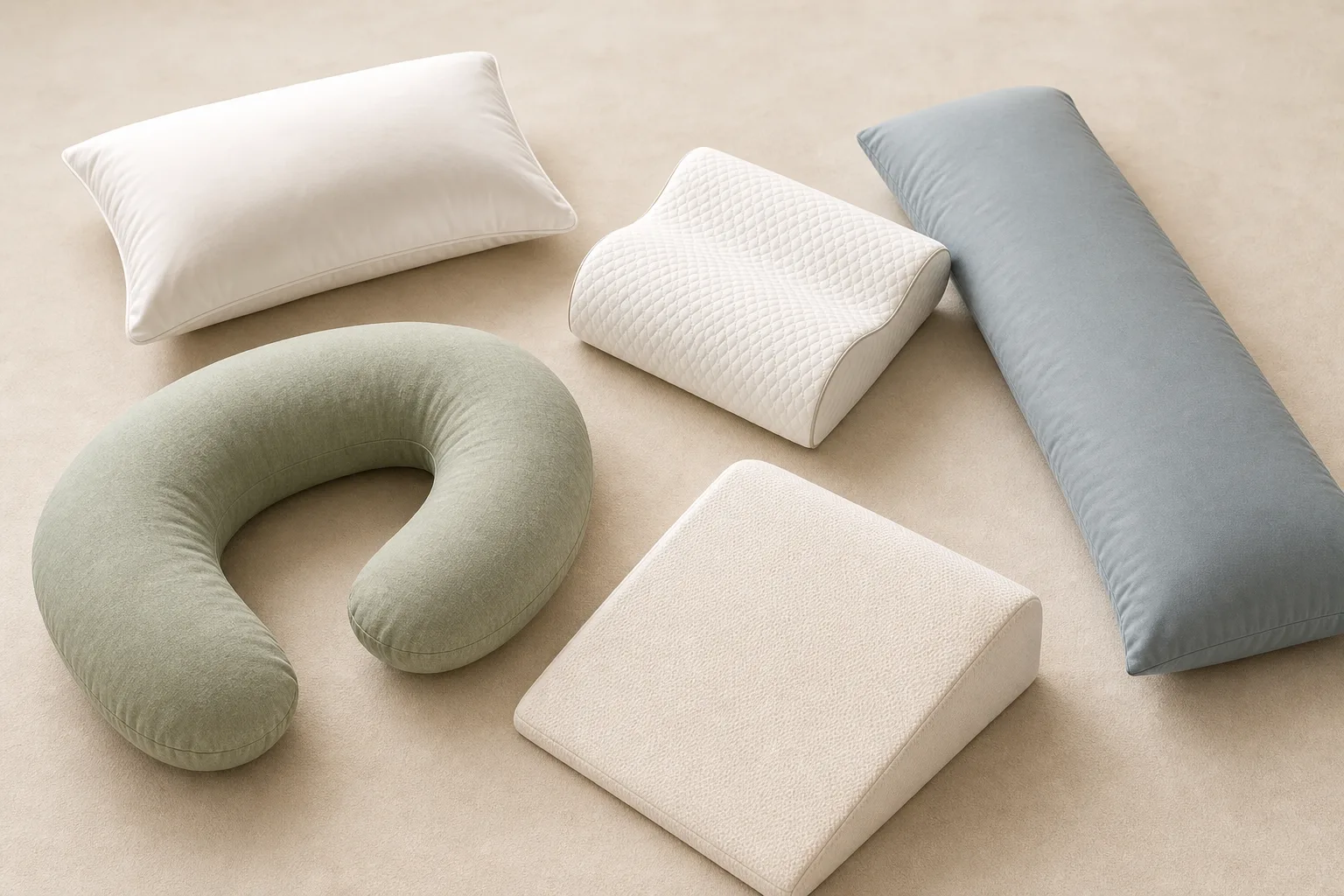
A conventional body pillow is a long straight or slightly flexible insert used beside the body. It can sit between knees, support an upper arm or be hugged without replacing the pillow under the head.
Pregnancy pillows include straight products but more often use C, J, U or wedge shapes. Their curves target several zones, though shape names and dimensions are not standardized across brands.
Section 2
Map support zones before choosing a letter
Identify whether discomfort relates to the knees, belly, back, upper arm or head. One straight pillow between knees and arms may be enough. A small wedge can target the belly without surrounding the whole body.
A full U supports front and back simultaneously, which can be convenient when turning. A C or J uses less space but may need repositioning. Bigger is not clinically better when much of the shape goes unused.
Section 3
ACOG suggests pillows as optional support
ACOG says side sleeping may be best during the second and third trimesters and mentions pillows between the knees, under the belly or a full-length body pillow. This is positioning guidance, not a requirement to purchase a branded U-shaped product.
ACOG also advises that if you wake on your back, you can turn to your side and return to sleep. Discuss personal sleep-position concerns with the clinician managing the pregnancy instead of relying on fear-based product advertising.
Section 4
Head-pillow independence changes fit risk
A straight body pillow usually leaves your normal head pillow untouched. That is helpful when its loft already fits your neck. Many U and C designs include a head section whose fixed thickness may be too high or low.
Look for a head-free, detachable or separately adjustable design when you have specific neck needs. Do not stack the built-in section beneath a regular pillow without checking the combined height.
Section 5
Bed footprint affects both sleepers
Measure the full product width and length against the mattress, not just packaging photography. A U-shaped pillow can occupy space on both sides, crowd a partner and make getting out of bed more complicated.
A straight pillow is easier to move, store and continue using after pregnancy. A specialized contour can justify its bulk when it reliably supports several needed zones without nightly reconstruction.
Section 6
Heat and cleaning burden increase with surface area
Wraparound shapes contact more of the body and can feel warmer. Cover fiber, fill density, protector and room climate influence the result; a breathable claim does not guarantee a cool experience.
Check whether only the cover or also the insert is washable. Large filled forms may exceed a household machine, while foam or shredded-fill liners can be spot-clean only. Replacement covers should remain available.
Section 7
Knee height should feel supportive, not forced
A pillow between the knees can make side lying more comfortable, but excessive thickness pushes the top leg upward. Mayo Clinic describes using a pillow between the legs for side sleeping while maintaining a comfortable position.
Choose a compressible section that fills the gap without twisting the pelvis. A full-body product is not automatically better than a smaller knee pillow for this single task.
Section 8
Plan for changing needs and later use
Comfort can change across pregnancy, so detachable sections, movable wedges and a practical trial reduce purchase risk. Confirm hygiene-related return exclusions before opening the product.
After pregnancy, a straight body pillow remains a general side-sleeping or lounging tool. A U or C may serve as back support, but it should not be repurposed for infant sleep or unattended infant positioning.
Sources
Frequently asked questions
Can you use a body pillow as a pregnancy pillow?
Yes. A straight body pillow can support knees, an arm or the belly. A specialized shape is optional when you need simultaneous support on more sides.
What is the difference between a body pillow and pregnancy pillow?
Body pillow usually means a long bolster. Pregnancy pillows are marketed around pregnancy support and may use U, C, J or wedge forms to target several zones.
When should you start using a pregnancy pillow?
There is no required week. Add support when your usual position becomes uncomfortable and discuss position concerns with your obstetric clinician.
Is a U-shaped pregnancy pillow better than a straight body pillow?
It offers front-and-back coverage without moving the whole pillow, but uses more bed space and may impose a fixed head height. Choose based on actual support zones.