
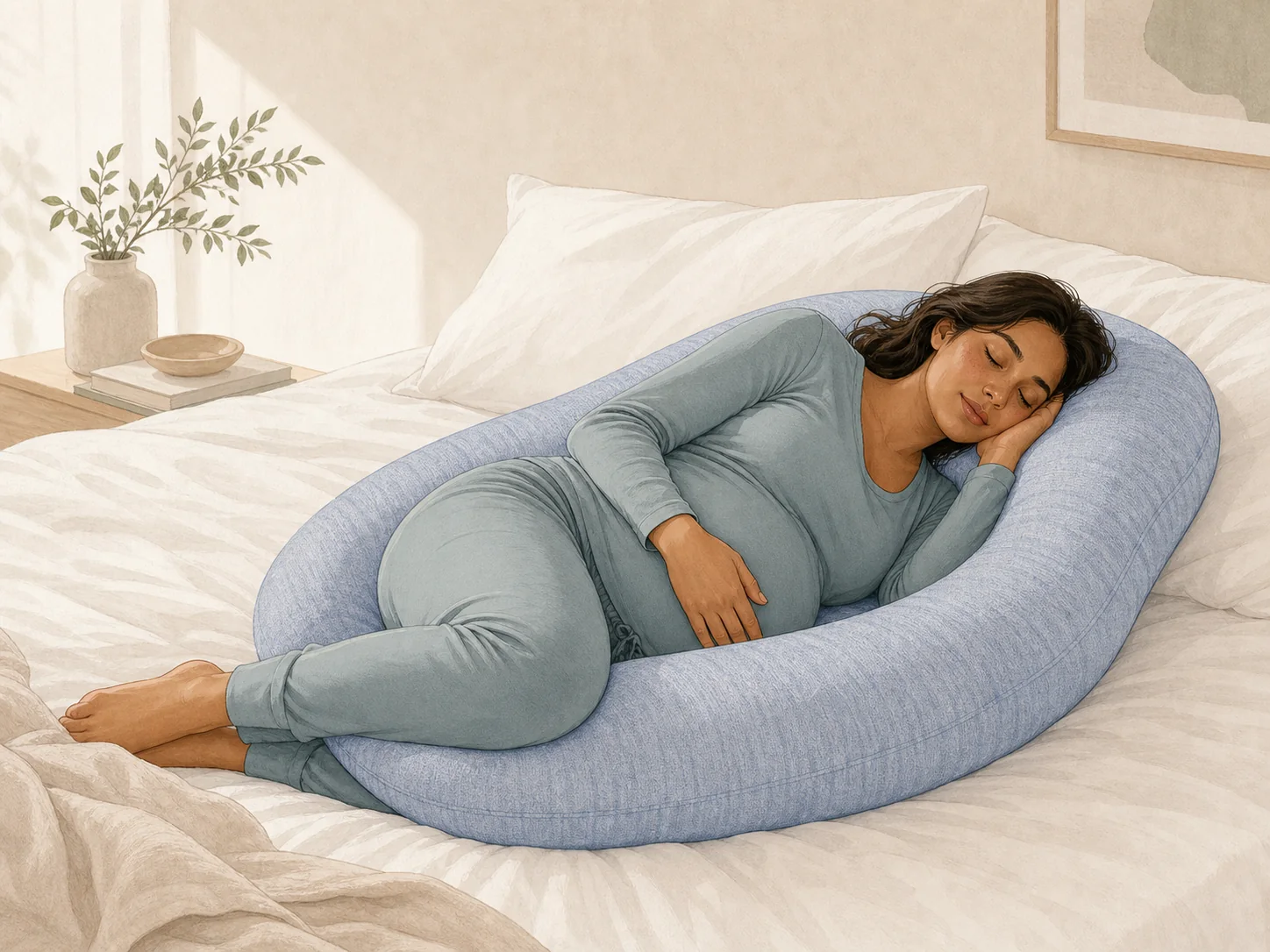
You can try this setup with ordinary pillows before buying a special shape. If you need more coverage, our pregnancy pillow buying guide compares five current designs by bed space, cover care and seller terms. This page shows where to put each shape after you have chosen one.
Important: These are comfort setups, not treatment or a way to guarantee that you stay in one position. Follow your obstetric clinician's advice for your own pregnancy, especially if it is high risk or you have pain, dizziness, breathing trouble or other concerning symptoms.
Section 1
Start with the gaps you want to fill
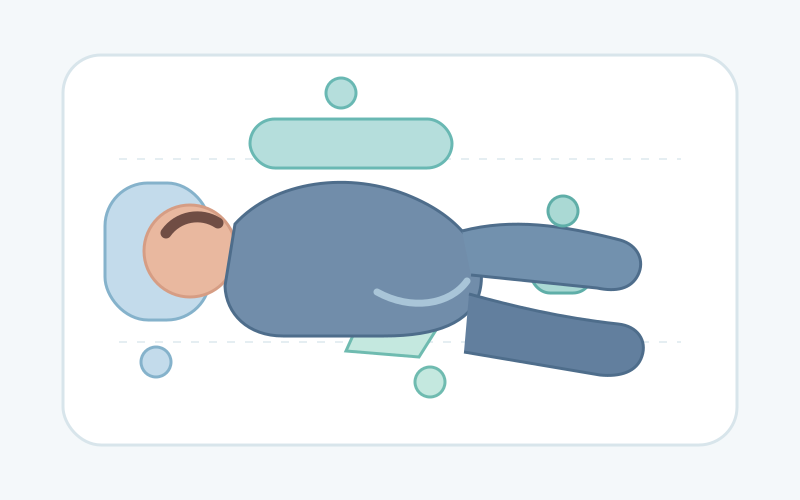
First lie on your side with your usual head pillow. Notice whether the top knee falls forward, the belly hangs without comfortable contact, or the back would feel better with a little support. Add one small pillow at a time. The NHS suggests supporting your bump and placing a pillow between your knees as options, not requirements.
You do not have to buy a large U just to fill a knee gap. The smallest arrangement that feels comfortable also leaves more room to turn and get out of bed. If you use a wedge, place its tapered side for gentle contact rather than pushing the thick edge hard into your belly.
Section 2
Place a U-shaped pillow on both sides
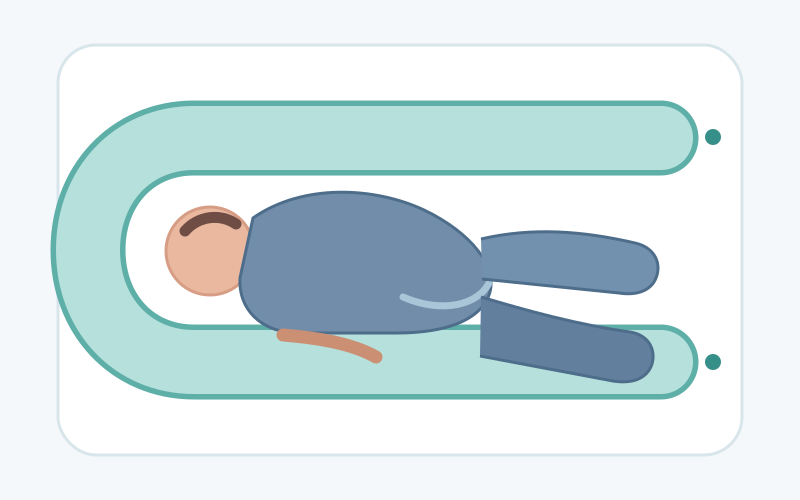
Set the curved end near your head and let the two long arms run beside you. Lie on one side, with the front arm available to hug or place between the knees and the other arm behind the back. The pillow does not need to press firmly on every part of your body.
Some U pillows use their curved end as the head pillow; others can be arranged around your usual pillow. Check the exact model instead of stacking both automatically. When you turn to the other side, the second long arm can become the front support without lifting the whole pillow.
Section 3
Move a C or J with your body when you turn
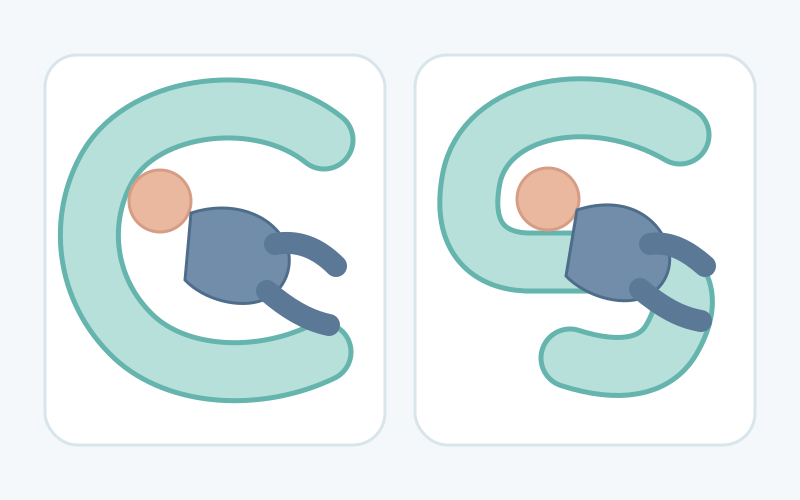
If you switch sides, move the pillow or turn within its curve so the support still meets your knees or belly. A shape drawn on a product page cannot tell you exactly where its fill will reach on your body; dimensions and your mattress matter.
C-shaped pillow
Let the curve follow one side from the head toward the knees. Place its lower end where it fills the knee gap, and check the head curve's height before settling in.
J-shaped pillow
Use the shorter curve near the head and run the long section along the side that needs support most. It may reach the knees, the belly, or neither on a particular body and mattress, so adjust it by feel.
Section 4
Use a straight pillow or wedge for a smaller job
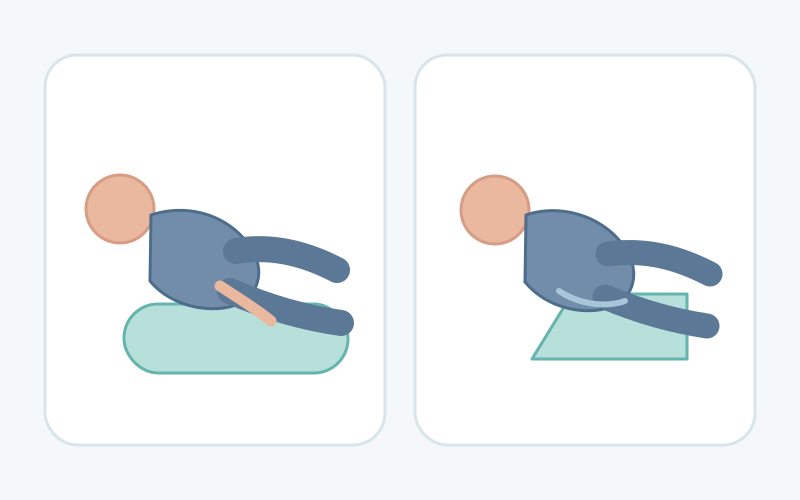
These smaller shapes can fill a specific gap without surrounding the entire body. Start with the area that needs contact most, then check that you can still turn comfortably.
Straight body pillow
Hold it in front and run it between the knees. A regular bed pillow can do the same job when the gap is small enough. Keep your usual head pillow if its height works for you.
Single or connected wedge
A single wedge can rest under the belly or behind the back while you lie on your side. It supports one small area at a time. A connected dual wedge may reach both sides but can feel restrictive and still needs adjusting when you turn. Neither type is proven to treat pain or prevent back sleeping.
Section 5
Turn and leave the bed without fighting the pillow
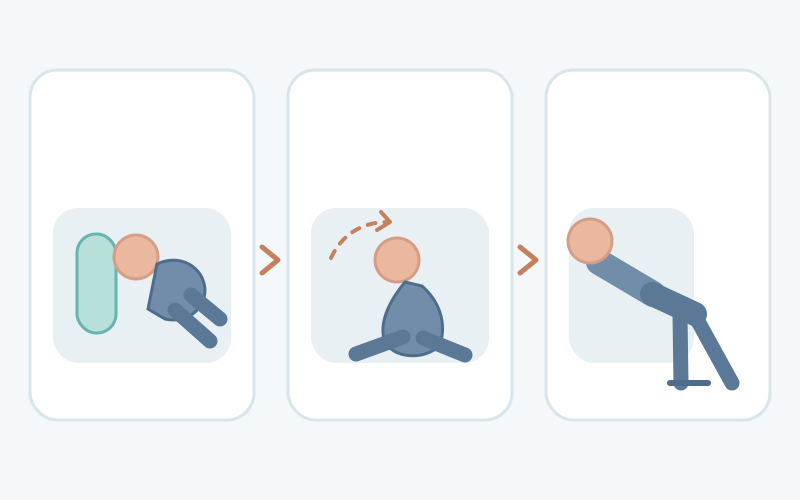
Try the arrangement before you are tired. Turn to the other side and check whether the pillow moves with you or needs repositioning. A full U takes more bed space, while a loose wedge often needs to be picked up. Neither setup should pin you in place.
If getting out of bed is awkward, move loose support away, roll onto your side and use your arms as you lower your legs off the bed. NHS physiotherapy guidance describes side rolling as one way to make turning and getting up easier during pregnancy. Ask your care team for individual advice if movement causes pain.
Section 6
Check head height, warmth and cleaning
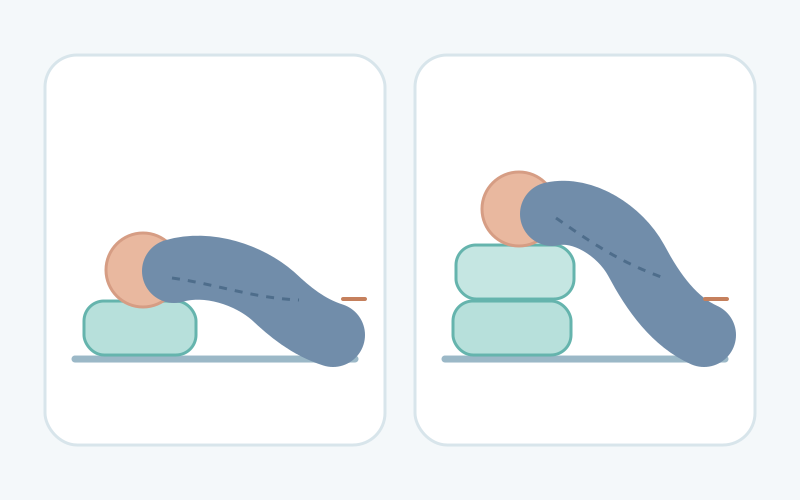
Feel whether your head rests at a comfortable height. A built-in head curve plus your regular pillow can lift the head more than intended. If your neck feels strained, change the arrangement rather than assuming the new pillow needs a long break-in period.
Large shapes bring more fabric against the body and take more room beside a partner. Check the cover label and the seller's opened-item return terms before buying. After birth, keep adult pillows out of an infant's sleep space; the CDC says soft bedding does not belong there.
Products to compare
Pillows that fit this use case
These are not treatment claims or paid placements. Confirm current size, seller, price, and return terms before ordering.
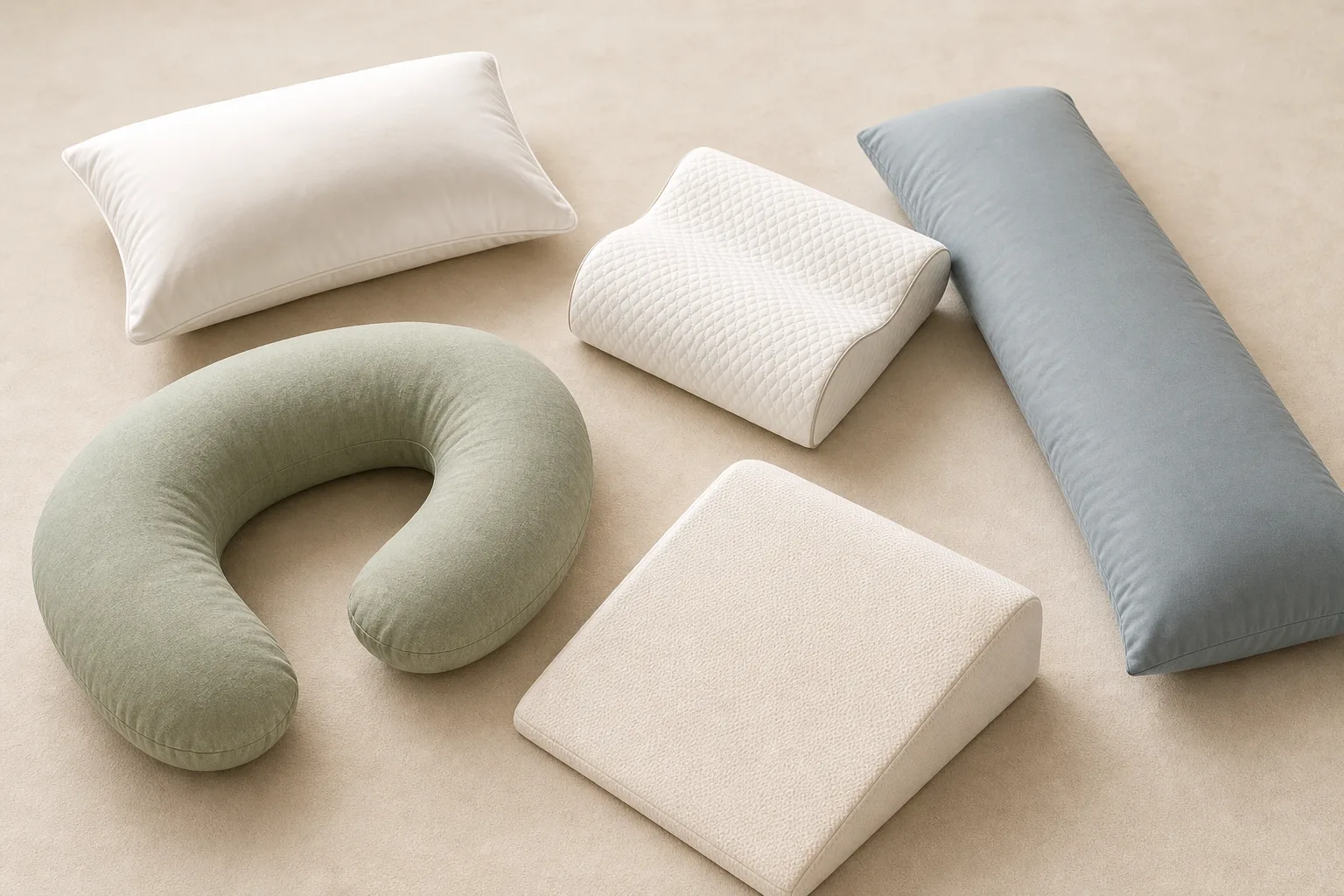
Full U-shape example
Momcozy U-Shaped Cooling Fabric Pregnancy Pillow (Grey)
The full Cooling-Grey pillow has two long sides. Compare its 57 × 30-inch expanded footprint with your bed, and do not confuse it with a cover-only variant.
Verify specifications at Momcozy full-pillow specificationsCheck the full Momcozy U pillowConnected wedge example
Momcozy Pregnancy Wedge Pillows with Cooling Cover
This connected W-shaped design supports a smaller area than a full U. Confirm Regular versus Plus and the exact item before ordering.
Verify specifications at Momcozy connected-wedge specificationsCheck the compact Momcozy wedgeAs an Amazon Associate we may earn from qualifying purchases. OneLink may localize the destination to your country and available catalog.
Sources
Frequently asked questions
Do you need a pregnancy pillow?
No. A regular pillow between the knees or a small pillow under the belly may give enough contact. A larger shape is an option when you want support across more areas and have room for it.
Can you sleep on either side while pregnant?
The NHS says either side can be used. Follow any advice from the clinician caring for your pregnancy. If you wake on your back, the NHS says you can turn to a side and go back to sleep.
Where should a pregnancy wedge pillow go?
While side lying, try a single wedge under the belly for gentle contact or behind the back. Keep its thick edge from pressing hard into you, and move it when you switch sides.
Should a U-shaped pillow replace your head pillow?
That depends on its curved head section and your usual pillow height. Try one arrangement at a time and keep the one that lets your head rest comfortably. Stacking both can make the head section too high.
Will a pregnancy pillow stop you rolling onto your back?
Do not rely on a product to keep you in one position all night. Use pillows for comfort and discuss individual sleep-position concerns with your obstetric clinician.