
The head pillow should first pass the fit checks in our guide to choosing a pillow. Add another only when it performs a separate, useful support job.
Important: Pillow positioning cannot treat unexplained pain, breathing pauses or neurological symptoms. Seek qualified care for persistent or severe concerns. Adult pillow advice never applies to infant safe sleep.
Section 1
One well-fitted head pillow is the simplest baseline
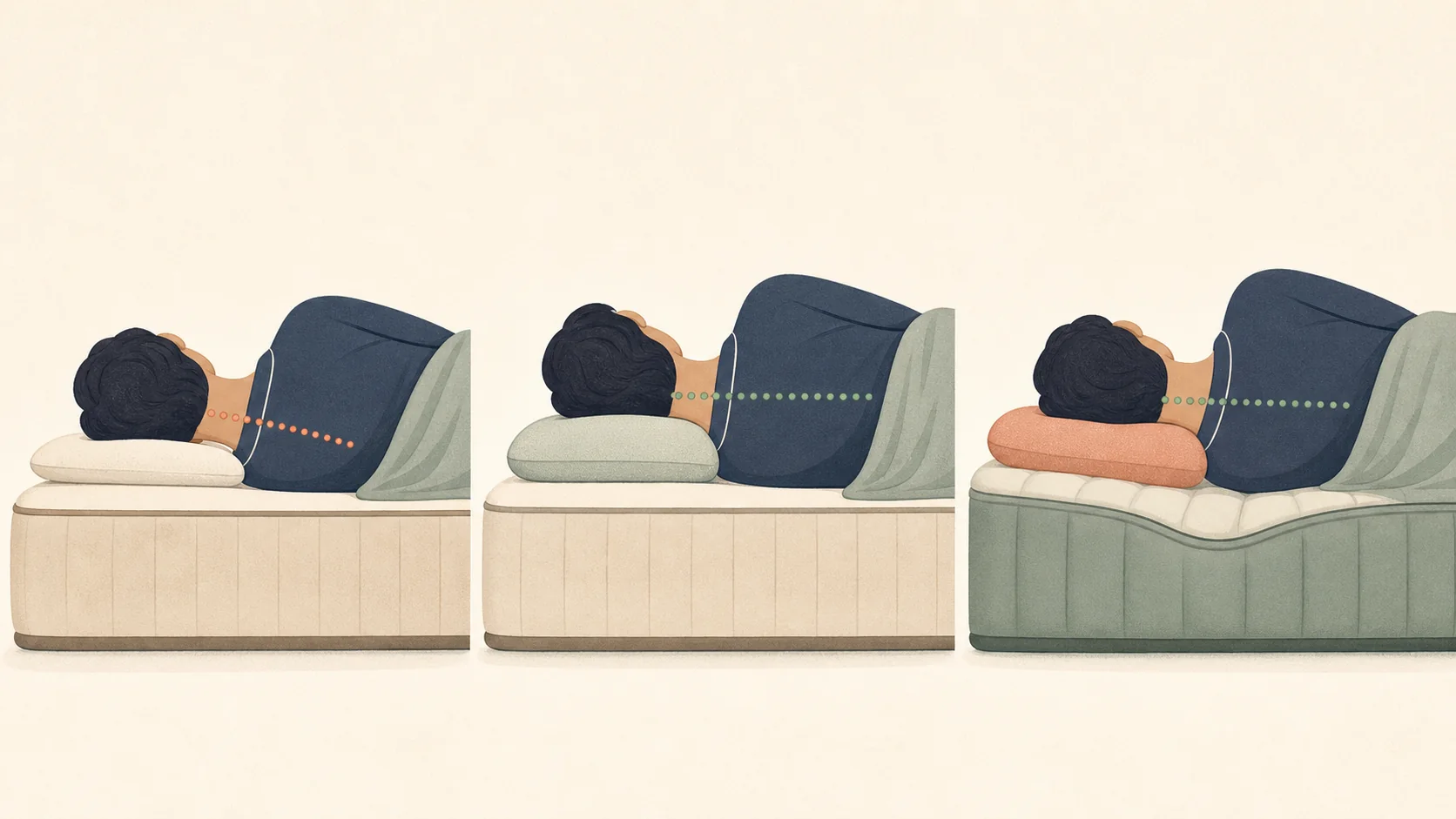
A single pillow is easier to keep stable and evaluate. Its compressed height should fill the space created by sleep position, body build and mattress sink without visibly pushing the head up, down or sideways.
One does not mean one universal model. A contoured foam core, adjustable shredded pillow and low down pillow create different heights under load. Choose by fit rather than by count.
Section 2
Two head pillows can solve the wrong problem
Stacking two low pillows may temporarily create enough loft, but the layers can slide and form an uneven ramp. Two regular pillows often push a back or stomach sleeper too high and make the chin move toward the chest.
If you repeatedly fold or stack, measure the combined compressed height and consider one purpose-built pillow at that loft. Keep a second layer only when the setup remains stable and comfortable.
Section 3
Side sleepers may use a second pillow between the legs
A pillow between knees or legs can make side lying more comfortable and limit the top leg from falling forward. Mayo Clinic includes this positioning option in its sleeping-position guidance.
This body-support pillow does not change the loft needed under the head. Choose enough leg-pillow thickness to support without forcing the upper hip upward, and use a body pillow when a longer surface is easier to keep in place.
Section 4
Back sleepers may place support below the knees
For some people, a pillow beneath the knees makes back lying more comfortable. Cleveland Clinic and Mayo Clinic describe knee support in back-sleep positioning. That additional pillow has a different job from the head pillow.
A large mound can feel restrictive or affect getting out of bed. Start with modest support and follow any postoperative or condition-specific positioning instructions from the treating clinician.
Section 5
Stomach sleepers usually need less head height
A high stack can increase backward neck extension while the face is turned. Many stomach sleepers use a very thin pillow or no pillow beneath the head, though the position still involves neck rotation and may stress the back or shoulders.
A small pillow under another body area is sometimes used for comfort, but it should not be treated as a generic correction. Stop when positioning increases pain or creates breathing difficulty.
Section 6
Pregnancy support may use several zones
ACOG mentions side sleeping, a pillow between the knees, one under the belly or a full-length body pillow. Those zones can be served by separate small pillows or a single shaped product.
There is no mandatory number or week to buy them. Use the smallest setup that remains comfortable and follow individual advice from the obstetric clinician, especially in a high-risk pregnancy.
Section 7
Decorative pillows do not count as sleep support
Euro shams and throw pillows can remain on the bed during the day but may have unsuitable dimensions, closures, trims or fill for sleeping. Remove objects that crowd the sleep surface or place the neck in an improvised position.
A reading stack also differs from the setup used all night. Return to the fitted sleep configuration rather than drifting off propped on several unstable pillows.
Section 8
Evaluate the whole setup systematically
Change one pillow or position at a time and observe sleep continuity and morning comfort for several nights. Note when an arm or folded blanket substitutes for missing height, or when a pillow is pushed away overnight.
Replace quantity with function: one under the head, perhaps one for a defined body zone. If the setup keeps growing to manage pain, seek assessment rather than continuing to build a taller stack.
Sources
Frequently asked questions
Is it better to sleep with one pillow or two?
One fitted head pillow is usually more stable. Use a second for a separate support zone or only when a two-layer head setup creates appropriate, stable compressed height.
Is sleeping with two pillows bad for your neck?
It can be when the combined loft pushes the head too high or layers slide. Count the loaded height, not the number alone.
How many pillows should a side sleeper use?
Often one under the head and optionally one between the knees or a body pillow. Head loft still depends on shoulder width and mattress sink.
Is it good to sleep with no pillow?
It may suit a few adult stomach sleepers, but many side and back sleepers need support. Adult pillowless advice does not apply to infant sleep.