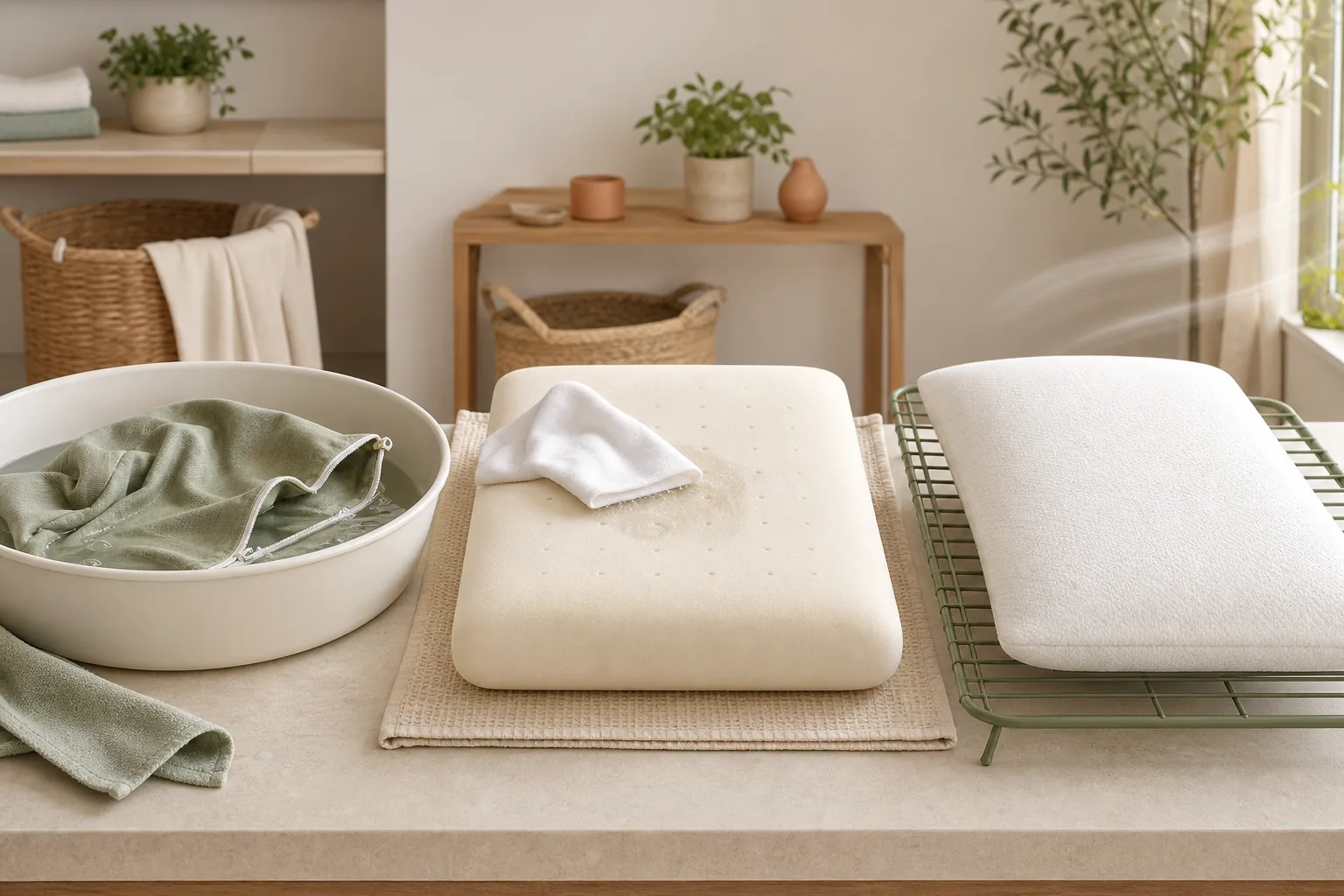
Different fills need different care, so confirm the construction in our pillow-washing guide before using water. Shredded foam in a sealed inner liner is not automatically machine-washable either.
Important: Liquid, twisting, high heat, and strong chemicals can permanently change memory foam. Always follow the exact care label for your model.
Products to compare
Pillows that fit this use case
These are not treatment claims or paid placements. Confirm current size, seller, price, and return terms before ordering.
Reducing future staining
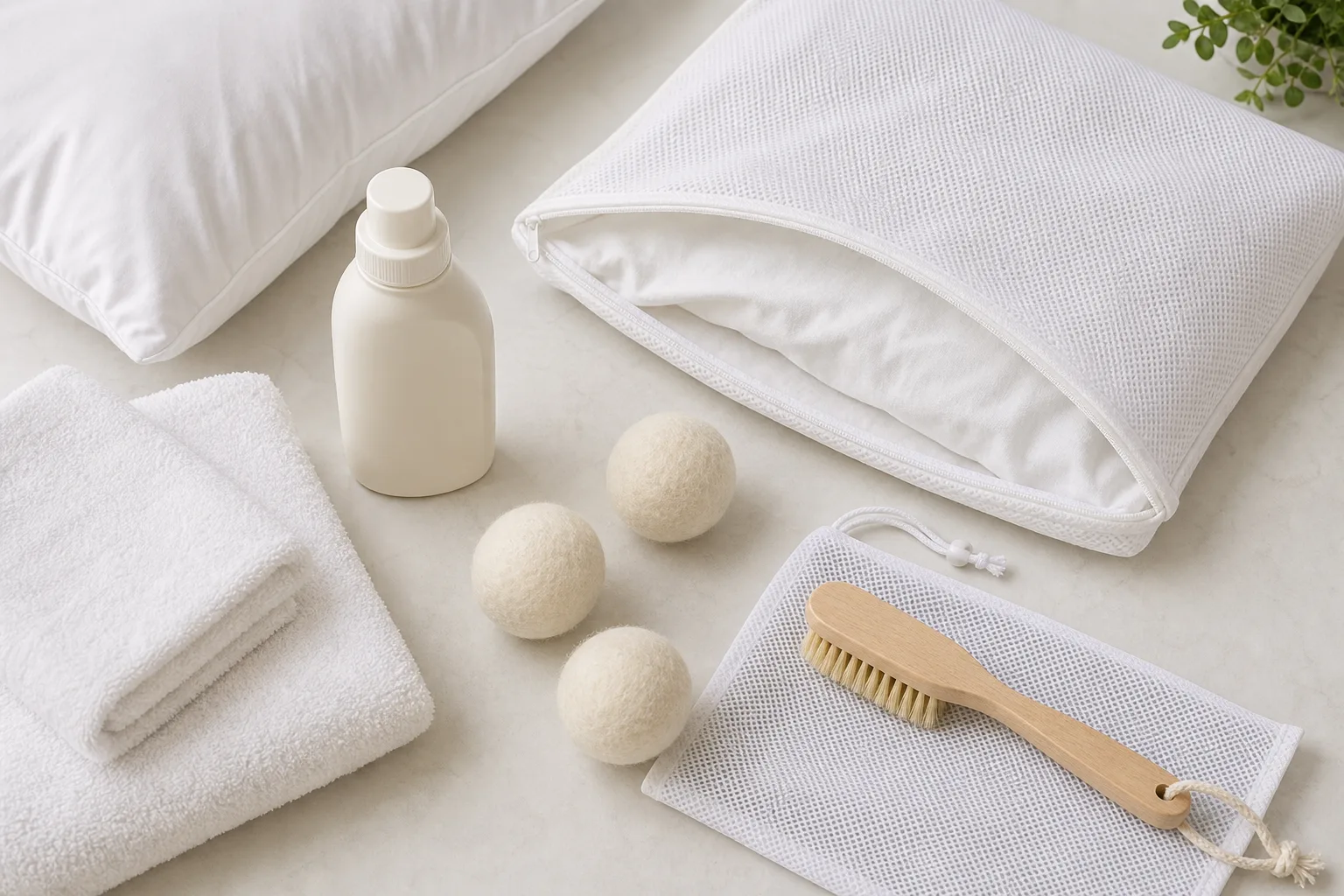
Breathable zippered pillow protector
A washable barrier can catch oils and moisture. Check size, fabric, and care label; waterproof membranes may sleep warmer.
Verify specifications at Allergy Standards pillow encasing guidanceCompare pillow protectorsLabel-approved tumble drying
Unscented wool dryer balls
Can help move approved down or fiber fill during tumble drying. Use only when the pillow label permits machine drying.
Verify specifications at Whirlpool guidance on dryer ballsCompare dryer ballsAs an Amazon Associate we may earn from qualifying purchases. OneLink may localize the destination to your country and available catalog.
Section 1
Separate the cover from the foam core
Unzip the outer cover and check whether there is a second inner liner. Read both labels. A removable cover may be machine-washable even when the foam core must stay dry, which is the rule published for many TEMPUR models.
Photograph the labels before laundering the cover. That preserves temperature and drying instructions after repeated washing makes a tag harder to read. Close zippers before washing when the manufacturer requests it.
Section 2
Remove dry debris first
Use a clean upholstery attachment on low suction to lift dust from the surface and seams. Support the foam with one hand so suction does not stretch thin areas. Vacuuming first keeps loose material from becoming mud when a damp cloth is applied.
Air the uncovered core in a dry, ventilated room. Avoid direct heaters and heated blankets. Temperature-sensitive foam can soften or change response when exposed to excessive heat.
Section 3
Spot-clean with as little liquid as possible
Test a barely damp cloth on an inconspicuous area. Blot the mark instead of scrubbing; friction can tear the foam surface. Use only a mild solution allowed by the manufacturer and keep liquid near the surface.
Never twist or wring the pillow. If a spill has soaked deeply into a non-washable core, surface cleaning cannot reliably remove everything inside. Contact the manufacturer or replace the pillow when contamination cannot be safely addressed.
Section 4
Air-dry the core all the way through
Lay the pillow flat on a clean ventilated rack or dry towel and turn it periodically. A fan can improve room airflow, but a hair dryer, radiator, or hot tumble dryer can damage foam.
Do not reinstall the cover while the core feels cool or damp. Trapping moisture slows evaporation and can create odor. Drying may take much longer than the short surface-cleaning step, so plan another pillow for that night.
Section 5
Yellow foam is not always a removable stain
Foam often changes color with age and exposure to air and light. A yellow core is not proof that it is dirty, and aggressive whitening can do more damage than the discoloration itself.
Focus on odor, texture, resilience, and the manufacturer’s lifespan guidance. If the foam crumbles, stays compressed, smells after airing, or has been deeply contaminated, cleaning is unlikely to restore it.
Section 6
Prevent the next deep clean
Use a breathable washable protector and a pillowcase. Wash those layers on their own schedule, let hair dry before bed, and address spills immediately. Do not seal damp foam inside an impermeable protector.
Rotate or air the pillow only as the maker recommends. Some molded contours have a designed top and bottom and are not meant to be flipped like a traditional fiber pillow. Keeping the care label and purchase instructions together also prevents guesswork when a spill occurs months later.
Steps
- Read both care labels: Distinguish the removable cover, inner liner, and foam core before choosing a method.
- Wash only approved removable parts: Follow the listed temperature, detergent, and drying method for the cover.
- Vacuum the dry foam gently: Remove surface debris before introducing any moisture.
- Blot small marks: Use minimal label-approved cleaner and never soak, scrub, twist, or wring the core.
- Air-dry completely: Keep the core flat in moving room air and avoid direct heat before replacing the cover.
Sources
Frequently asked questions
Can a memory foam pillow be washed?
Most solid memory foam cores should not be machine-washed. Some removable covers are washable and a few specialty products differ, so the exact care label is decisive.
Why do memory foam pillows turn yellow?
Foam can oxidize and change color as it ages. Yellowing alone does not prove contamination; assess odor, damage, resilience, and the manufacturer’s instructions before attempting treatment.
How to clean a stinky memory foam pillow?
Remove and wash the approved cover, vacuum the core, and air it thoroughly. If odor came from a deep spill or remains after safe airing, replacement may be more reliable than soaking non-washable foam.
How to rejuvenate a memory foam pillow?
Safe airing and cleaning the cover can freshen it, but cleaning cannot reverse crumbling or permanent compression. Do not use heat to force recovery because it may damage the material.