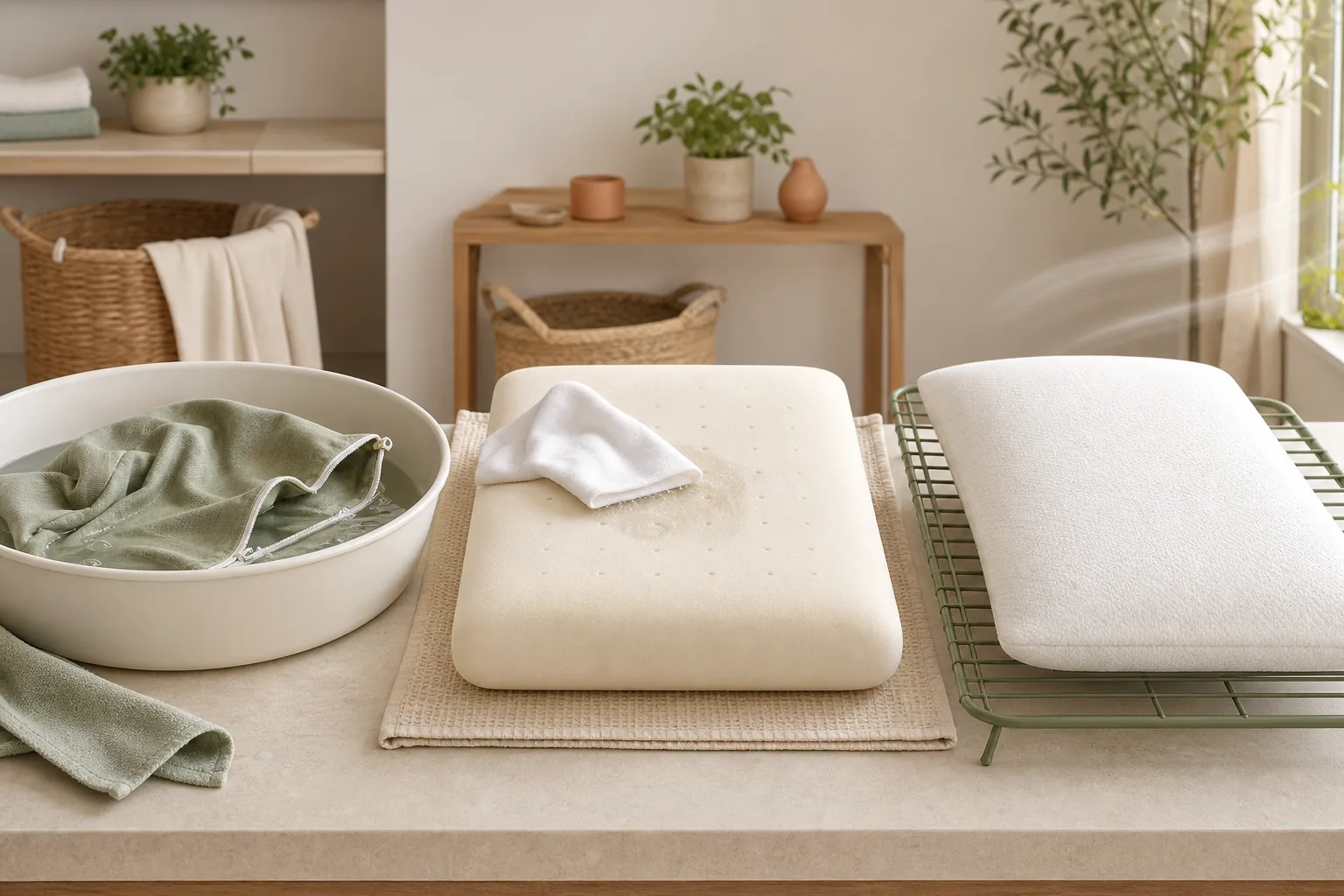
Stain treatment is only one part of safe cleaning. Use our fill-by-fill pillow-washing guide to check whether the inner fill can enter a machine before any liquid reaches the pillow.
Important: Do not combine cleaning agents. Bleach mixed with ammonia or acids can release dangerous gas. Follow both the pillow care label and the stain-product label, and ventilate the workspace.
Products to compare
Pillows that fit this use case
These are not treatment claims or paid placements. Confirm current size, seller, price, and return terms before ordering.
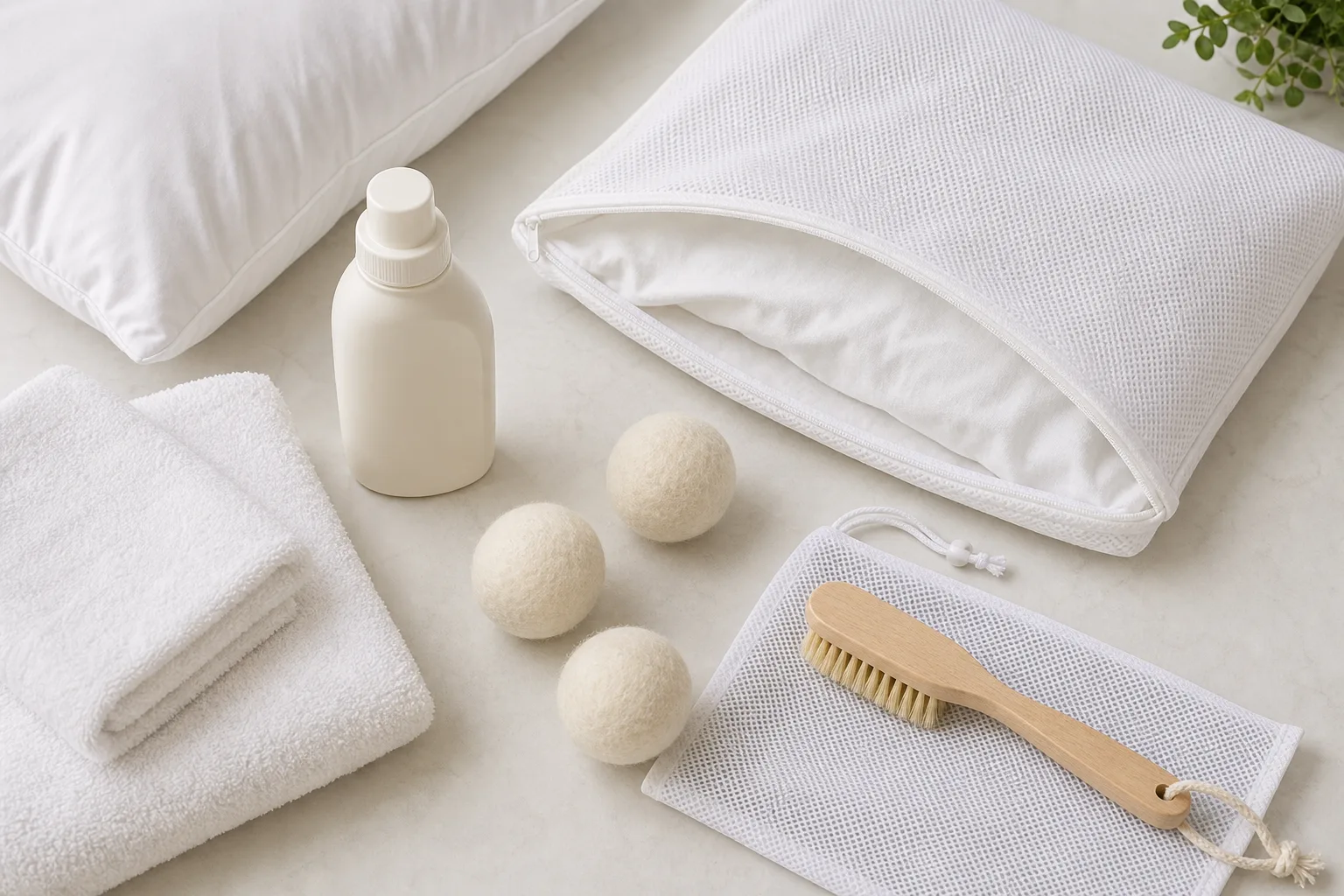
Reducing future staining
Breathable zippered pillow protector
A washable barrier can catch oils and moisture. Check size, fabric, and care label; waterproof membranes may sleep warmer.
Verify specifications at Allergy Standards pillow encasing guidanceCompare pillow protectorsLabel-approved tumble drying
Unscented wool dryer balls
Can help move approved down or fiber fill during tumble drying. Use only when the pillow label permits machine drying.
Verify specifications at Whirlpool guidance on dryer ballsCompare dryer ballsAs an Amazon Associate we may earn from qualifying purchases. OneLink may localize the destination to your country and available catalog.
Section 1
Locate the stain before choosing chemistry
Strip off the pillowcase and protector and inspect each layer under neutral light. A washable cotton case, a coated protector, a down-proof shell and a memory foam core can all require different treatment. Do not pour a mixture through the assembled pillow simply because the outer yellow patch lines up.
Note the fill, shell fiber, care symbols and any warning about bleach, soaking or dry cleaning. A removable cover can be washable while the core must remain dry. Photograph the label before products or water make it difficult to read.
Section 2
Yellowing has more than one cause
Body oils, sweat, skin products and damp hair can transfer to bedding and oxidize over time. Detergent or softener residue may also hold soil. Foam itself often becomes yellow with age and exposure to air; that color change is not necessarily a removable surface stain.
Smell, texture and history matter. A localized recent mark on a washable case is a different problem from a uniformly yellow, crumbling foam core. Aggressive whitening cannot restore aged material and may damage it.
Section 3
Pretreat a washable textile in a controlled way
Remove loose soil and test the selected laundry stain remover on a hidden area. Apply only the amount and contact time on its label. Blot rather than scrub a delicate down-proof shell, because worn fabric can open during washing.
Do not let an internet recipe replace fiber instructions. Oxygen-based and chlorine products are not interchangeable, and color-safe marketing does not prove compatibility with every finish. If the care tag excludes bleach, respect that restriction even when the stain is stubborn.
Section 4
Wash and rinse according to the pillow label
Use the warmest water approved for that item, the correct machine configuration and a measured amount of detergent. More soap does not mean more stain removal; residue inside a dense pillow is difficult to rinse and can leave fill sticky.
Add an extra rinse when permitted and inspect the mark before high-heat drying, which can make some remaining stains harder to address. Repeat only a compatible treatment rather than escalating to an unsafe chemical combination.
Section 5
Keep non-washable foam nearly dry
Most solid memory foam cores should not be machine-washed or soaked. Vacuum dry debris, then spot-blot only when the manufacturer allows it. Use minimal liquid and air-dry the core flat without a radiator, hair dryer or tumble dryer.
If bodily fluid has penetrated deeply, a light surface treatment cannot verify that the inside is clean. Contact the manufacturer or replace a core that cannot be safely decontaminated. Hiding the mark under a clean cover does not address deep moisture or odor.
Section 6
Accept when an old mark will not become white
A lighter but visible stain can remain after a safe wash, especially when oils oxidized over many months. Judge cleanliness, odor, integrity and dryness rather than repeatedly weakening the textile in pursuit of a perfect color.
Use a washable protector beneath the case, go to bed with dry hair and address new marks promptly. Prevention keeps treatment mild and reduces how often the full pillow needs washing.
Steps
- Separate and identify every layer: Find whether the mark is on the case, protector, shell or inner core and read its own label.
- Test one compatible treatment: Use a labeled laundry product on a hidden textile area; never combine cleaners.
- Pretreat only for the stated time: Blot delicate fabric and keep liquid away from non-washable fill.
- Wash and rinse as permitted: Use measured detergent, the warmest label-safe temperature and an extra rinse when allowed.
- Dry completely and reassess: Check the center for moisture, odor and damage before adding a protector or returning the pillow to bed.
Sources
Frequently asked questions
What causes yellow stains on pillows?
Common contributors include body oils, sweat, damp hair and product transfer. Foam can also yellow through aging and oxidation, which is not necessarily a washable stain.
How do you get old yellow stains out of pillows?
Identify a washable textile, test a label-compatible pretreatment, wash and rinse as directed, and inspect before drying. Old oxidation may lighten without disappearing completely.
Can you use bleach on yellow pillows?
Only if both the pillow label and bleach label permit that exact use. Never mix bleach with ammonia, vinegar, acids or another cleaning product.
Why is my husband’s pillow yellow?
Differences in perspiration, skin oils, hair moisture and personal products can change transfer rates. The color alone does not diagnose a health issue or identify one cause.