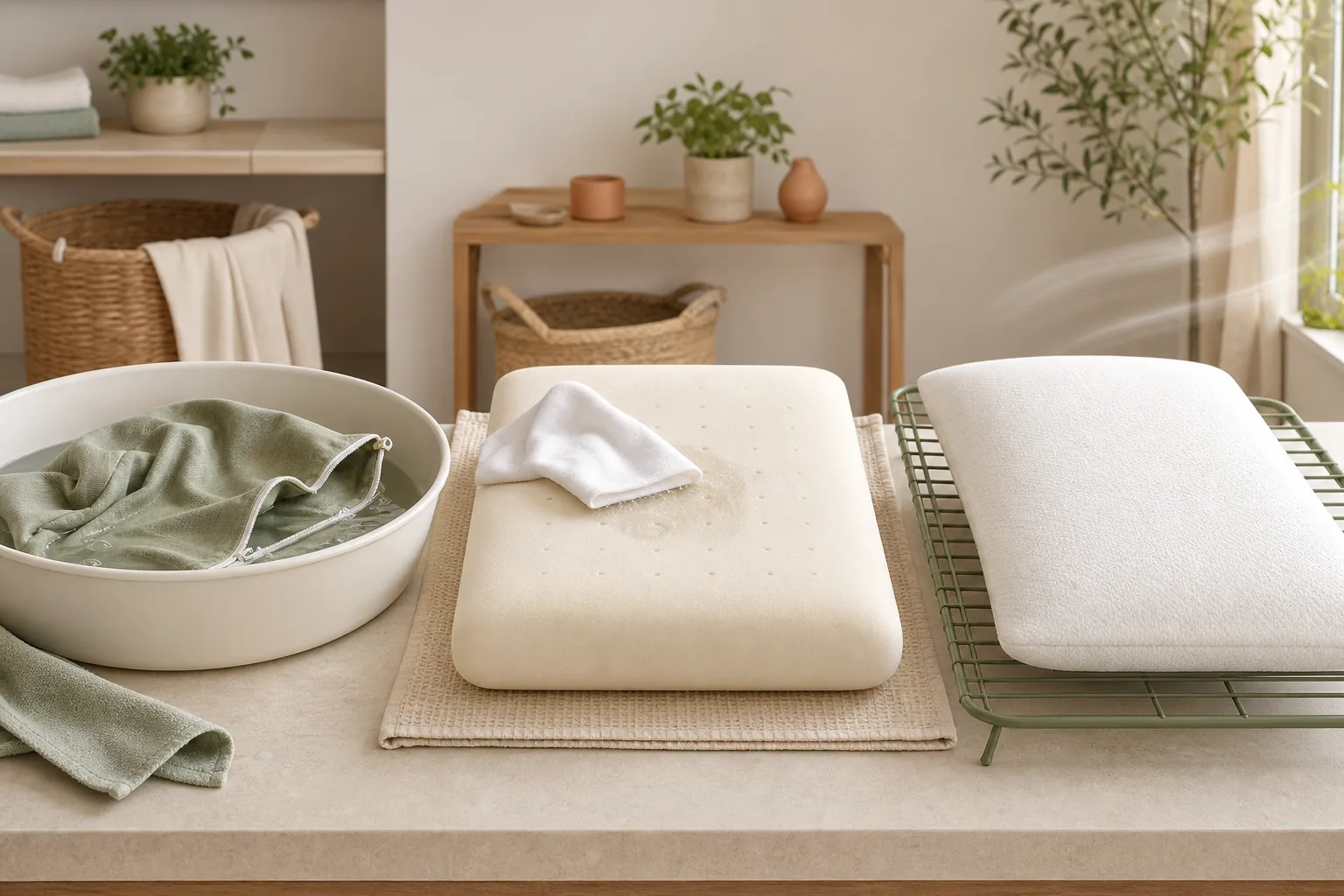
First identify the fill and washable parts with our fill-by-fill cleaning guide. Sanitizing advice that ignores the care label can damage the pillow or leave chemicals where your face rests.
Important: Never mix bleach, ammonia, acids, or other cleaning products. Follow product labels, ventilate the room, and seek public-health guidance for a known infectious exposure.
Products to compare
Pillows that fit this use case
These are not treatment claims or paid placements. Confirm current size, seller, price, and return terms before ordering.
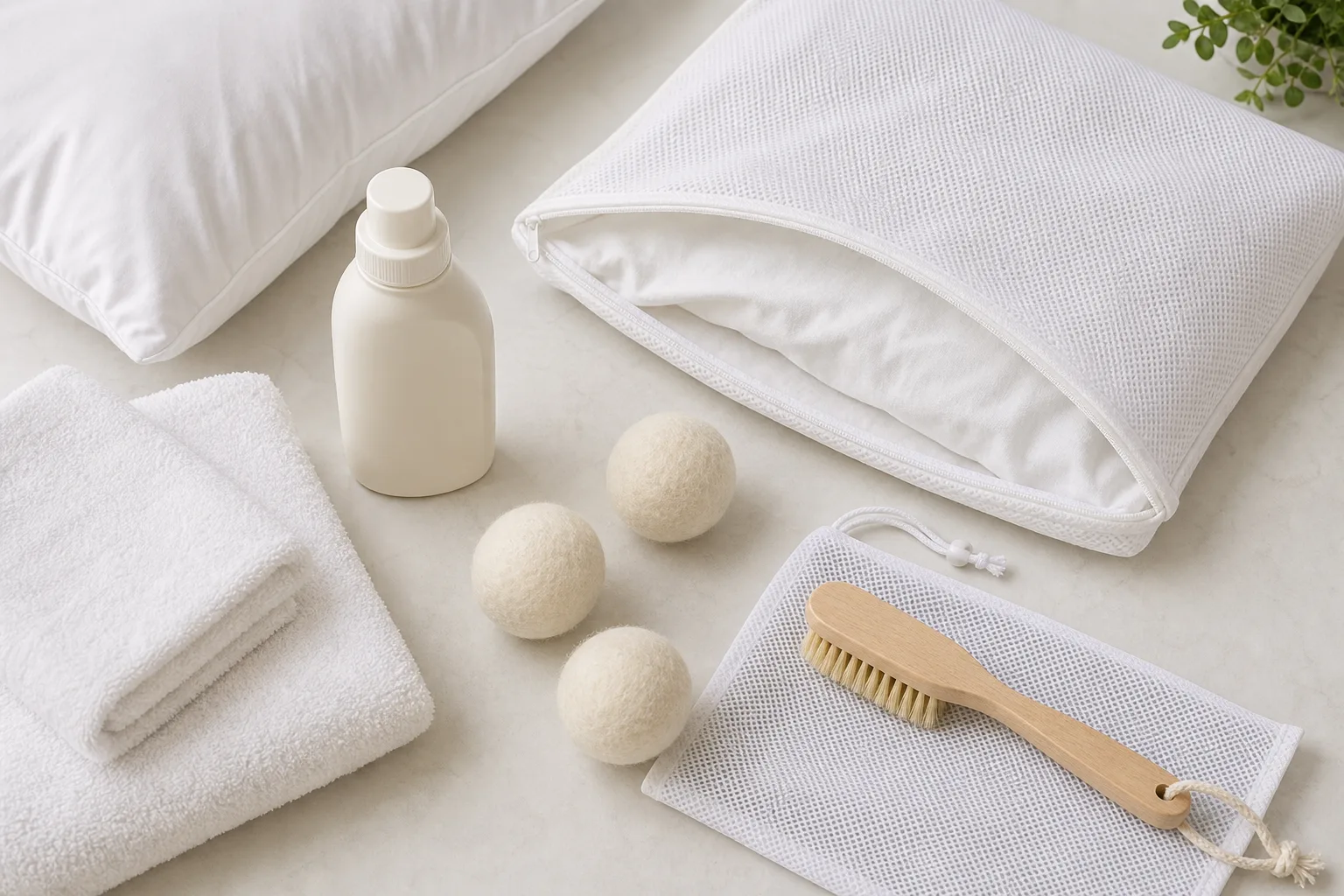
Reducing future staining
Breathable zippered pillow protector
A washable barrier can catch oils and moisture. Check size, fabric, and care label; waterproof membranes may sleep warmer.
Verify specifications at Allergy Standards pillow encasing guidanceCompare pillow protectorsLabel-approved tumble drying
Unscented wool dryer balls
Can help move approved down or fiber fill during tumble drying. Use only when the pillow label permits machine drying.
Verify specifications at Whirlpool guidance on dryer ballsCompare dryer ballsAs an Amazon Associate we may earn from qualifying purchases. OneLink may localize the destination to your country and available catalog.
Section 1
Cleaning, sanitizing, and disinfecting are different
Cleaning removes dirt and many germs with detergent, water, and mechanical action. Sanitizing reduces germs to a defined safe level. Disinfecting uses registered chemicals to kill more germs on suitable surfaces. The CDC says routine cleaning is enough in many homes unless someone is sick or at higher risk.
A pillow is a layered soft object, not a kitchen counter. A product approved for a hard nonporous surface may be unsuitable for fabric or foam and may not reach contamination deep inside the fill.
Section 2
Use the laundering process when the label allows it
For a machine-washable pillow or cover, use detergent and the warmest water setting permitted by its label. Complete drying is part of the process. Moisture left in a dense pillow creates a new problem even if the wash cycle was thorough.
Do not raise temperature beyond the label to chase a sanitation claim. Down clusters, adhesives, foam, waterproof membranes, and cooling finishes can all be harmed by unsuitable heat or chemicals.
Section 3
Non-washable foam needs a different decision
Many solid memory foam and latex cores are not machine-washable. Remove and clean approved covers, vacuum the core if permitted, and spot-clean only as directed. High heat and soaking can change the material.
After a major bodily-fluid spill or a known infectious exposure, a light surface spray may not address the inside. Ask the manufacturer or a qualified public-health source whether the item can be safely treated; replacement can be the more defensible option.
Section 4
Why a hot dryer is not a universal sanitizer
Dryer temperature varies by machine, load, moisture level, and program. More importantly, many foam or latex pillows must not be tumble-dried. A social-media time rule cannot override the product label.
Use a dryer only for items whose care instructions permit it. Choose the approved setting and continue until the center is fully dry. For air-dry-only items, maximize ventilation instead of adding unapproved heat.
Section 5
Be cautious with sprays near the face
A disinfectant label states which surfaces it can treat, how wet the surface must remain, and whether rinsing is required. If pillows or bedding are not named, do not invent an application method.
Fragrance does not prove sanitation. It can also make it harder to notice damp or musty odor. Use washable pillowcases and protectors as the routine hygiene barrier because they are easier to clean correctly.
Section 6
A practical routine for most homes
Wash pillowcases regularly, wash protectors according to their labels, and clean the pillow when its maker recommends or after a relevant spill. Keep sleeping surfaces dry and allow fresh airflow when changing bedding.
If someone in the household is ill, follow current advice for that illness rather than a generic pillow hack. Public-health guidance can change, and some exposures require handling precautions beyond ordinary laundry.
Steps
- Identify the material and exposure: Decide whether this is routine soil, a small spill, or a known health-related contamination.
- Read the care and cleaner labels: Confirm that the pillow part, temperature, chemical, and drying method are compatible.
- Clean before considering sanitation: Remove soil using the approved laundering or spot-cleaning method.
- Use only an applicable labeled process: Do not apply hard-surface disinfectants or heat rules to a pillow without explicit support.
- Dry fully and reassess: Do not use or enclose the pillow until every layer is dry and free from concerning odor or damage.
Sources
Frequently asked questions
What is the 2 2 1 rule for pillows?
There is no universal public-health or manufacturer standard by that name for sanitizing every pillow. Use the exact care label and an authoritative process for the material instead of a memorable social-media formula.
Do pillows hold dust mites?
Bedding can collect skin flakes and allergens, but the amount varies with materials, humidity, covers, and cleaning. Washable encasements and label-safe laundering are more reliable controls than unverified sprays.
Does putting pillows in the dryer sanitize them?
Not automatically. Heat and exposure differ, and some pillows must never enter a dryer. Follow the pillow label and any current health guidance relevant to the exposure.
Can I spray Lysol on my pillow?
Only use a product on surfaces explicitly covered by its label and follow every direction, including contact time, ventilation, and rinsing. A generic spray is not a safe universal method for every pillow fill.