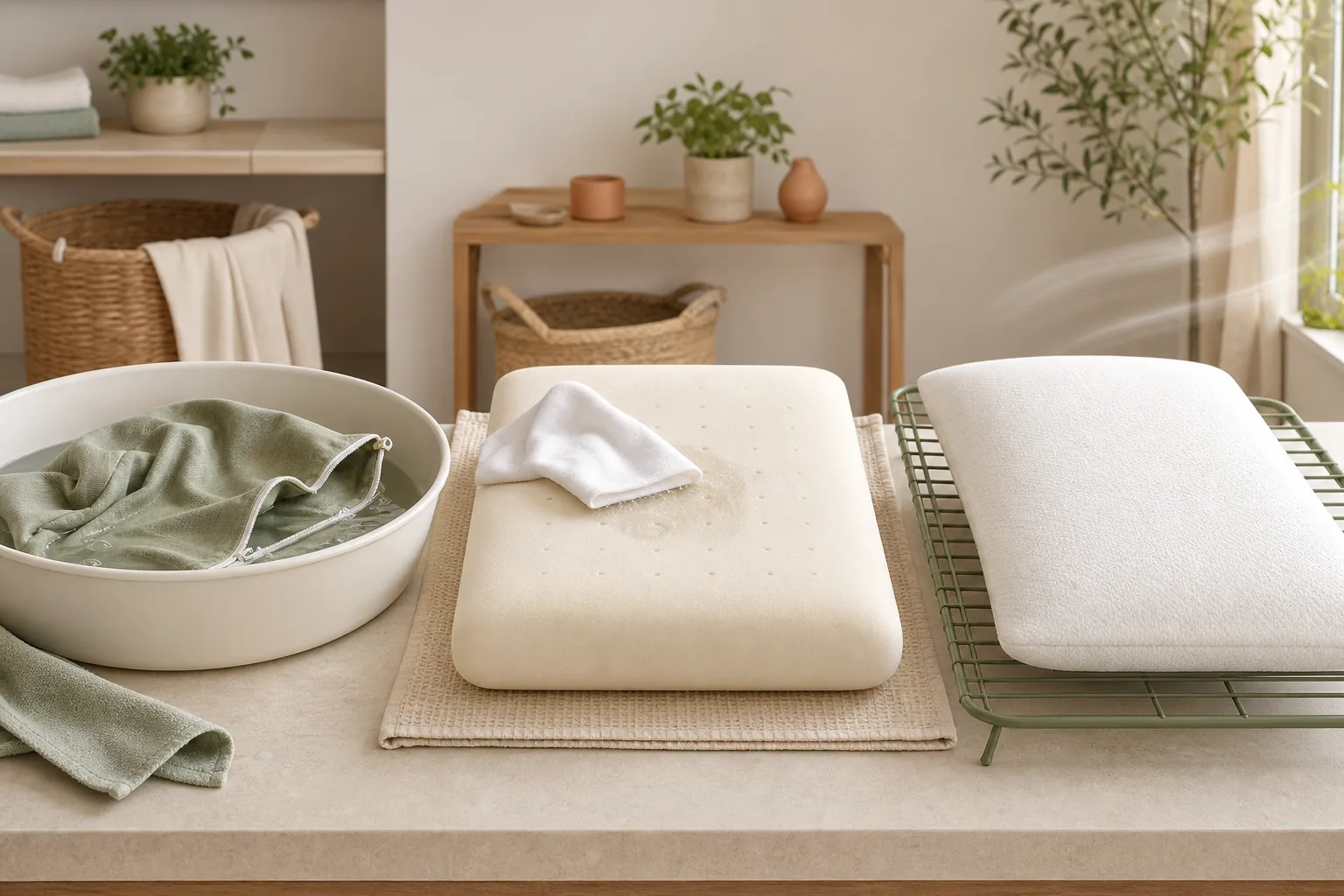
This is a fill-specific companion to our complete pillow-washing guide. Start there if you do not know whether your pillow contains down, feather, foam, latex, or a blended chamber.
Important: The sewn-in care label overrides every general instruction on this page. Do not machine-wash a pillow marked dry-clean-only, spot-clean-only, or non-washable.
Products to compare
Pillows that fit this use case
These are not treatment claims or paid placements. Confirm current size, seller, price, and return terms before ordering.
Reducing future staining
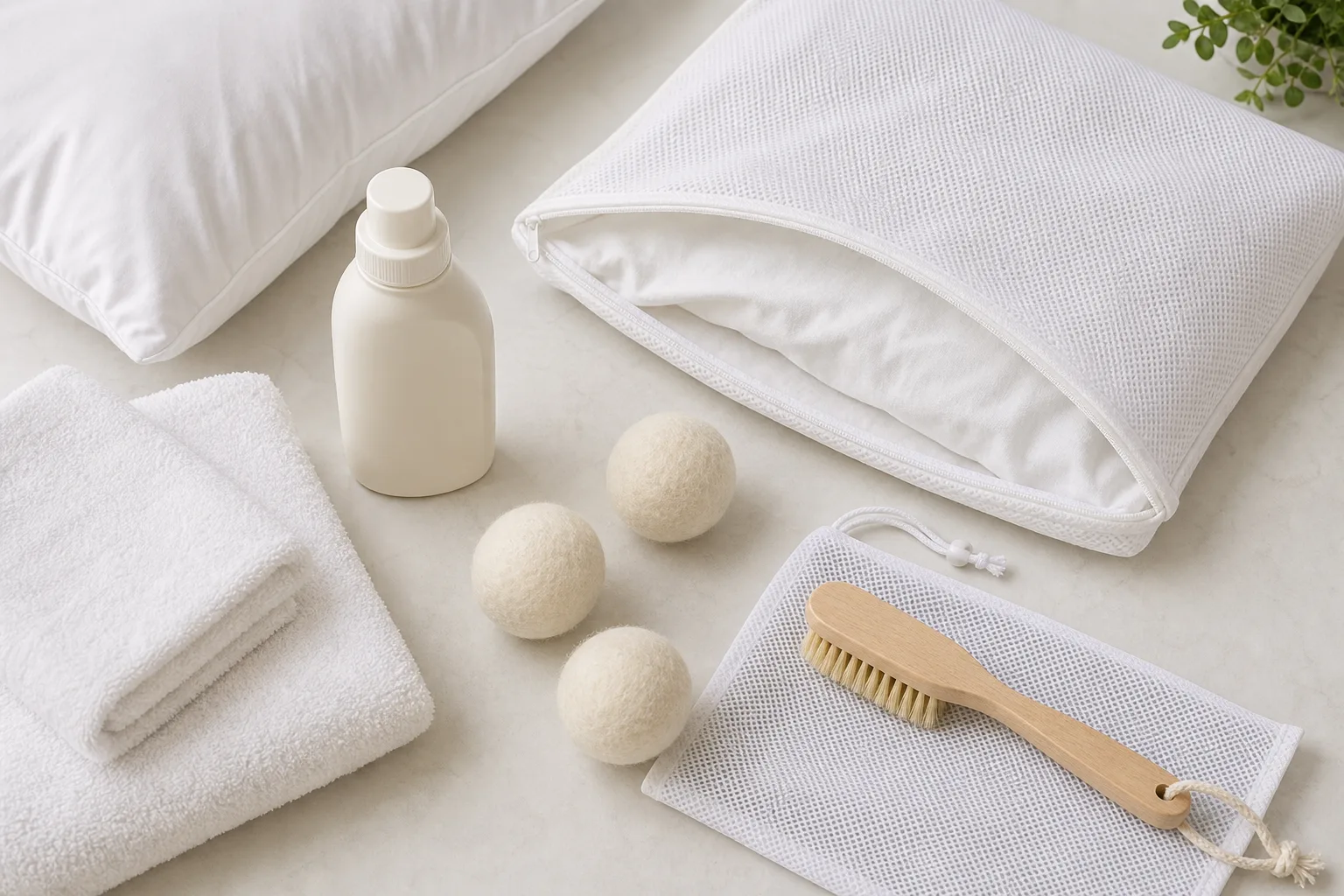
Breathable zippered pillow protector
A washable barrier can catch oils and moisture. Check size, fabric, and care label; waterproof membranes may sleep warmer.
Verify specifications at Allergy Standards pillow encasing guidanceCompare pillow protectorsLabel-approved tumble drying
Unscented wool dryer balls
Can help move approved down or fiber fill during tumble drying. Use only when the pillow label permits machine drying.
Verify specifications at Whirlpool guidance on dryer ballsCompare dryer ballsAs an Amazon Associate we may earn from qualifying purchases. OneLink may localize the destination to your country and available catalog.
Section 1
Check whether the whole pillow is washable
Read the label before removing any cover. A washable outer cover does not prove that the inner pillow can enter a machine. Some pillows combine down around a foam core, and that core may be damaged by water or agitation.
Inspect the shell for open seams, thin fabric, or escaping feathers. Water makes the fill heavy. A weak seam that survives normal use can open during the spin cycle, so repair damage before washing or choose professional cleaning.
Section 2
Use less detergent than a normal laundry load
Down traps soap easily because thousands of fine fibers create a large surface area. Choose a mild liquid detergent and use a small measured amount. Fabric softener can coat the clusters and reduce their ability to loft.
A front-loading washer or a top-loader without a central agitator is usually gentler. Wash two compatible pillows together when the machine and labels allow it; the balanced load reduces violent movement during spinning.
Section 3
Rinse until no detergent remains
Select the gentlest label-approved cycle and water temperature. An extra rinse is useful because residue can make the fill feel sticky and slow its recovery. Do not assume hot water is safe just because it feels more hygienic.
After the final spin, press the pillow gently. Do not twist it. If the pillow still feels unusually slick or produces suds when pressed, rinse again before drying.
Section 4
Drying is the critical stage
Use only the dryer setting permitted by the label, usually low heat. Pause the cycle regularly, separate clumps with clean hands, and rotate the pillow so dense corners do not remain damp. Dryer balls can help movement, but they do not replace manual checks.
A down pillow can feel dry at the surface while moisture remains in its center. Check several places for cool, heavy, or compact areas. Continue drying until the center is dry and the fill separates freely. Never put a slightly damp pillow into a protector or cupboard.
Section 5
What odor after washing means
A persistent animal or musty smell usually means the fill is still damp, not that it needs perfume. Return it to a label-approved drying cycle and keep breaking up wet clusters. Fragrance spray can mask the warning without removing moisture.
If odor remains after complete drying, or if the shell shows mold-like spotting, stop using the pillow. Replacement may be more sensible than repeated washing, especially when the fabric or fill is already deteriorating.
Section 6
Keep the next wash farther away
Use a washable pillow protector under the pillowcase and launder those outer layers more often than the pillow itself. Air the pillow when changing bedding, keep it away from wet hair, and respond to small spills promptly according to the label.
Washing is maintenance, not restoration. A clean pillow can still be too flat or uneven to support you. If it stays clumped after thorough drying and careful fluffing, compare replacement signs rather than adding another aggressive wash.
Steps
- Read the label and inspect seams: Confirm the inner pillow is washable and repair any opening before water makes the fill heavy.
- Load the washer evenly: Use a gentle machine configuration and balance the load with a second compatible pillow when permitted.
- Add a small amount of mild liquid detergent: Avoid fabric softener and excessive soap, which are difficult to rinse from down clusters.
- Run a gentle cycle plus an extra rinse: Use only the temperature allowed by the manufacturer and rinse until residue is gone.
- Dry completely on the allowed setting: Pause, rotate, and break apart clumps until the center is dry, light, and evenly lofted.
Sources
Frequently asked questions
Can you wash down pillows in a washing machine?
Many can be machine-washed, but the care label must permit it. A down pillow with a foam core, damaged shell, or dry-clean-only instruction needs a different method.
Can you wash a 100% down pillow?
The percentage of down does not decide care by itself. Check the shell, construction, and manufacturer label; when machine washing is allowed, use mild detergent, gentle action, thorough rinsing, and complete low-heat drying.
How to wash down pillows that are yellow?
First confirm that washing and any stain treatment are label-safe. Do not mix chemicals or use chlorine bleach unless explicitly allowed; old oxidation may lighten without disappearing completely.
How long does it take for a down pillow to dry?
There is no safe universal time because pillow size, machine, humidity, and fill density differ. Judge the center: it must feel dry, light, warm rather than cool, and free of damp clumps.