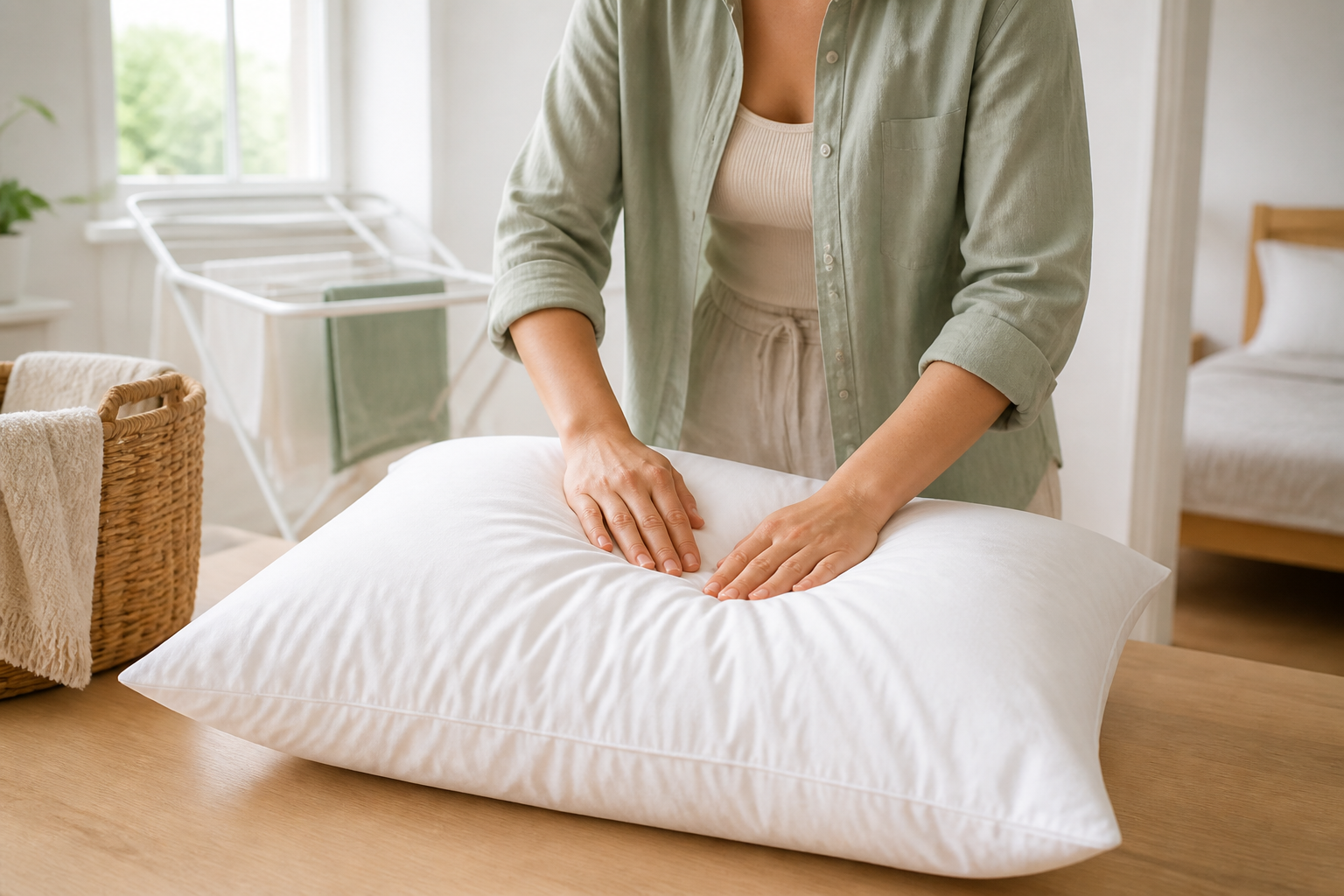
Do not start by spraying fragrance or putting every pillow in the washer. First identify whether the odor is new-foam off-gassing, body residue, detergent left after washing, trapped moisture, or a genuinely musty warning sign. Then check the care label and treat only the washable layer or fill. The safest fix depends more on the pillow's construction and moisture level than on how strong the smell seems.
If the label allows washing, use our material-specific pillow washing guide instead of copying a one-size-fits-all laundry recipe.
After washing, follow the complete pillow drying checklist because a dry shell can hide damp fill in the center.
Start with the odor: new, sweaty, soapy, or musty?
A new foam smell that begins when the packaging is opened is a different problem from an older pillow that smells sour after use. Tempur-Pedic describes the initial odor of its new pillows as off-gassing and recommends airing the pillow for several days. That advice does not transfer automatically to every material, so follow the maker's instructions for your model.
A sweaty or oily smell usually points to residue in the case, protector, shell, or washable fill. A strong detergent smell after laundering can mean too much product or incomplete rinsing. A musty smell, especially with dampness or spotting, deserves investigation rather than perfume: EPA says moldy odors can indicate hidden moisture or mold growth.
- New chemical-like odor: air the pillow as its manufacturer directs
- Body or hair-product odor: separate and wash only label-approved layers
- Strong detergent odor: check dosing and whether a label-safe rinse is possible
- Musty odor: isolate the pillow and inspect for dampness, spotting, and a room moisture source
How to freshen a pillow without washing it
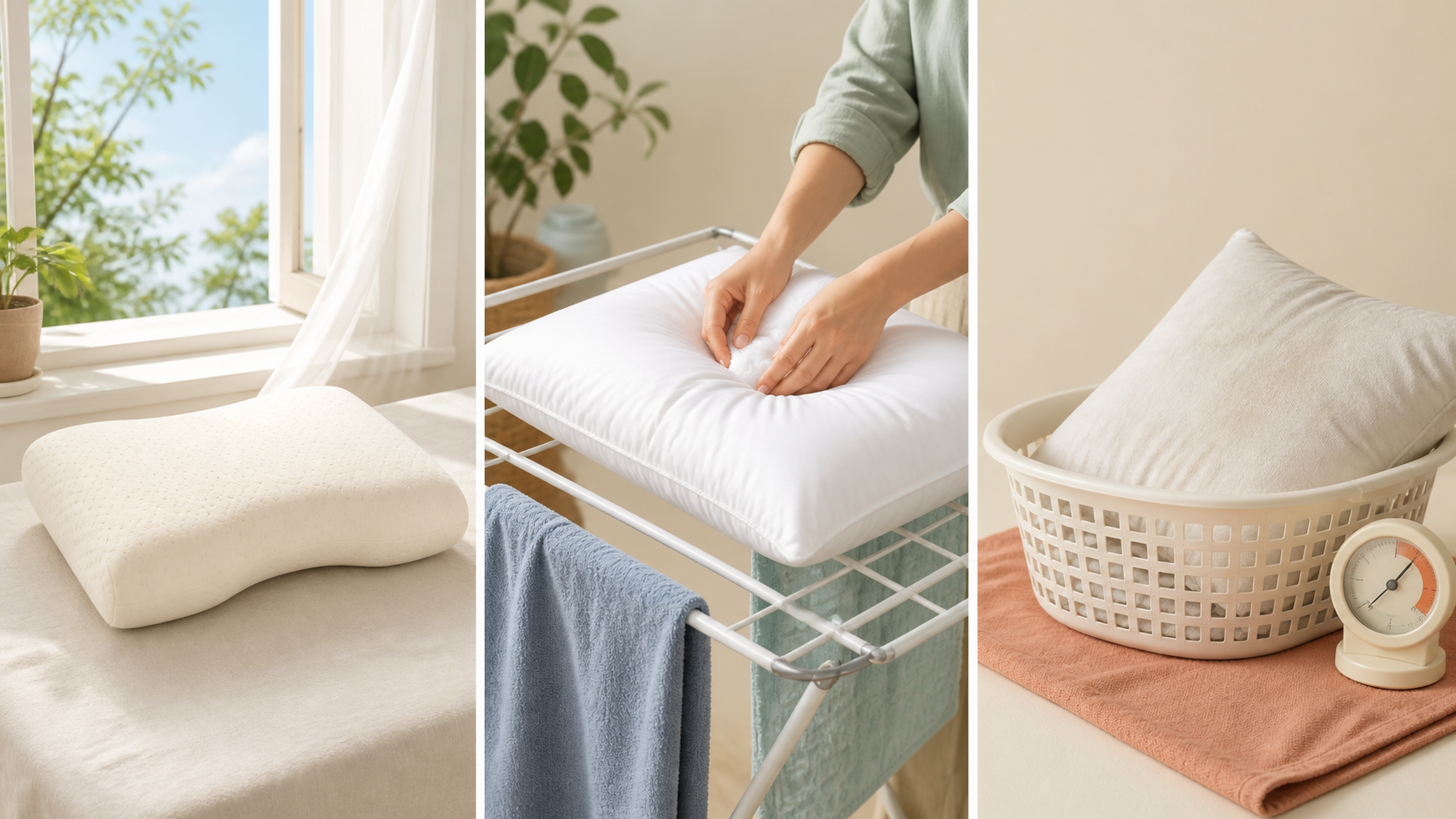
Remove the pillowcase and protector, wash those separately, and place the bare pillow in a clean, dry, well-ventilated room. Turn it so both sides receive airflow. Do not place solid foam in direct heat, soak it, or add fragrance to disguise an unexplained odor.
For example, a new TEMPUR pillow can be aired for several days under Tempur-Pedic's published guidance. A travel pillow with a spot-clean-only core may permit washing only its removable cover. These are concrete label cases: 'freshen without washing' means ventilating the core and cleaning approved outer layers, not inventing a dry-cleaning chemistry at home.
Why pillows sometimes stink after washing
The most common practical causes are trapped water, detergent residue, soil that was not fully removed, or a washer or dryer that transferred its own odor. Thick fill can feel dry at the seam while remaining damp in the center. Reusing or covering it at that point slows further drying.
Coop's care instructions show how model-specific this can be. Its Original inner pillow may be washed on a cold delicate cycle, but the company says it can need several low-heat dryer cycles and tells owners to put a hand inside to confirm all fill is dry. Its Cool+ foam pillow, by contrast, is spot-cleaned with limited water and air-dried. Never apply the first procedure to the second pillow just because both contain foam.
Keep washable residue off the pillow core
A correctly sized zippered protector is easier to wash and dry than most pillow fills. Check fabric, closure, membrane, size, and care instructions.
A safe odor-removal sequence for washable pillows
Check the label, remove every separate cover, and confirm that the inner pillow itself is machine washable. Use the detergent type and amount allowed by the label and washer instructions; more detergent is not a stronger deodorizer. Wash the item in a machine large enough for it to move without being crushed, then use any extra rinse only if the label and machine permit it.
Dry exactly as directed. Pause periodically to redistribute clumps in a fiber or down pillow when the care label allows that handling. Check the center, corners, seams, and fill—not only the warm outer fabric. If the pillow still smells damp, keep drying within the permitted temperature range rather than remaking the bed.
- Wash only label-approved components
- Do not mix bleach, acids, ammonia, or improvised cleaning formulas
- Use the prescribed temperature and cycle
- Confirm the center is completely dry
- Reassess the odor only after the pillow cools in clean air
When a musty smell means stop cleaning and investigate
Isolate a pillow that remains musty after complete drying, shows spreading spots, or was wet for an unknown period. Inspect the protector, mattress surface, wall, window, and headboard. EPA recommends fixing the water source and drying wet materials within 24 to 48 hours; it also advises keeping indoor relative humidity below 60%, ideally 30% to 50%.
Do not treat odor as a laboratory test: people perceive smells differently, and odor alone cannot identify a species or prove that a pillow is safe. Our guide to mold on a pillow explains when porous fill is a poor cleaning candidate. If visible contamination has reached the core or the fill cannot be cleaned and dried under its label, replacement is more honest than masking the smell.
How to keep pillow odor from returning
Use a washable pillow protector, launder outer layers before residue builds up, let hair and skincare dry before bed, and air the pillow after a humid night. Keep the bed away from condensation and measure bedroom humidity if mustiness returns across several textiles.
A simple example: if a clean pillow smells normal in the morning but becomes musty only after sitting against a cold exterior wall, investigate condensation and airflow. If only the pillow smells after each wash, audit detergent dose, washer cleanliness, load size, and complete drying. The source pattern tells you more than adding another scented product.
Frequently asked questions
How long does it take for pillow smell to go away?
It depends on the source and material. Tempur-Pedic says a new-pillow off-gassing odor usually dissipates and recommends airing the pillow for several days. A washed pillow should not be reused until every part is completely dry; persistent mustiness needs investigation rather than a fixed waiting time.
Why do my pillows stink after washing?
Possible causes include damp fill, too much detergent, incomplete rinsing, remaining body residue, or odor transferred from the washer or dryer. Check the care label, machine cleanliness, detergent dose, and the center of the fill before washing again.
How do I get yellow stains and odor out of a pillow?
Treat staining and odor as related but separate clues. Follow the pillow's care label and our yellow-stain guide; never use a whitening formula on foam, latex, down, or a waterproof membrane unless its manufacturer permits every ingredient and step.
How can I freshen pillows without washing them?
Wash removable cases and protectors, then air the bare pillow in a clean, dry, ventilated place. Do not soak, heat, or perfume a non-washable core, and investigate any persistent musty odor.
Sources
About the editorial team
The Pillow Advisor checks product specifications, care instructions and reliable expert sources. We do not invent hands-on testing or medical claims.